Morning arrives in shades of gray and blue before the sun clears the horizon. Frost clings to windshields. Breath billows in white clouds from small mouths waiting at the corner. For millions of families, this is the choreography of dawn—a delicate, synchronized dance of backpacks, lunchboxes, and hurried goodbyes. Then comes the yellow beast.
It is a familiar shape, painted in a hue designed to cut through fog and dim light. It carries weight. It carries noise. More than anything, it carries the most fragile cargo society has to offer.
When a school bus slows to a halt, its amber lights begin their rhythmic pulse. That warning flash is a universal language. It is a boundary drawn on the asphalt, a temporary pause in the roaring machinery of modern life. It says: Stop. Wait. Pay attention.
Yet, every single day, that boundary is breached.
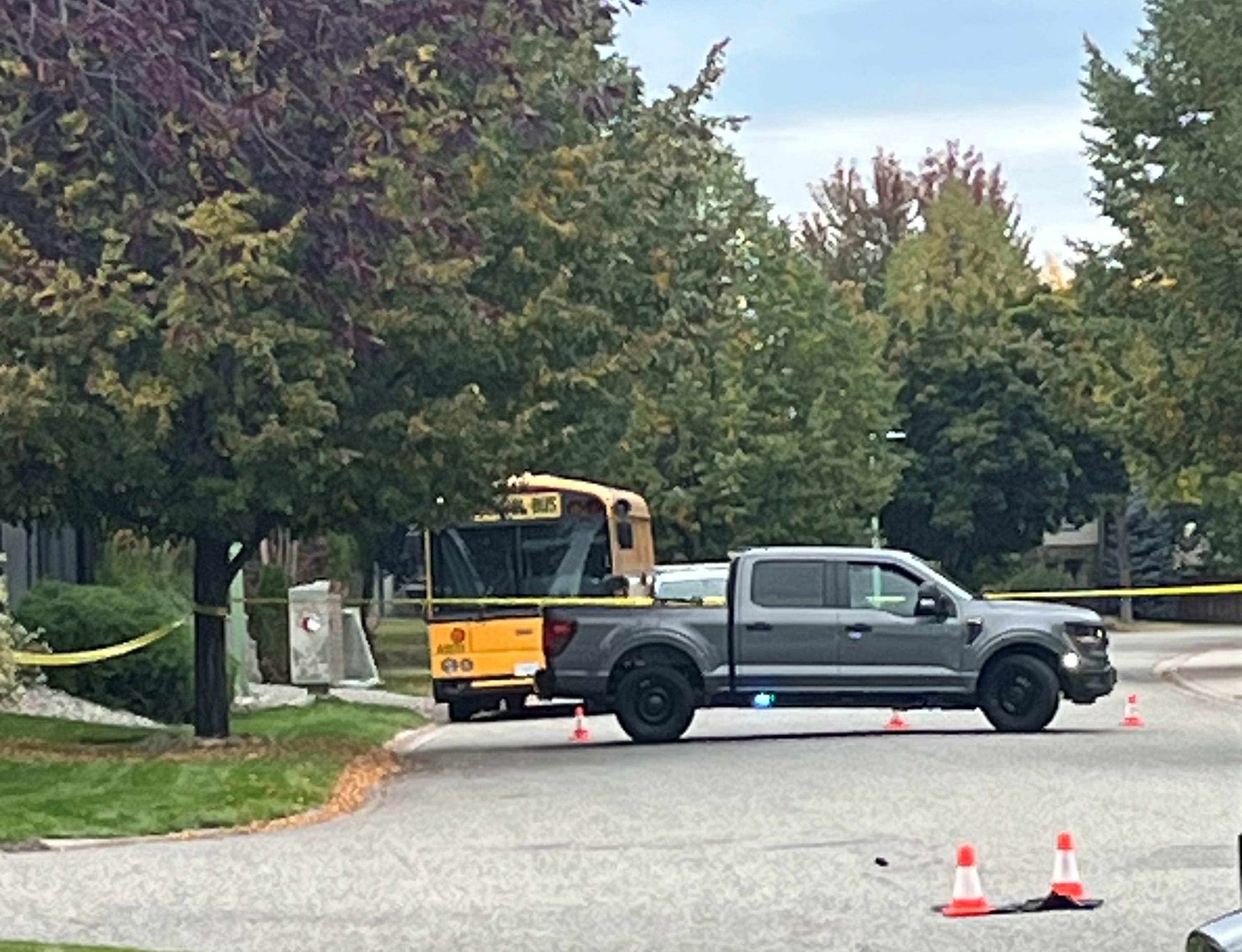
Consider a Tuesday morning in Kelowna. The air was crisp, typical for the shoulder season when visibility can play tricks on the human eye. Children stepped off a bus, expecting the world to hold still for them. Instead, a vehicle rolled past the flashing red signals. Metal met flesh. Two students were struck.
Statistics in police reports are tidy things. They reduce trauma to digits, injuries to severity codes, and human suffering to quarterly summaries. But numbers do not capture the sound of a mother’s breath catching in her throat when the phone rings. They do not measure the second-guessing that haunts a driver in the quiet hours of the night, replaying a fraction of a second over and over, wishing the hands had turned the wheel differently, wishing the foot had pressed the brake a heartbeat sooner.
To understand why this happens, we have to look past the cold mechanics of traffic laws and examine the psychology of the person behind the steering wheel.
Modern driving has become an exercise in sensory compartmentalization. We sit inside climate-controlled cabins that isolate us from the outside world. Sound systems muffle the street. Navigation apps whisper turn-by-turn directions. Minds are cluttered with unpaid bills, looming work deadlines, arguments from breakfast, and the invisible hum of digital notifications waiting in our pockets.
We are physically present in the driver seat, but mentally, we are miles away.
This cognitive tunnel vision creates a dangerous illusion of safety. When a driver is trapped in the loop of their own internal monologue, the external world flattens. Traffic signs become mere suggestions. Streetlights blur together. And a massive, brightly colored, heavily marked school bus with blinking red lights can somehow become invisible.
It sounds impossible. How can anyone miss a school bus? Ask the investigators who reconstruct these scenes. They will tell you about the driver who looked down at a dashboard screen for three seconds. At fifty kilometers an hour, three seconds means traveling the length of a football field completely blind. In that blind stretch, a bus door opens. A child steps down the metal steps. A life pivots on a pivot of pure negligence.
The Royal Canadian Mounted Police issue reminders with predictable regularity. After an incident shakes a community, press releases go out. Officers stand in front of microphones, urging vigilance, reciting the legal penalties, pointing out that stopping for a school bus is not optional. It is the law.
But reminders are reactive. They arrive after the ambulance has cleared the intersection, after the yellow tape has been rolled up, after the shock waves have already radiated outward through families, schools, and neighborhoods.
What is missing is not a rule. The rules are painted in bright letters on signs and codified in motor vehicle acts across every province and state. What is missing is a fundamental shift in how we perceive the act of driving itself.
Driving is not a passive commute. It is a high-stakes responsibility. Every time an ignition turns, the operator of that vehicle holds immense kinetic power. That power demands absolute, undivided attention. When that attention is fractured by impatience, distraction, or fatigue, the consequences are distributed unfairly onto the most vulnerable.
Think about the children.
A child’s perspective of the world is physically and cognitively distinct from an adult's. Their peripheral vision is narrower. Their ability to judge the speed of an approaching vehicle is still developing. They do not calculate stopping distances or factor in icy road conditions. When they step off a bus, their focus is immediate: getting across the street, meeting a friend, heading home to tell a parent about a drawing or a test. They operate under the profound, innocent assumption that the adult world will protect them.
When a driver blows past a bus, that trust is shattered in an instant.
The ripple effects of such a collision are vast and enduring. There is the immediate physical recovery—surgeries, physical therapy, the quiet agony of healing bones and bruised tissue. Then there is the psychological residue. How does a child feel walking to that same bus stop the following month? Every approaching engine becomes a potential threat. Every sound of squeaking brakes triggers a spike of adrenaline. The simple act of going to school, a rite of passage meant to foster independence and growth, becomes laced with anxiety.
For the parents, the world permanently alters its texture. The easy wave goodbye from the front porch is replaced by a lingering knot in the stomach. Every car that slows down on the street is eyed with suspicion. The baseline sense of security that allows a community to function smoothly is chipped away, replaced by a low-grade, constant vigilance.
And what of the driver who failed to stop?
Society rarely affords much sympathy to the at-fault motorist, and rightly so. The responsibility rests squarely on their shoulders. Yet, the human reality is that mistakes born of negligence leave permanent scars on the perpetrator as well. The realization of what could have been—or what actually happened—destroys peace of mind. Lives are derailed on both sides of the windshield. One moment of distraction turns an ordinary citizen into someone defined by a catastrophic error in judgment.
This is why the amber lights matter.
Those flashing bulbs are a call to mindfulness. They demand an abrupt exit from our internal preoccupations. When those lights begin to cycle, the driver must strip away the noise of the day and return to the immediate present.
Consider the mechanics of the stop itself. It requires deceleration. It requires patience. It requires waiting thirty seconds, perhaps a full minute, while children cross the road. To a mind rushed by the frantic pace of modern life, that minute can feel like an eternity. The clock ticks. Work starts soon. The schedule is tight.
Yet, measure that minor inconvenience against the alternative.
There is no destination important enough to justify trading a child’s safety for saved time. There is no email, no meeting, no errand that holds more weight than the life standing at the edge of the curb.
Enforcement alone cannot fix this problem. Police cruisers cannot sit at every bus stop on every residential street. Cameras help, and heavier fines send a message, but deterrence only goes so far against human complacency. The real solution lives in the cultural mindset of the road.
It requires treating driving as a communal trust. When one driver stops, they signal to the drivers around them that this space is shared, that caution is collective, and that the rules protect everyone. It creates a silent solidarity of care.
When you see those amber lights begin to flash in the distance, let the urgency drop away. Let the radio fade into the background. Put the phone entirely out of reach, not just face-down on the seat, but out of mind. Watch the children step down onto the pavement. Watch them make their way safely to the sidewalk, their backpacks bouncing with every step, chattering about their day, entirely unaware of how close they came to the edge of the abyss.
Watch them reach the other side.
Only then, when the road is clear and the red lights fall silent, do you press the accelerator. Only then do you rejoin the rush of the world, carrying with you the quiet, steady awareness of what you just protected.