The asphalt does not remember the screech of tires once the smoke clears. It only holds the quiet weight of skid marks, fading under a thin layer of gray dust.
Consider a hypothetical patrol car idling on a desolate stretch of highway at two in the morning. The officer behind the wheel—let us call him Miller—stares at the dashboard glow. His radio hums with static. He knows the math of the asphalt better than most. He knows that every time the blue lights ignite behind a fleeing sedan, a silent, fragile equation begins to calculate itself in real time. Speed multiplied by panic equals a catastrophic margin for error.
For decades, the standard operating procedure on American roads was built on an instinctive reflex: pursuit. When someone ran, you chased. It was the unwritten creed of law enforcement, born from a desire for absolute accountability. If you break the law, you do not get to drive away.
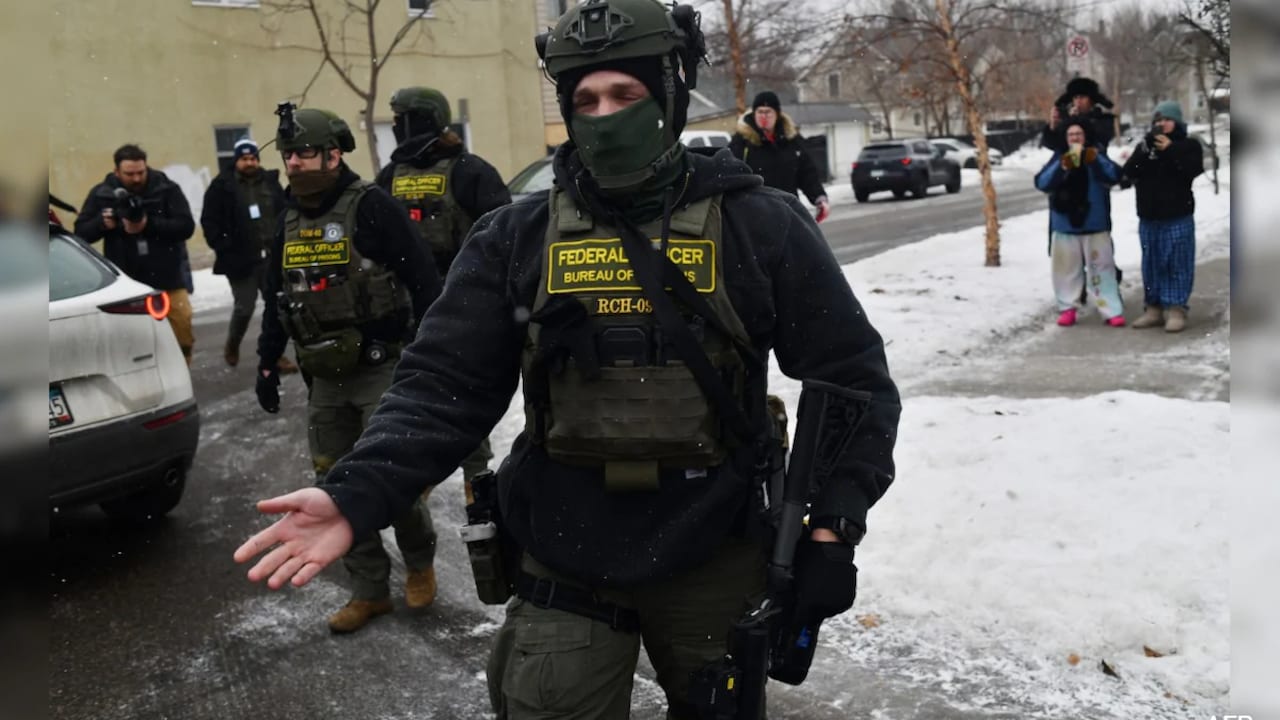
Yet, the federal government recently shifted the paradigm of how Immigration and Customs Enforcement operates, rewriting the rulebook on high-speed pursuits and limiting vehicle stops following deadly encounters and escalating risks on public thoroughfares.
This is not merely a bureaucratic amendment buried in a PDF manual. It is a profound acknowledgment of a terrifying truth. Sometimes, the pursuit itself creates a danger far greater than the original infraction.
The Weight of the Pedal
To understand why these federal policy changes matter, you have to sit in the driver seat when adrenaline spikes.
Imagine pushing a heavy crown victoria or an SUV past one hundred miles per hour on a wet Tuesday night. The steering wheel vibrates with a fierce, chattering life of its own. Pedestrians blur into shadows. Traffic lights shift from green to red like warning flares. Your heart is a drum in your throat. You are hunting a tail-light, and nothing else exists in the universe except that blinking red point in the distance.
That is the high-speed chase. It is cinematic, breathless, and frequently lethal.
Federal directives now restrict these pursuits unless there is an imminent threat of death or serious bodily injury. The logic is stark and unapologetic. A fleeing vehicle carrying undocumented migrants or suspected violators presents a legal infraction, yes. But does an administrative immigration violation warrant a high-speed roulette game through a crowded suburban intersection where a school bus might be turning the corner?
The answer, borne out by tragic statistics across municipal and federal departments alike, is a definitive no.
In the past, innocent bystanders paid the ultimate price for pursuits that spiraled out of control. Families coming home from grocery stores, teenagers waiting at bus stops, delivery drivers navigating quiet residential avenues—they became collateral casualties in chases born from minor infractions. By narrowing the threshold for when a chase can be initiated, the new guidelines attempt to balance law enforcement duties against the preservation of human life.
The Shift at the Traffic Stop
The changes do not stop at high-speed chases. They also restrict certain vehicle maneuvers and tactical stops, particularly those initiated in ways that escalate into gunfire or fatal crashes.
We have all seen it happen in dashcam footage. A vehicle is boxed in. Commands are shouted over a loudspeaker. Nerves fray. Movement is misinterpreted as aggression. A weapon is drawn. Within fractions of a second, a routine traffic check transforms into a violent confrontation.
When federal agents or local officers make split-second decisions under the weight of fear and duty, mistakes carry permanent consequences. The updated directives place heavy emphasis on de-escalation and tactical repositioning. Instead of forcing a dangerous vehicular interception on a busy interstate, agents are increasingly encouraged to rely on alternative investigative methods—surveillance, digital tracking, and inter-agency intelligence sharing—rather than brute-force roadside confrontations.
Critics argue that these restrictions weaken enforcement, suggesting that a softer approach invites defiance. They worry that individuals will simply refuse to pull over, knowing that federal units are bound by tighter leashes.
Yet, defenders of the policy point to a deeper reality. A badge does not grant immunity from tragedy. When a stop results in avoidable bloodshed, the credibility of the entire institution frays. Safety cannot be sacrificed simply to preserve the illusion of absolute compliance on demand.
Living in the Aftermath
I spoke once with a retired officer who spent twenty-five years on highway patrol. He had scars that did not show on an X-ray. He remembered every crash scene where blue lights flashed against twisted metal long after the victims were gone.
"You think you're doing the right thing," he told me, his hands wrapped around a lukewarm cup of coffee. "You're chasing the bad guy. You feel like justice is right there at the end of your bumper. But then you stand over a wrecked car and look at a child's toy rolling across the pavement. And you realize the chase cost more than the crime ever was worth."
That is the invisible stake behind the headlines. It is the mental burden carried by those who enforce the law and those who live alongside it.
The new federal restrictions on high-speed pursuits and vehicle stops are not a retreat from justice. They are a recalibration. They acknowledge that the road belongs to everyone—to the commuter, the parent, the child, and the migrant alike.
As the sun comes up over the asphalt where Miller idled hours earlier, the tire marks begin to bake into the gray stone. The sirens are silent. The highway hums with ordinary traffic, moving forward at a sensible speed, bound by a new understanding that some things are worth catching, but nothing is worth destroying an innocent life to reach.