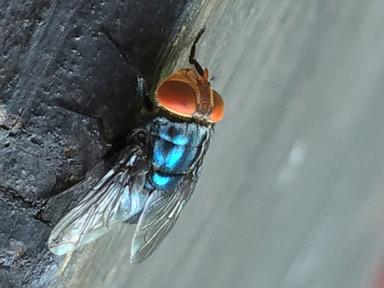
The headlines are vibrating with a familiar, dangerous brand of panic. On June 3, 2026, the United States Department of Agriculture confirmed that the New World screwworm (Cochliomyia hominivorax) had been detected in a three-week-old calf in Zavala County, Texas. Immediately, the media machine dusted off its 1960s playbook. The consensus rolled out instantly: This is a freak, isolated breach. The food supply is bulletproof. The Sterile Insect Technique will effortlessly wipe them out again. Agriculture Secretary Brooke Rollins stepped up to assure the public that "there is no threat of mass infestation."
This is lazy consensus at its absolute worst. It is an industry-wide opiate designed to protect a multi-billion-dollar livestock lobby while ignoring the fundamental biosecurity shifts of the last sixty years.
I have spent decades watching agricultural agencies throw millions of dollars at containment lines while misunderstanding the ground-level physics of modern ecology. To believe that a single 20-kilometer quarantine zone around La Pryor, Texas, can box in a highly mobile, flesh-eating parasite in 2026 is not just optimistic; it is reckless. The comforting narrative of "total eradication" is dead. The sooner the cattle industry admits it, the sooner we can build a strategy that actually works.
The Flawed Logic of the 1960s Playbook
The core of the competitor argument relies on historical precedent. They point to the glorious mid-century triumph when the United States used the Sterile Insect Technique (SIT)—releasing billions of factory-bred, irradiated male flies to mate with wild females, resulting in unviable eggs—to push the pest all the way down to a biological barrier in Panama.
That was then. The biological, geopolitical, and logistical realities of 2026 bear zero resemblance to the world of 1966.
First, consider the sheer volume of modern livestock movement. Sixty years ago, cattle were largely raised, fattened, and slaughtered regionally. Today, the supply chain is a hyper-connected interstate web. A calf born in South Texas can be on a trailer crossing three state lines before its umbilical stump is even dry. The USDA confirmed this infestation in a three-week-old calf, with the larvae burrowing directly into its navel. The incubation period for screwworm larvae to drop from a host and pupate in the soil is a mere five to seven days. By the time a laboratory in Ames, Iowa, confirms a sample, the biological clock has already run out on localized containment.
Second, the assumption that SIT can be scaled up instantly to meet a continental crisis is a logistical fantasy. For decades, the entire Western Hemisphere relied on a single sterile fly production facility in Panama. When the screwworm breached that barrier in late 2024 and began its relentless march through Central America and into Mexico, our single-point-of-failure strategy was exposed.
The USDA is currently scrambling. They poured $21 million into converting a fruit-fly plant in Mexico and are breaking ground on a massive $750 million fly factory in Texas. But built-in bureaucratic inertia means these facilities cannot pivot overnight. The current drop rate of 4 million sterile flies per week in the Texas border region is a drop in the bucket compared to the sheer reproductive velocity of a wild population that lays up to 400 eggs in a single scratch of an animal's hide.
The Wildlife Blindspot
The industry loves to talk about cattle because cattle can be counted, inspected, and injected. The fatal flaw in the USDA's containment model is the complete omission of feral and wild mammalian vectors.
Texas is home to an estimated 3 million to 5 million feral hogs. They roam unchecked across millions of acres of dense brush, frequently engaging in aggressive, wounding behavior that creates the perfect, bloody invitations for female screwworm flies.
- Feral hogs do not report to USDA inspection checkpoints.
- Whitetail deer do not respect a 12-mile quarantine perimeter.
- Javelinas and coyotes do not wait for a Texas Animal Health Commission movement permit.
When a parasitic fly can utilize millions of unmanaged, highly mobile wild hosts, traditional agricultural quarantines become theater. The data used by state veterinarians relies almost entirely on self-reporting by ranchers. This creates a massive reporting bias: a cattleman with a $15 billion state industry on the line has an economic incentive to check his herd, but no one is checking the ears and navels of the millions of wild mammals moving through the brush country of South Texas every night.
The Cost of the Border Lock
To protect the domestic herd, Secretary Rollins closed the U.S.-Mexico border to Mexican livestock imports. On paper, this looks like a strong, decisive biosecurity measure. In practice, it is an economic blunt-force instrument that ignores how black markets and human behavior operate under pressure.
When you choke off a massive commercial trade artery, you do not stop the demand; you simply drive the movement underground. The financial pressure on border-region operations to move stock across the Rio Grande without official oversight skyrockets. All it takes is one undocumented horse, one hunting dog, or one trailer of uninspected goats crossing an unmonitored point to completely bypass a multi-million-dollar aerial fly-drop zone.
True biosecurity is not an on-off switch. It requires admitting the downsides of your own strategy. By implementing a total ban rather than an aggressively subsidized, high-throughput testing regime at the border, the government has incentivized evasion.
Redefining the Premise: The Wrong Question
The industry is currently asking: How do we recreate the absolute border wall of the 1960s?
This is the wrong question. The climate has changed, truck transport is vastly faster, and wild vector populations have exploded. We are no longer dealing with a temporary breach; we are dealing with a systemic shift in pest pressure driven by a breakdown of the southern biological barriers.
Instead of funding a permanent, multi-billion-dollar war of attrition via fly-dropping airplanes—a strategy that requires perpetual funding and flawless execution forever—we must pivot toward automated, decentralized farm-level biosecurity.
Ranchers cannot rely on the federal government to drop enough sterile flies to save them. The solution requires a hard pivot to real-time, sensor-driven individual animal monitoring. If a rancher is waiting for a calf to show signs of systemic lethargy or a foul odor of decay before detecting an infestation, they have already lost the week-long window to prevent larval drop into their soil.
We need to treat biosecurity like a cybersecurity problem. You do not assume your perimeter wall will stop every hacker; you build internal monitoring systems that detect anomalous behavior the second a breach occurs. Thermal imaging drones, automated scratching posts that apply larvicides, and acoustic monitoring systems that detect the specific wing-beat frequency of Cochliomyia hominivorax in the pasture are the only ways to manage a pest that has already breached the gate.
The era of a screwworm-free United States is drawing to a close. The single calf in Zavala County is not an anomaly; it is the vanguard. Stop waiting for the factories in Panama or Mexico to save the industry with a silver bullet made of sterile flies. The parasite is back, the wild vectors are waiting, and the old playbook is officially obsolete.
USDA confirmed case updates provides direct reporting on the initial discovery in South Texas and the government's immediate regulatory response.