The smell of a furniture factory is something you never quite shake. It is a thick, sweet perfume of kiln-dried maple and industrial adhesive, a scent that speaks of permanence. When you walk onto a shop floor in Quebec, that scent represents more than just a product. It represents a generational pact. For decades, these towns—places like Victoriaville, Sherbrooke, and Beauce—have been built on the sturdy backs of hardwood tables and upholstered chairs.
But lately, the air has changed. It smells like silence.
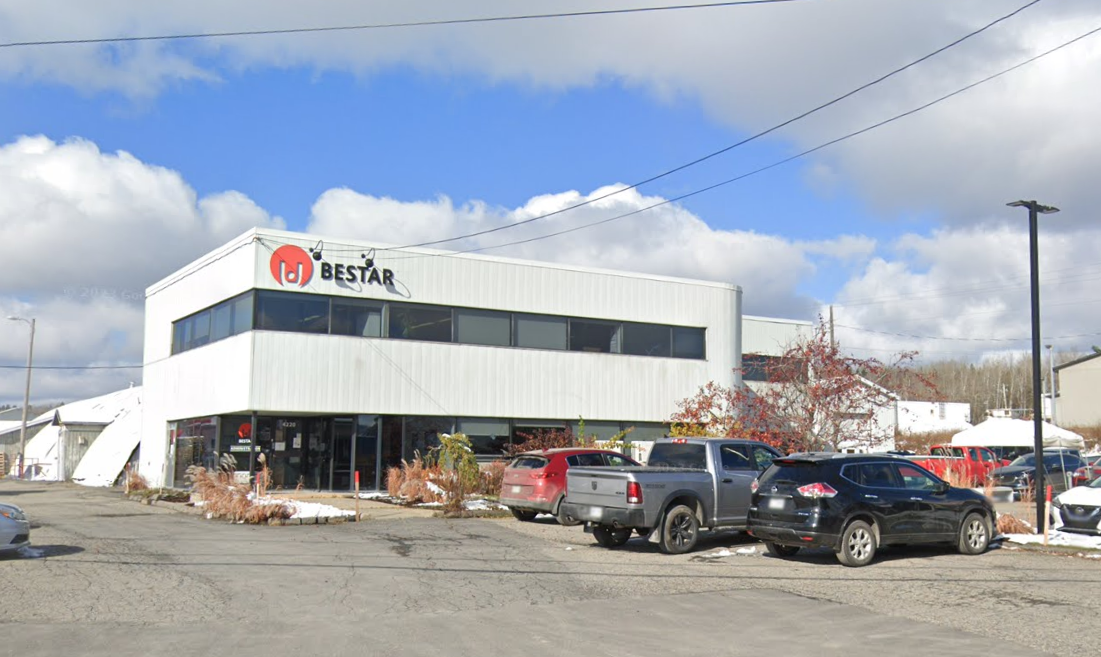
The latest casualty in a burgeoning trade war isn't just a name on a stock exchange or a line item in a government report. It is a physical space where hundreds of people used to wake up with a purpose. Another Quebec-based furniture pillar has buckled. The cause cited in the official press release is a cold, clinical term: U.S. tariffs. To a politician, a tariff is a lever of power. To a craftsman in Saint-Georges, it is the sound of a padlock clicking shut on a factory gate for the last time.
The math of a shuttered factory is deceptively simple. Imagine a mid-sized company—let’s call the owner Jean-Pierre. For thirty years, Jean-Pierre has shipped 70% of his dining sets south of the border. His margins were never wide; the furniture business is a game of pennies. Then, overnight, a 200% or 300% duty is slapped on certain components or finished goods coming into or out of the country.
The dining table that used to cost an American family $1,200 now costs $2,800.
The customer doesn't care about trade disputes or the geopolitical nuances of "dumping" allegations. They just buy a different table. They buy one from Vietnam. Or Mexico. Or a local artisan who doesn't have to navigate the labyrinth of cross-border tax law. Jean-Pierre watches his order book go blank. He looks at his staff—people he has known since their weddings—and realizes he can no longer afford their hands.
This isn't an isolated tragedy. It is a contagion.
Quebec’s furniture industry has long been a crown jewel of the province’s manufacturing sector. It was built on the proximity to raw materials and a workforce that viewed woodworking as a high art. But the global trade landscape has become a minefield. The United States, once the most reliable neighbor a business could ask for, has turned inward. Protective measures, designed to bolster American jobs, often end up decapitating the integrated supply chains that both nations spent sixty years perfecting.
Consider the ripple effect of a single factory closure. It starts with the floor workers—the sanders, the assemblers, the quality control eyes. They lose their primary income. Then it hits the local sawmill that provided the birch. Then the trucking company that moved the pallets. Then the diner across the street where those three hundred workers bought their lunch every day at 12:15 PM.
The economic heart of a small town doesn't stop beating all at once. It fades.
We often talk about "market shifts" as if they are natural disasters, like a hurricane or an earthquake. We treat them as unavoidable. But these specific failures are the result of pen strokes in office buildings thousands of miles away. There is a profound disconnect between the person signing a trade enforcement order and the person who has to go home and tell their spouse that the pension they spent twenty years building is now a giant question mark.
The complexity of these tariffs is often what kills companies before the actual taxes do. Navigating the legalities of anti-dumping and countervailing duties requires a small army of trade lawyers. A massive multinational corporation can absorb those legal fees as the cost of doing business. A family-owned firm in rural Quebec cannot. They are outgunned and outmaneuvered by a system that favors the biggest players.
It feels personal. Because it is.
When you speak to the people on the ground, they don’t talk about "macroeconomic trends." They talk about the machines. They talk about the "old girl"—a massive German-made CNC router that was the pride of the shop—now sitting under a plastic tarp, waiting to be sold for scrap or shipped to a competitor at an auction. There is a mourning process for a lost industry. It is the loss of a specific kind of dignity that comes from making something tangible.
The irony is that the demand for quality furniture hasn't vanished. People still want pieces that will last longer than a move between apartments. They want the weight of real wood. But the friction of the border has become a wall higher than any physical barrier. The North American Free Trade era promised a seamless flow of goods, a "continental " synergy that made us all stronger. That promise is currently being shredded in the teeth of a saw.
What happens to the workers? Some retrain. Some move to the city to work in logistics or service. But something essential is lost when a town stops being a "furniture town." The collective knowledge of how to treat a piece of oak, how to match a grain, and how to finish a surface to a mirror sheen is not easily replaced by a certificate in data entry.
We are witnessing the hollowing out of the middle.
The high-end boutique shops will survive because their clients can afford the "tariff premium." The ultra-cheap mass-market retailers will survive because they move their production to whatever country currently has the fewest trade restrictions. It is the solid, middle-market manufacturer—the one that provided a stable, middle-class life for thousands—that is being squeezed into non-existence.
Every time a headline appears about another Quebec company shutting down, the comments sections fill with debates about "competitiveness" and "diversifying markets." It is easy to be an armchair CEO from behind a keyboard. But you cannot simply "pivot" a hundred-thousand-square-foot factory to a new market overnight. You cannot find a replacement for the American consumer in a week.
The reality is a slow, grinding exhaustion. Owners spend months dipping into personal savings, trying to weather the storm, hoping the next round of negotiations will bring relief. They hold on until the bank says "no more."
The ghost of the industry is already haunting these valleys. You can see it in the empty parking lots and the "For Lease" signs that stay up for years. You can see it in the eyes of the older generation, who remember when the whistles blew at the same time across three different plants.
The sawdust has settled. The ledgers are closed.
Tonight, in a small house outside of Montreal, a craftsman is looking at his hands. They are calloused, stained with a walnut finish that won't wash off, and perfectly capable of another twenty years of work. He is a master of his craft, a veteran of the floor, and a man who knows exactly how to build a table that will stand for a century.
He just doesn't have a floor to stand on anymore.