Everyone in Saskatoon is yelling at the wrong number.
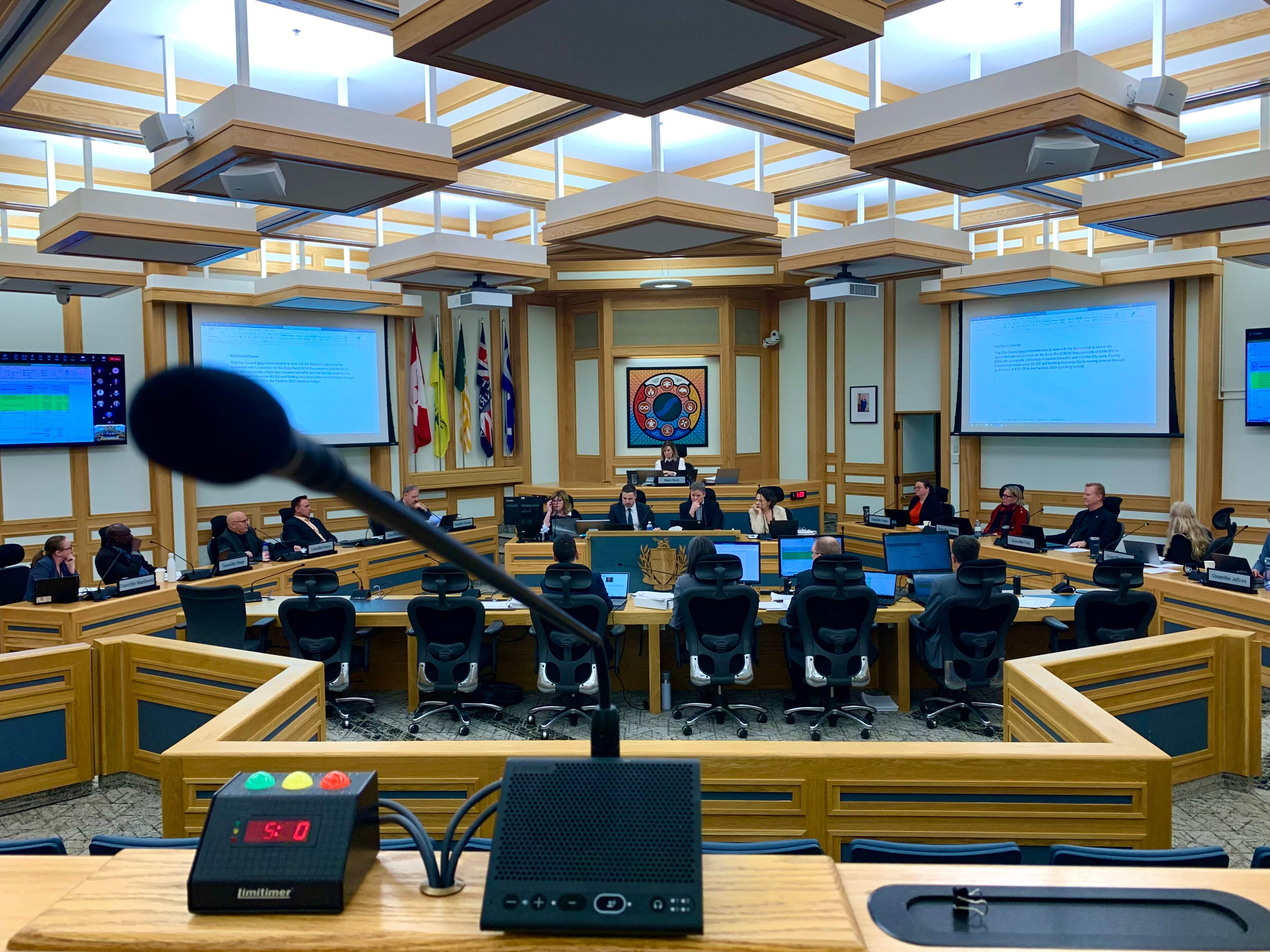
City Hall floats a 5.45% property tax increase for next year’s budget, and the local comment sections immediately catch fire. Homeowners clutch their pearls. Pundits write predictable, hand-wringing columns about affordability, fiscal recklessness, and bloated civic payrolls. The lazy consensus settles in before anyone even reads the line items: City Council is bleeding taxpayers dry, and the only responsible move is to slash the mill rate down to zero. Meanwhile, you can find related stories here: Why Vanuatu Is Right About COP31 Needing an Overhaul.
That consensus is mathematically illiterate.
If you look at how municipal finance actually works in a growing prairie city, a 5.45% hike isn’t an aggressive cash grab. Once you strip out inflation, contractual wage floors, and the crushing debt of forty years of suburban sprawl, 5.45% is barely enough to keep the snowplows running. Worse, the people demanding a tax freeze are actively campaigning to bankrupt the city—and tank their own property values in the process. To understand the complete picture, we recommend the detailed article by Reuters.
I have sat in enough municipal budget lockups and reviewed enough infrastructure asset management plans across Western Canada to know how this movie ends. Every city that caves to the "zero-percent increase" mob ends up paying triple five years later in emergency bond issuances, busted water mains, and catastrophic special assessments.
Stop asking why Saskatoon is raising taxes by 5.45%. Start asking why we built a city that costs so much to maintain that 5.45% feels like a crisis.
The Illusion of the "Tax Hike"
To understand why the panic over 5.45% is misplaced, you first have to separate nominal dollars from purchasing power.
When a municipality passes a budget, it does not buy consumer goods. It buys asphalt, diesel, concrete, treated water chemicals, steel, and specialized unionized labor. Economists track this using the Municipal Price Index (MPI), not the Consumer Price Index (CPI) you see on the evening news. While CPI measures milk, eggs, and rent, the MPI measures heavy civil construction and fleet maintenance—costs that consistently outpace general inflation by one to two percentage points every single year.
If the cost of paving a kilometer of Circle Drive rises by 4% and police and fire collective agreements—which are bound by provincial arbitration laws, not council whims—rise by 3%, a 0% tax increase is not a freeze. It is a massive, immediate cut to service levels.
Even at 5.45%, Saskatoon isn't expanding into some utopian spending spree. A massive chunk of that percentage is dedicated strictly to maintaining existing service levels against rising input costs, alongside dedicated levies for infrastructure replacement and snow management. Calling this a "tax hike" is like calling it a "grocery splurge" when your weekly food bill goes up because the price of beef doubled while you bought the exact same steak.
Why Homeowners Are Fighting Against Their Own Equity
Here is the irony that nobody at a taxpayer rally wants to hear: residential property owners are the primary beneficiaries of the very spending they want to cut, and they are heavily subsidized by the commercial sector to boot.
In Saskatchewan, property taxation relies on a bifurcated system involving assessed values, provincial percentage-of-value multipliers, and municipal mill rate factors. Let’s get the mechanics straight, because most commentators butcher them.
The Saskatchewan Assessment Management Agency (SAMA) and city assessors determine the market value of a property. Then, the provincial government applies a "percentage of value" (for instance, residential properties are taxed at 80% of their assessed value, while commercial properties are taxed at 85% or 100% depending on the class). Finally, City Council applies a mill rate factor—a multiplier that shifts the tax burden away from homeowners and onto businesses.
In Saskatoon, commercial and industrial properties pay a significantly higher effective tax rate per dollar of assessed value than single-family homes. Yet commercial corridors require a fraction of the linear infrastructure per tax dollar generated compared to sprawling residential neighborhoods.
Imagine a scenario where a city freezes property taxes for four straight years to appease angry suburban voters. To balance the books—because Saskatchewan municipalities are legally prohibited from running operating deficits—City Hall defers road resurfacing, cuts transit frequency, closes library branches, and delays storm sewer upgrades.
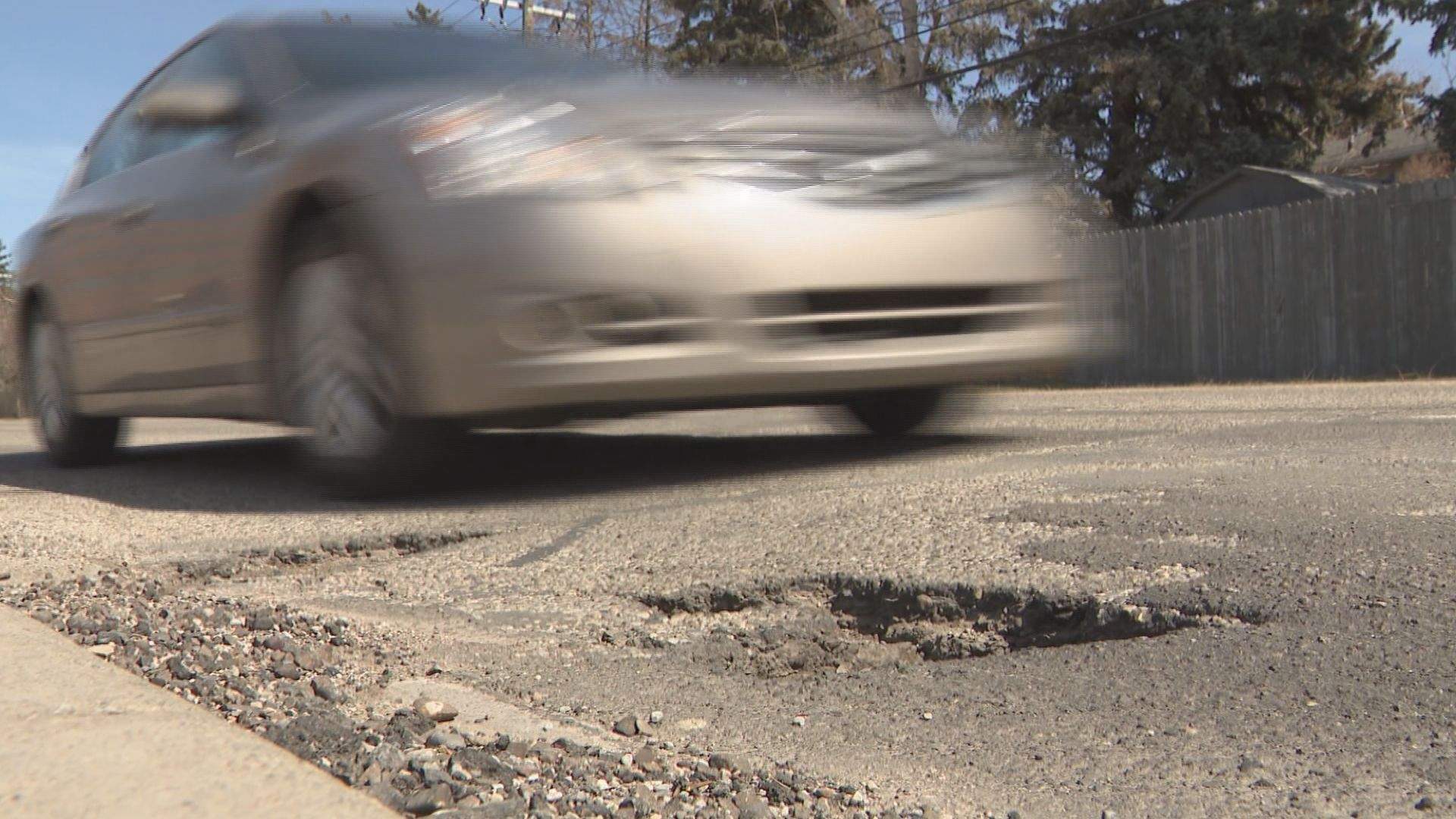
What happens in year five? Basement backups during summer cloudbursts. Axle-snapping potholes on arterial roads. Longer emergency response times. Suddenly, buyers stop looking in those neighborhoods, and your home's market value stagnates while the city is forced to slap a 12% catch-up tax hike on everyone just to fix the crumbling pipes. Deferring maintenance does not save money; it merely converts a predictable annual expense into a high-interest emergency loan.
The Real Villain Isn't City Hall—It's the Cul-de-Sac
If you want to point fingers at why Saskatoon’s budget is permanently stretched, stop looking at civic administrators and start looking at a map of the city's outer rings.
Urban planning analysts like Charles Marohn, founder of Strong Towns, and municipal finance researchers at the University of Calgary’s School of Public Policy have documented this phenomenon exhaustively. It is known as the Growth Ponzi Scheme, and Saskatoon is a textbook case study.
When a developer builds a brand-new subdivision on the edge of the city, they pay for the initial installation of the roads, sidewalks, water lines, and sewers. They hand those assets over to the city for free. For the first fifteen to twenty years, City Hall collects brand-new property taxes from those homes while spending almost nothing on maintenance because the pipes and asphalt are new. It looks like a massive financial win.
Then year twenty-five hits.
The asphalt cracks. The water mains corrode. The streetlights need replacing. Suddenly, the city is on the hook for 100% of the lifecycle replacement cost of miles of low-density streets, cul-de-sacs, and trunk lines serving a relatively small number of households. When you divide the total tax revenue collected from a low-density suburban street by the actual long-term liability of replacing the infrastructure underneath it, the math goes deeply negative.
To pay for the aging pipes in the suburbs built in the 1990s, the city has to approve more new subdivisions on the fringe to capture another wave of short-term tax revenue, which in turn creates an even bigger infrastructure liability twenty-five years down the road.
The 5.45% budget increase isn't a symptom of wasteful spending on bike lanes or art grants—those represent fractions of a single percent of the civic budget. It is the bill coming due for decades of building wide roads and low-density neighborhoods that cannot mathematically pay for their own upkeep.
Dismantling the "People Also Ask" Myths
Whenever budget season rolls around in Saskatoon, the same tired questions dominate local media and search engines. Almost all of them are built on faulty premises.
"Why doesn't the City just cut administrative bloat and middle management?"
Because civic payroll isn't structured the way people imagine. Roughly 60% to 70% of a typical Canadian municipality’s operating budget goes directly to salaries and benefits—and the overwhelming majority of that money pays for frontline protective services (police and fire), transit operators, utility workers, and public works crews. You cannot balance a billion-dollar civic budget by firing three communications coordinators. If you want meaningful payroll reductions, you have to cut police officers, firefighters, or snowplow drivers. Nobody running on a "cut the fat" platform ever admits which of those three they want to fire first.
"If my property assessment went up, why is my tax bill rising by the same percentage?"
It doesn't. This is the single biggest misconception in municipal finance. Property taxes are revenue-neutral during a reassessment year. If every home in Saskatoon doubles in assessed value overnight, your property taxes do not double. City Council sets the total dollar amount it needs to run the city first, and then adjusts the mill rate downward so the total pie remains the same. Your tax bill only spikes during a reassessment if your specific neighborhood appreciated faster than the city-wide average.
"Can't the City use reserve funds to lower the 5.45% increase?"
Using one-time reserve cash to pay for ongoing operating expenses is the municipal equivalent of paying your monthly mortgage with a credit card. Reserves exist for capital emergencies—like an unprecedented three-day blizzard that blows through the snow removal budget—or planned multi-year infrastructure builds. Raiding reserves to artificially suppress the mill rate by 1% this year simply guarantees an automatic 1% tax hike next year when the reserve money is gone, plus whatever inflation adds on top.
"Why are we paying more when civic services feel worse?"
Because infrastructure debt compounds silently until it hits a breaking point, and provincial downloading has squeezed municipal budgets from both sides. Over the past decade, provincial governments across Canada have steadily shifted costs onto municipalities—from policing mandates and addiction/homelessness responses to reduced revenue-sharing formulas—while restricting cities to a single, regressive revenue tool: the property tax. Cities have no access to income taxes or sales taxes, meaning every new social crisis or federal infrastructure mandate lands squarely on the homeowner's tax notice.
The Uncomfortable Downsides of the Contrarian View
Advocating for realistic, inflation-adjusted tax increases—and aggressive urban infill—isn't without real pain. Honesty requires admitting where this approach hurts.
First, property taxes are profoundly regressive. Unlike income tax, which scales with your ability to pay, property tax is levied on an illiquid asset. A retired senior living on a fixed pension in a paid-off bungalow in Nutana or Varsity View gets hit with the exact same 5.45% increase as a dual-income tech household next door. Without aggressive provincial property tax deferral programs for low-income seniors, steady mill rate increases genuinely threaten housing security for people on fixed incomes.
Second, shifting away from suburban sprawl toward higher-density infill disrupts existing neighborhoods. It brings construction noise, shadow impacts, parking friction, and friction over neighborhood character. Asking residents to accept four-plexes on their block while simultaneously paying higher taxes is a brutal political sell, even when the fiscal math is undeniable.
Third, giving City Hall a blank check without rigorous performance auditing breeds institutional complacency. Just because 5.45% is mathematically justified by inflation and infrastructure liabilities does not mean every civic department is operating at peak efficiency. Procurement processes in Canadian cities remain painfully slow, and capital projects routinely suffer from scope creep.
How to Actually Fix Saskatoon’s Tax Trajectory
If we want to stop having this exact same fight every November, we need to stop treating the symptoms and rewire the incentives. Both taxpayers and City Council need to abandon political theater and execute four concrete moves.
- Publish Neighborhood-Level Fiscal Balance Sheets: City Hall should map every neighborhood in Saskatoon showing total property taxes collected versus the amortized annual cost of maintaining that neighborhood's roads, pipes, and services. Once residents see in black and white that dense, older neighborhoods subsidize sprawling outer suburbs, the political conversation around urban density changes overnight.
- Tie Mill Rate Floors to the Municipal Price Index: Stop pretending a 0% tax increase is a realistic baseline. Establish a transparent fiscal policy where the baseline operating budget automatically tracks the Municipal Price Index, forcing Council to explicitly vote on which services to eliminate any time they want to drop below that threshold.
- Shift to Land Value Taxation Principles: Within provincial legislative bounds, push harder on taxing unimproved land value rather than penalizing property improvements. Right now, if you buy a derelict downtown lot and build a productive apartment building, your taxes skyrocket. If you leave it as a gravel parking lot, your taxes stay low. That is backwards. Tax the land aggressively so speculators are forced to build or sell.
- Ring-Fence Capital Maintenance: Legally separate the operating budget from the capital replacement reserve. Every new piece of infrastructure approved by Council—whether a recreation complex or a new arterial road—must include a mandatory, funded lifecycle reserve contribution baked into the approval vote on day one. If we can't afford to replace it in thirty years, we don't build it today.
Drop the Pitchforks and Read the Balance Sheet
Outrage over a 5.45% tax increase is easy. It requires zero understanding of bond ratings, municipal price indices, or underground infrastructure lifecycles. It lets commentators play the populist hero while demanding an impossible fantasy: world-class snow clearing, pristine roads, fully staffed fire halls, and 1990s tax bills.
Saskatoon doesn't have a spending problem driven by one year's 5.45% adjustment. It has a geometry problem driven by decades of building a city spread too thin to pay its own bills. Until taxpayers demand fewer miles of asphalt per capita instead of magical cuts to the mill rate, next year's budget fight is already guaranteed—and the number won't be 5.45%.