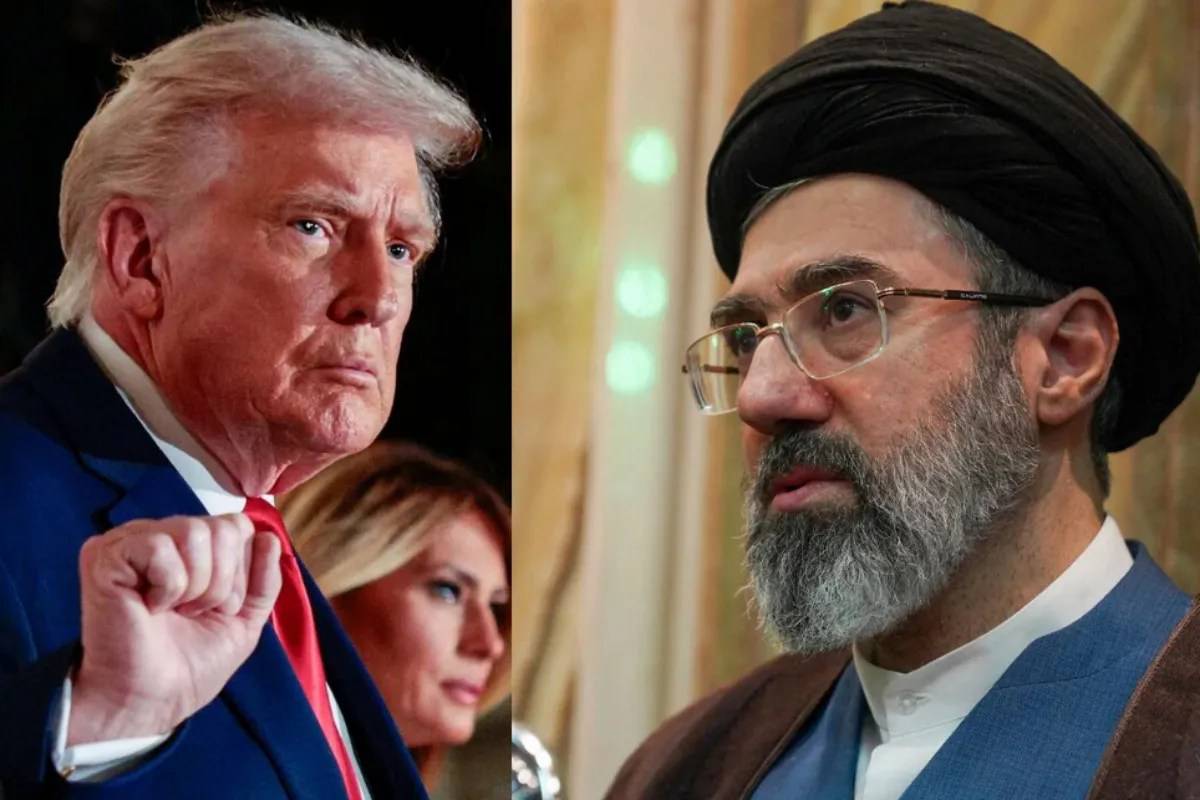
The headlines are predictable. They tell you that Iran is desperate. They claim Tehran is "demanding" the removal of blockades before sitting down for a second round of talks with Washington. It makes for a neat, linear narrative of a struggling nation gasping for economic air.
It is also completely wrong.
The assumption that the lifting of sanctions is the primary goal of Iranian hardliners ignores the brutal reality of how power functions in a closed economy. If you think this is a simple "money for nukes" trade, you haven't been paying attention to the last twenty years of Middle Eastern geopolitics. The "blockade" isn't just a hurdle for the Iranian regime; it is their greatest political asset.
The Sanction Paradox
Mainstream analysts love to talk about GDP contraction and currency devaluation as if these metrics determine state behavior. They don't. In a command economy, scarcity is a tool of control.
When a country is integrated into the global financial system, power decentralizes. Private businesses grow. Young entrepreneurs look toward Silicon Valley or London. The grip of the state weakens. But when a country is under a heavy "blockade," the state becomes the sole gatekeeper of resources.
The Revolutionary Guard (IRGC) doesn't fear sanctions. They thrive on them. They run the black markets. They control the smuggling routes. They decide who gets the limited supply of foreign medicine and who doesn't. By demanding that the US lift sanctions before talks, Tehran isn't looking for a deal. They are setting a condition they know the US cannot meet without significant political suicide at home.
It is the perfect stall tactic. It allows the regime to continue its nuclear enrichment program while blaming the resulting economic misery on "Western imperialism."
The Myth of the Rational Negotiator
We are taught to believe that every player at the table wants a "win-win" outcome. That is a Western delusion. In the current US-Iran standoff, the status quo is the win for the clerical establishment.
Consider the mechanics of the "pre-condition." By insisting on the removal of the blockade first, Iran is effectively asking the US to surrender its only piece of leverage before the game even begins. No serious diplomat thinks this will happen. So why ask?
- Internal Legitimacy: It paints the leadership as defiant heroes standing up to a global superpower.
- Economic Insulation: It keeps the Iranian middle class dependent on government subsidies rather than private sector growth.
- Nuclear Runway: Every month spent arguing about the terms of the talks is another month the centrifuges spin in Natanz.
I have watched diplomats waste decades on this. They treat the JCPOA (Joint Comprehensive Plan of Action) like a holy relic that just needs a bit of polishing. They fail to see that the world changed in 2018, and again in 2022. The leverage has shifted. Iran isn't an isolated island anymore; they have built a "resistance economy" linked to Russia and China. They aren't "demanding" relief; they are signaling that they don't actually need it as much as we think they do.
Why the US is Asking the Wrong Questions
Most "People Also Ask" queries focus on when the sanctions will end or if gas prices will drop if Iranian oil hits the market. These are the wrong questions.
The real question is: What happens to the Iranian power structure if the sanctions actually vanish?
If $100 billion in frozen assets suddenly flooded back into Tehran, the internal rivalries between the "moderates" (who want to spend on infrastructure) and the "hardliners" (who want to fund regional proxies) would turn into a civil cold war. The hardliners don't want that instability. They prefer the certainty of the siege.
The US continues to play a game of checkers against a regime playing a high-stakes version of "Go." Washington thinks the sanctions are a wall; Tehran has turned them into a fortress.
The Brutal Truth About "Pre-conditions"
Let's look at the math. For the US to lift the blockade, the Biden-Harris administration (or any subsequent one) would need a guarantee of "longer and stronger" restrictions. Iran has already stated that is off the table.
We are at a permanent impasse.
The "second round of talks" is theater. It is a diplomatic dance designed to keep the European allies happy and prevent an immediate slide into kinetic warfare. But don't mistake movement for progress.
The Iranian demand to "remove the blockade first" is a masterclass in psychological warfare. It puts the burden of "failure" on Washington. If the talks fail, Tehran says, "We were ready, but the Americans refused to stop their economic war." It’s a clean, effective lie that plays well in the Global South and with domestic audiences.
Stop Looking for a Deal
There is no deal coming. Not a real one.
The "Controversial Truth" is that both sides find the current tension more useful than a resolution. For Washington, Iran is a convenient bogeyman to justify military presence in the Gulf and arms sales to regional partners. For Tehran, the "Great Satan" is the only thing keeping a disgruntled, young population from focusing their anger entirely on the incompetence of their own rulers.
If you are waiting for a breakthrough, you are waiting for a ghost.
The blockade won't be lifted because the US can't afford to look weak, and the Iranian leadership can't afford the consequences of being integrated into a world that would eventually demand their obsolescence.
The talks aren't about peace. They are about managing the rate of decay.
If you want to understand the Middle East, stop reading the official statements about "sincere efforts" and "mutual respect." Look at the bank accounts of the people running the smuggling operations. As long as those accounts are full, the "blockade" is exactly where the regime wants it.
The negotiation isn't the solution. The negotiation is the distraction.
Get used to the stalemate. It's the most stable thing in the region.