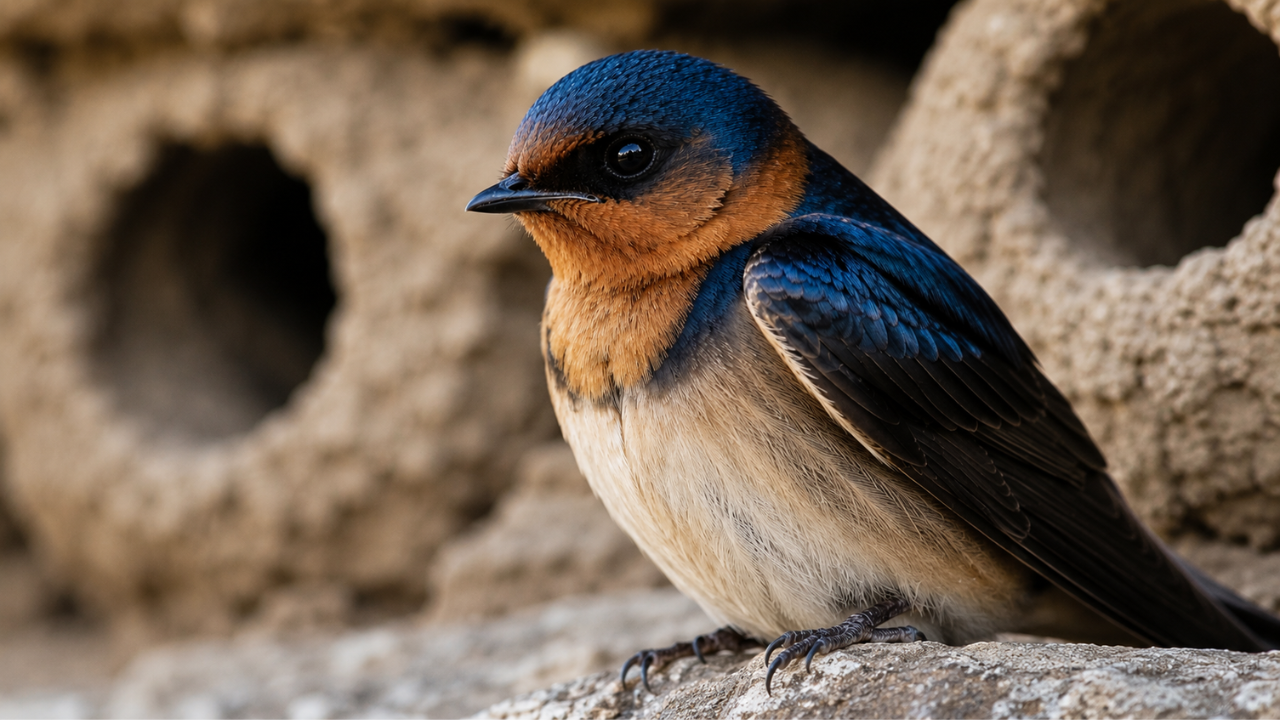
Every year on March 19, the world looks toward a small Southern California town expecting a miracle of nature. For decades, the narrative was set in stone. The cliff swallows would wrap up their six-thousand-mile journey from Argentina and land precisely at Mission San Juan Capistrano on St. Joseph’s Day. It inspired songs, books, and a massive tourism boom.
Then, the birds stopped showing up.
It did not happen overnight, but by the late 2000s, the skies above the historic mission were completely empty. The famous swallows had abandoned the very walls that made them a global phenomenon. For a town built entirely around this avian romance, it was a cultural and economic disaster.
The story of how San Juan Capistrano lost its birds, and the lengths to which scientists and locals went to bring them back, tells us a lot about what happens when human development clashes with nature. It takes more than wishful thinking to fix an ecosystem.
The Day the Skies Went Quiet
To understand why the birds left, you have to look at what made the mission attractive to them in the first place. Cliff swallows are master builders. They construct gourd-shaped nests out of mud pellets, gluing them to vertical surfaces with overhanging ledges that offer protection from the elements and predators. The rough, historic stone walls of Mission San Juan Capistrano were perfect.
During the late twentieth century, the town grew rapidly. Orange groves turned into strip malls. Open fields became master-planned communities. As urbanization took over, the local environment changed.
The turning point came during a massive, necessary stabilization project on the ruins of the Great Stone Church in the 1990s. The structure was crumbling and unsafe. Builders reinforced the walls and smoothed out the rough surfaces to preserve the historic masonry.
In doing so, they inadvertently destroyed the old nests and made the walls too slick for new mud to stick.
Birds are pragmatic creatures. They do not care about local folklore or tourism revenue. When the mission became inhospitable, they looked elsewhere. They found modern infrastructure. Concrete highway overpasses, bridges, and the eaves of newly built suburban homes offered ideal nesting spots. The swallows did not stop coming to the region. They just stopped coming to the town center. They moved to the suburbs.
Enter the Swallows Whisperer
By 2010, the situation was dire. The annual Swallows Day Parade still drew crowds, but tourists were left staring at empty skies. The town was celebrating a ghost.
The mission leadership realized that waiting for nature to heal itself was a losing strategy. They reached out to Dr. Charles Brown, a professor of biological sciences at the University of Tulsa and the leading authority on cliff swallow behavior.
Dr. Brown understood that cliff swallows are intensely social animals. They nest in massive colonies because it provides safety in numbers and helps them forage for insects more efficiently. They actively look for signs of previous successful nesting before they commit to a site. If a young swallow flies over an empty building, it assumes the spot is dangerous or lacks food.
To bring them back, the team had to trick the birds into thinking the mission was already a thriving colony.
First, they built the infrastructure. Dr. Brown and local artisans created artificial nest starter cones made of ceramic plaster. They bolted these human-made nests under the eaves of the mission walls, giving the birds a head start so they would not have to build from scratch on the slick stone.
Next came the auditory illusion. The mission installed a sound system designed to play recorded cliff swallow vocalizations. Every morning during the migration season, the courtyard echoed with the sounds of a bustling colony. The goal was simple. Lure the scouts down from the sky.
A Slow Return and a Local Celebration
The strategy required patience. The birds did not return in a massive wave the first year. Instead, a few curious scouts investigated the plaster nests.
Over several seasons, the audio decoys and artificial nests did their job. A few pairs stayed. They raised chicks. Those chicks returned the following year, bringing more birds with them. The illusion became reality.
Today, while the colony at the mission is not as massive as it was in the mid-twentieth century, the birds are present again. The community did not just watch from the sidelines. The return of the swallows revitalized local conservation efforts and breathed new life into the annual festival.
The Fiesta de las Golondrinas, which culminates in the Swallows Day Parade, has shifted its focus. It is no longer just a celebration of an old legend. It is an educational event highlighting urban wildlife management. The parade remains one of the largest non-motorized parades in the country, filling the streets with equestrian units, dancers, and marching bands.
Lessons in Urban Conservation
What happened in San Juan Capistrano is happening in cities across the globe. Wildlife adapts to human structures, often in ways we do not expect. When we modify those structures, we break a delicate chain of animal behavior.
If you want to support urban wildlife in your own area, you can take immediate action without waiting for a university professor to step in.
Identify native birds in your neighborhood and understand their nesting habits before undertaking major home renovations. Keep local water sources clean, as birds rely on mud and water for nest building. Plant native vegetation that supports the insect populations these birds need to feed their young.
Preserving nature in a developing world requires active, deliberate management. San Juan Capistrano learned that lesson the hard way, but their success shows that with the right mix of science and community effort, it is possible to welcome nature back home.