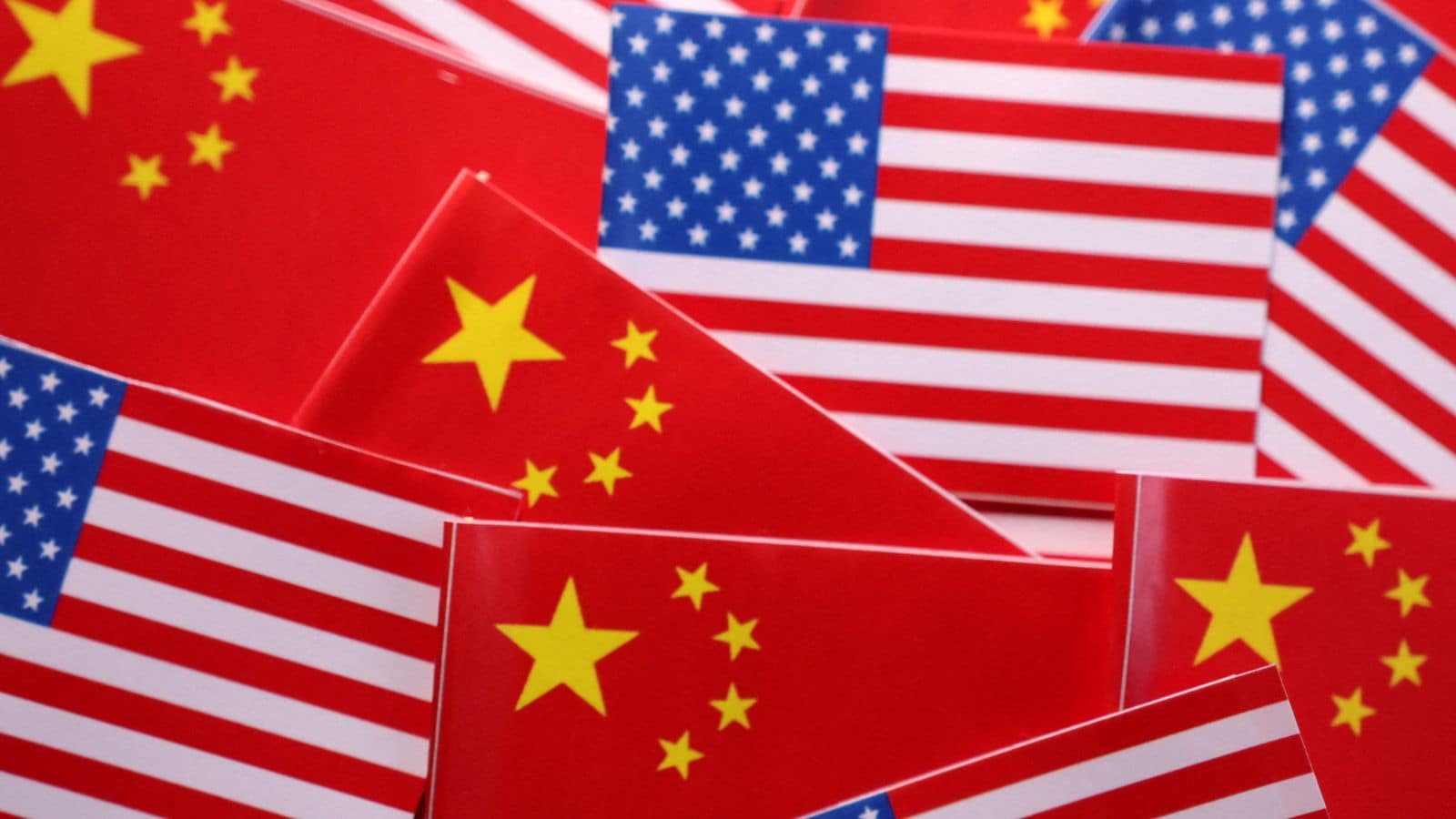
The coffee cups are empty. The condensation on the glass windows of the Manhattan high-rise mirrors the chill settling over the East River outside. Inside, twenty-four people sit around a table crafted from dark walnut. Ties are loosened. Sleeves are rolled up. Outside these walls, eight million people rush through neon-lit canyons, oblivious to the fact that the architecture of their tomorrow is being quietly debated in this exact room.
Marcus checks his watch. 3:14 AM. Time bends differently under fluorescent lights.
He is not a politician. He is a trade attaché, a man who spends his career translating political fury into tariff schedules and compliance metrics. Across the table sits a counterpart from Beijing, a veteran negotiator whose expression resembles polished granite. Between them lies a thick stack of briefing documents, red-penned annotations, and coffee-stained memos.
The official headlines will call it a routine trade dialogue. The financial tickers will flash minor fluctuations depending on whether the morning briefing sounds optimistic or grim. But anyone who understands the gears of global power knows better. This is not about soybeans or shipping containers today.
This is about silicon and shadows.
For decades, globalization was sold as an unvarnished promise. It was painted as a frictionless highway of cheap goods, open borders, and shared prosperity, where commerce would naturally dissolve geopolitical friction. We were told that if two nations traded enough widgets, they would never rattle sabers. But trees do not grow to the sky, and supply chains do not remain apolitical forever. The highway turned out to have cliff edges, and the widgets turned out to carry dual-use technology.
Consider what happens next in the quiet corridors of modern industry. Two distinct forces collide in New York this week. On one side, the staggering, untamed acceleration of artificial intelligence—systems capable of rewriting code, diagnosing diseases, and predicting financial panics before human traders blink. On the other side, the enduring, volatile gravity of Middle Eastern geopolitics, anchored by the silent pressures surrounding Iran's economic arteries.
Why are trade teams hashing out intelligence protocols and petroleum corridors in the same breath? Because modern commerce cannot be separated from modern survival. When code can move markets and algorithms can dictate supply chain vulnerabilities, every silicon chip becomes a geopolitical chess piece.
Let us step back into the room.
The Chinese delegation speaks first on algorithmic governance. The translation hums through tiny earpieces, a mechanical voice echoing a human one. The argument is structural, rooted in state-guided stability and the belief that technological velocity without containment is a recipe for systemic collapse. The American delegation listens, arms crossed, weighing innovation against security, market freedom against national survival.
They are talking about neural networks. They are talking about computing power measured in floating-point operations per second. But beneath the technical jargon lies a deeper, older human anxiety. Control. Who gets to decide how smart our machines become? Who holds the kill switch when autonomous systems begin making decisions that no human mind can fully audit?
Marcus remembers his daughter sketching pictures of robots on the kitchen table back in Virginia. She drew them with big, smiling eyes. She thinks technology is a friend. She does not know about neural weights, training clusters drawing as much electricity as a small city, or the silent race to achieve sovereign supremacy over artificial intelligence. If she did, she might not draw smiles.
Yet fear is a poor negotiator. Both sides know that a total technological decoupling is economic suicide. The supply chains are too deeply entangled. You cannot unmake a globalized economy with the stroke of a pen, no more than you can unring a bell. Every smartphone, every electric vehicle battery, every cloud server relies on an intricate, invisible web spanning two hemispheres. To sever it is to plunge both nations into an economic dark age.
So they talk. They haggle over export controls, chip architectures, and compliance verification. Every concession is measured in billions of dollars and millions of jobs.
Then the conversation pivots. Not with a shout, but with a quiet slide of a new dossier across the polished wood.
Iran.
At first glance, trade negotiators discussing Middle Eastern geopolitical friction seems mismatched. Trade is about commerce, contracts, and customs ports. Diplomacy is about treaties, aircraft carriers, and nuclear pacts. But in the twenty-first century, those boundaries have dissolved into a single, interconnected battlefield.
Energy prices dictate inflation. Inflation dictates elections. Elections dictate trade policies. And beneath all of it lies the steady, nervous flow of crude oil through maritime bottlenecks, complicated by decades of sanctions, proxy networks, and diplomatic standoffs.
When Iranian supply lines shift or tankers navigate troubled waters, the ripples hit manufacturing hubs in Guangzhou and logistics centers in Chicago within hours. The trade teams are not here to solve the Middle East. They are here to build firewalls. They are trying to ensure that geopolitical flashpoints do not detonate the fragile global economic recovery that working families depend on for their daily bread.
Listen to the silence in the room after the word Iran is spoken.
It is a heavy silence. It is the sound of history pressing down on the present.
The American negotiator leans forward. He does not raise his voice. Diplomats of this caliber rarely do; authority is inversely proportional to volume. He points out the rising costs of maritime insurance, the disruptions in shipping lanes, the downstream effects on high-tech manufacturing components that require uninterrupted power and stable logistics.
The Chinese representative responds with data on alternative energy procurement, bilateral agreements, and the steady flow of commodities that bypass traditional Western financial architecture. They are playing a multi-dimensional game of chess where every move has three simultaneous consequences.
This is the hidden cost of modern globalization. We built a world where everything is connected, which means everything is vulnerable. A disturbance in the Strait of Hormuz can stall an assembly line in Shenzhen, which delays a product launch in Silicon Valley, which alters the retirement portfolio of a teacher in Ohio.
We forget this when we look at stock tickers. We forget that behind every red and green number is a human story of cause and effect.
Consider a factory worker in Suzhou. She spends her shift assembling precision sensor modules that will eventually be installed in autonomous logistics vehicles. She has never heard of New York high-rises or trade delegations. Yet, right now, twenty-four people in a Manhattan boardroom are debating regulations that will determine whether her factory keeps running next month or goes silent.
Consider a software engineer in Seattle. He writes code for machine learning optimization, believing his work exists in a purely digital domain of pure logic. Yet his algorithms rely on hardware components sourced through complex trade agreements that are currently being hammered out, clause by clause, across a walnut table thousands of miles away.
We live in a web of invisible dependencies.
The meeting stretches past four in the morning. The coffee machine in the corner of the room has given up, sputtering a final drop of dark liquid into a paper cup. Tempers do not flare—professionalism is too deeply ingrained for outbursts—but exhaustion leaves its fingerprints on every face. Eyes are bloodshot. Posture slumps.
A compromise begins to take shape. Not a grand, sweeping treaty that will solve the tensions of the century. That is impossible. Instead, it is a series of guardrails. A mechanism for communication. A mutual agreement on what lines neither side will cross without warning.
Incrementalism.
It is unglamorous. It will not make front-page banners with shouting headlines. It will not satisfy ideologues on either side who demand total victory or total destruction. But incrementalism is what keeps the lights on. It is the invisible grease in the wheels of human civilization.
Marcus looks at the draft text glowing on his laptop screen. Paragraph four, subsection b. A modest agreement on AI safety information sharing and maritime trade security channels. It is imperfect. It leaves too many questions unanswered. It defers the hardest decisions to another day, another meeting, another room just like this one.
Yet it is something.
Outside, the first faint smear of grey dawn begins to stain the New York skyline. The dark silhouette of the bridges over the East River emerges from the night. Below, delivery trucks are starting their engines. Streetlights click off one by one.
The negotiators stand up. Chairs scrape against hardwood. Hands are shaken—firmly, professionally, with just enough warmth to signal mutual respect without yielding an inch of strategic advantage. Briefcases snap shut.
They will return to their respective capitals by evening. They will brief their superiors, draft memos, and prepare for the next round of talks in Geneva or Beijing. The world will keep spinning. Markets will open. Algorithms will process billions of data points in microseconds. Oil tankers will move across dark oceans.
And Marcus will pack his laptop, walk out into the cool Manhattan morning, and look for a fresh cup of coffee.
He knows the peace they negotiated is fragile. He knows the technological race is accelerating faster than any bureaucracy can track. He knows the geopolitical friction points are not going away.
But he also knows that as long as people are still sitting across tables talking instead of shouting, the worst-case scenario remains postponed.
And in a world wired for chaos, postponement is sometimes the closest thing we get to a miracle.