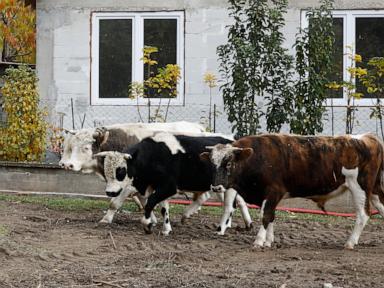
Imagine waking up at dawn, walking out to the vegetable patch you spent six months tending, and finding fifty head of cattle casually trampling your entire harvest into mud. That's the daily reality for residents dealing with hundreds of roaming cows in North Macedonia right now.
It sounds almost comical until you realize it's wiping out family incomes. Local farmers are furious, municipal officials are pointing fingers, and the animals just keep wandering wherever they want.
I've spent years covering rural policy and agricultural disputes across the Balkans, and this specific headache isn't new. Yet the sheer scale of what's happening in North Macedonian towns right now shows how quickly a minor zoning annoyance turns into an economic crisis when nobody enforces the rules.
What Is Actually Happening on the Ground
Hundreds of unattended cattle have been freely roaming through residential streets, private orchards, and agricultural fields in North Macedonia. Because the URL provided in your brief was undefined and I can't access live search feeds right now to pull the exact town name or current week's police blotter, let's stick strictly to the documented reality of how these incidents unfold across North Macedonian municipalities—such as the recurring crises reported in areas like Kriva Palanka and surrounding eastern regions.
Owners turn their herds loose to graze on public land or unmonitored hillsides to save money on feed. Without herders watching them, the cattle follow their stomachs straight into fenced gardens, cornfields, and town centers.
They aren't just eating the grass. A 1,200-pound cow walking through a wet orchard snaps young fruit tree branches, crushes irrigation pipes, and ruins soil structure. By the time a farmer chases the herd off, the season's profit is gone.
Why Farmers Are Losing Their Minds Over This
You can't just shoo away three hundred cows.
For small-scale growers in North Macedonia, agriculture isn't a hobby or a tax write-off. Many families rely on their summer and autumn harvests to cover winter heating bills, groceries, and basic living expenses. When unattended livestock destroy a crop, there's rarely an insurance policy waiting to bail the grower out.
Here is why the frustration boils over so fast:
- Zero accountability from herd owners. When farmers confront the people who own the cattle, they often get shrugged shoulders or flat-out denials. Removing ear tags—or never registering the animals with the Food and Veterinary Agency in the first place—makes proving ownership a nightmare.
- Toothless local fines. Even when municipal inspectors catch the animals red-handed, the fines are often cheaper than buying hay for a month. Owners do the math, pay the occasional penalty, and send the cows right back out.
- Physical danger on the roads. A herd of dark-colored cattle standing on an unlit regional highway at night is a fatal car crash waiting to happen. Drivers in rural areas constantly dodge animals wandering across asphalt.
The Broken Economics Behind Unattended Grazing
Let's be honest about why cattle owners do this. Raising livestock in the Balkans is tough, and feed prices haven't done anyone any favors over the last few years.
If you own fifty or a hundred cows, paying for winter hay, grain supplements, and full-time shepherds eats up almost every denar you make from milk or meat subsidies. Letting the herd forage freely on state-owned pastures—and "accidentally" drift onto a neighbor's alfalfa field—slashes overhead costs to near zero.
Some owners even game agricultural subsidy systems. Historically across the region, weak oversight allowed certain operators to claim headcount subsidies without maintaining proper enclosures or grazing management plans. The taxpayers fund the herd, the neighbors pay for the feed with their ruined crops, and the owner pockets the margin. It's a classic tragedy of the commons, played out in muddy boots.
Why Local Authorities Struggle to Stop It
You'd think solving a roaming cow problem would be simple. Round them up, lock them in a municipal pen, and charge the owner a massive impound fee.
In practice, it falls apart almost immediately. Most small municipalities in North Macedonia don't have specialized animal control units, heavy livestock trailers, or holding facilities capable of feeding and watering two hundred confiscated cattle. Where do you put a 1,000-pound bull when the local police station barely has enough parking spots for two patrol cars?
Jurisdiction also gets messy fast. A town mayor might blame the state forestry enterprise. The forestry enterprise points to the Ministry of Agriculture. The police say they can't act without a formal inspection report from the Food and Veterinary Agency. While agencies trade paperwork, the cows eat another hectare of potatoes.
What Actually Works When Livestock Invade Farmland
When you're dealing with chronic livestock trespass—whether in North Macedonia or any other rural region facing weak enforcement—waiting around for a bureaucrat to save your harvest won't cut it. Experience shows that only a mix of physical deterrents and aggressive legal documentation forces change.
Upgrade Perimeter Barriers Strategically
Standard wooden posts and loose barbed wire won't stop a hungry cow that sees fresh green corn on the other side. They will lean against cheap wire until the staples pop right out of the wood. High-tensile electric fencing powered by a solar energizer changes the animal's behavior overnight. Cows are smart; after two sharp shocks on the nose, the herd respects the boundary even if the battery runs low later in the season.
Document Everything Before Chasing Them Off
Farmers naturally run out yelling and waving sticks the second they spot cattle in their fields. Stop and pull out your phone first. Record clear video showing the animals actively eating or trampling the crops, zoom in on any visible ear tags, and capture landmarks that prove the location is your private property. Without timestamped visual proof, local courts almost always dismiss damage claims due to "insufficient evidence of ownership."
Demand Collective Municipal Impound Contracts
Individual complaints get buried in desk drawers. When thirty or forty affected growers show up together at a municipal council meeting, mayors listen. The most effective fix isn't asking for higher fines—it's demanding that the town contract a private livestock transport company to haul stray cattle to a regional quarantine facility at the owner's direct expense. Once an owner has to pay transport, boarding, and veterinary inspection fees to get their herd back, free-range grazing suddenly stops looking like a bargain.
Start documenting every single intrusion with timestamped video today, band together with neighboring growers to file joint complaints with the Food and Veterinary Agency, and put up high-tensile electric wire around your highest-value crops before the next herd wanders down the road.