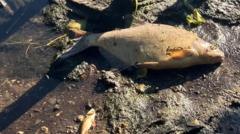
Hundreds of dead fish washing ashore during a heatwave is not merely a consequence of warm air. It is a systemic ecological failure driven by the invisible collapse of dissolved oxygen in freshwater ecosystems. When atmospheric temperatures spike, waterways face a double jeopardy. The water holds less physical capacity to retain oxygen, while the metabolic rates of aquatic life accelerate, demanding more.
Thermal pollution and climate stress create an immediate crisis for rivers and lakes. Water temperature dictates chemistry. As ambient heat climbs, molecular activity increases, driving dissolved oxygen out of the liquid column and into the atmosphere. At the same time, the fish populations inhabiting these systems experience skyrocketing respiration demands. Cold-blooded organisms cannot regulate their internal temperatures. When their environment warms, their bodily functions speed up. They burn through energy faster, swim harder to survive, and require higher volumes of oxygen just to maintain basic cellular respiration.
The math of this biological equation guarantees disaster. Oxygen supply plummets while demand spikes. By the time floating carcasses appear on the surface, the aquatic ecosystem has already endured hours of total suffocation.
The Anatomy of a Thermal Suffocation Event
Most people assume fish die of literal boiling when water temperatures rise. That is rarely the case. Long before water reaches temperatures that cause thermal tissue damage, it crosses a physiological threshold where oxygen starvation takes over.
Freshwater rivers rely on a delicate balance of mechanical aeration, photosynthetic activity, and atmospheric diffusion to maintain healthy oxygen levels. Healthy rivers typically maintain dissolved oxygen concentrations between 6 and 10 milligrams per liter. When readings drop below 4 milligrams per liter, sensitive species enter distress. Below 2 milligrams per liter, mass mortality occurs within hours.
During a prolonged heatwave, several compounding factors destroy this balance:
- Stagnant Flow: High-pressure weather systems bring drought conditions, reducing river discharge rates and eliminating the turbulent mixing that normally oxygenates moving water.
- Algal Explosions: Excessive heat combined with agricultural nutrient runoff triggers massive phytoplankton blooms. While these algae produce oxygen during peak daylight through photosynthesis, they consume massive amounts of oxygen at night through respiration, creating lethal pre-dawn oxygen crashes.
- Microbial Decay: As organic matter in the sediment warms up, decomposing bacteria multiply exponentially. These bacteria consume vast quantities of dissolved oxygen, effectively starving the higher life forms in the water column.
This is not a sudden accident. It is a predictable chain reaction. We have built drainage basins, concrete channels, and agricultural networks that strip rivers of their natural resilience. When the heat hits, the system lacks the buffers required to absorb the shock.
Beyond the Surface Narrative
Official press releases from local environmental agencies often default to safe explanations. They point to the weather. They mention the exceptional seasonal temperatures. They call it a natural anomaly.
That framing lets municipal planners, industrial dischargers, and agricultural regulators off the hook.
Weather is the trigger, but human modification of the landscape is the loaded gun. Rivers constrained by concrete levees cannot access their natural floodplains, where cool groundwater and shaded shallows would provide thermal refuges for fish. Upstream dams release stagnant, warm bottom-water from reservoirs rather than aerated surface water. Factory farms and municipal wastewater treatment plants pump heated effluent and nitrogen-rich waste into waterways, feeding the algal blooms that choke the life out of the current long before the thermometer peaks.
When a river loses its canopy of riparian trees due to commercial development or agricultural clearing, it loses its shade. Exposed to direct sunlight all day, a shallow river absorbs thermal energy rapidly. By mid-summer, the water is already operating near its stress limit. A standard heatwave then pushes the system past the breaking point.
The Regulatory Blind Spot
Environmental protection frameworks are poorly equipped to handle acute thermal shocks. Water quality standards often focus on chronic toxicity, heavy metals, and chemical pollutants. Temperature criteria exist in theory, but enforcement is reactive rather than preventative.
Monitoring stations are spaced miles apart, leaving massive blind spots. By the time telemetry sensors record a dissolved oxygen collapse, the fish kill is already underway. Agencies respond by cleaning up the dead biomass to prevent public health hazards, but they rarely pursue systemic remedies.
Consider the role of industrial cooling water discharge. Power plants and manufacturing facilities withdraw millions of gallons of river water for cooling, returning it at significantly elevated temperatures. While permits usually dictate maximum discharge temperatures, these limits are rarely tightened during regional heatwaves when the receiving waters are already dangerously warm. Regulators permit status-quo operations until the ecosystem breaks.
Rebuilding Resilient Watersheds
Fixing this crisis requires a complete overhaul of how we manage freshwater resources. We cannot control every heatwave, but we can radically alter how our watersheds respond to thermal stress.
First, riparian restoration must become a mandatory infrastructure priority. Planting dense corridors of native trees along riverbanks cools the water through shade, dropping summer peak temperatures by several degrees. A cooler river retains significantly more dissolved oxygen.
Second, water management authorities must rethink dam operations. Environmental flows must be legally mandated, ensuring that reservoirs release water strategically during heatwaves to maintain adequate current, depth, and oxygenation downstream.
Third, nutrient loading must be curbed at the source. Agricultural runoff is the primary fuel for the algal blooms that consume summer oxygen. Enforcing stricter buffer strips around farm fields and limiting fertilizer application immediately prior to forecasted dry spells will prevent the biological over-enrichment that turns rivers into dead zones.
We have treated rivers as industrial plumbing for over a century. We channel them, warm them, and drain them. Each summer brings higher temperatures and harsher droughts, testing the limits of these altered systems. The floating fish are an early warning signal. Ignore them, and the next casualty will not be confined to the water.