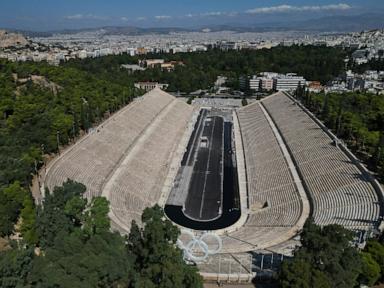
Preserving ancient stone architecture under modern urban stress requires balancing material conservation with high-frequency public utilization. The ongoing restoration of the Panathenaic Stadium in Athens represents a rare convergence of structural asset management, private capital allocation, and high-stakes ceremonial timing. Built entirely from Pentelic marble—the identical stone used for the Acropolis—the 47-tier U-shaped structure known as the Kallimarmaro is undergoing its first systematic cleaning and conservation intervention since its 1896 reconstruction. Analyzing this project reveals how historic infrastructure can be optimized for contemporary utility without compromising material authenticity.
The Conservation Mechanics
When managing carbonate stone structures exposed to environmental weathering and heavy pedestrian footfall, the primary constraint is avoiding aggressive abrasion. Pentelic marble possesses a crystalline structure susceptible to surface micro-fracturing if subjected to high-pressure media or chemical stripping agents.
The Hellenic Olympic Committee, operating under the technical supervision of architect and archaeologist Manolis Korres alongside Culture Ministry conservators, selected a controlled low-pressure water application method. This protocol rejects harsher alternatives like aggressive laser ablation or chemical washes in favor of targeted physical hydration and suction extraction.
- Targeted Particulate Removal: The intervention focuses on clearing accumulated organic layers, atmospheric carbon deposits, and biological growth rather than stripping the natural patina of the marble. Shaded tiers experience higher rates of moisture retention, leading to accelerated biological colonization (moss and lichen growth) compared to sun-exposed zones.
- Contaminant Mitigation: Specialized thermal steam lances are deployed to target localized deep-set lipophilic compounds, primarily hydrocarbon-based chewing gum residues that have bonded with the calcium carbonate matrix over decades of public events.
- Runoff Management: Unlike traditional open-wash methods that risk driving dissolved pollutants deeper into porous stone sub-layers, mobile vacuum recovery units capture wastewater concurrently at the point of application.
The Asset Financing Framework
The restoration economics of public monuments typically suffer from municipal budget constraints and shifting political priorities. The Kallimarmaro project bypasses public expenditure constraints through a structured private-public partnership model. Capital Maritime & Trading Corp., a major shipping enterprise, fully underwrites the renovation program.
This corporate sponsorship model protects taxpayer funds while providing the Hellenic Olympic Committee with immediate liquidity to execute a comprehensive capital expenditure roadmap. Beyond the marble cleaning, the funds cover foundational electromechanical upgrades:
- Sub-surface Infrastructure: Replacement of the deteriorated running track to meet modern athletic performance standards.
- Illuminative Engineering: Installation of contemporary LED lighting arrays designed to enhance architectural depth without emitting localized heat stress onto vulnerable stone sections.
- Operational Readiness: Upgrades to support facilities to ensure compliance with international event hosting standards.
Operational Bottlenecks and Scheduling Pressures
Executing a monumental conservation project on a compressed timeline introduces distinct operational bottlenecks. The immediate priority involves finishing the sphendone (the curved end of the stadium) ahead of the September 10 torch-handover ceremony for the Dakar Youth Olympic Games. This tight deadline requires a phased logistical rollout:
[Phase 1: Sphendone Core] ---> (Deadline: Sept 10 Ceremony) ---> [Phase 2: Lateral Tiers] ---> (Project Completion: Dec 2026)
The tension between accelerated milestone delivery and meticulous conservation science creates risk. Rushing water-pressure application across steep 47-degree tiers increases the probability of incomplete particulate extraction in complex masonry joints. To mitigate this, labor deployment has been organized into specialized units focusing on high-impact zones first, deferring lower-traffic perimeter walls to the final phase extending through the remainder of the year.
Strategic Lifecycle Management for Ancient Venues
The long-term viability of the Panathenaic Stadium depends on shifting from reactive maintenance to predictive asset health monitoring. Historically, the venue has functioned as a dual-purpose asset: a sacred symbolic anchor for the Olympic Movement and a commercial rental space for rock concerts, fashion shows, and cultural exhibitions.
Each event category imposes distinct degradation vectors:
- High-Impact Foot Traffic: Soft-drink spillages introduce organic sugars that accelerate bacterial and fungal growth within micro-fissures, while stiletto heels create localized impact point-loads capable of chipping crystalline edges.
- Acoustical Vibrations: Heavy bass frequencies from commercial concerts transmit mechanical shear forces through the masonry bed, potentially destabilizing mortar joints in historical retaining walls.
To protect the newly restored marble matrix, operational protocols must introduce strict load-bearing thresholds and post-event chemical neutralization routines. The ongoing intervention serves as a baseline reset. Future preservation depends on enforcing strict preventative wear limits rather than relying on century-long remediation cycles.