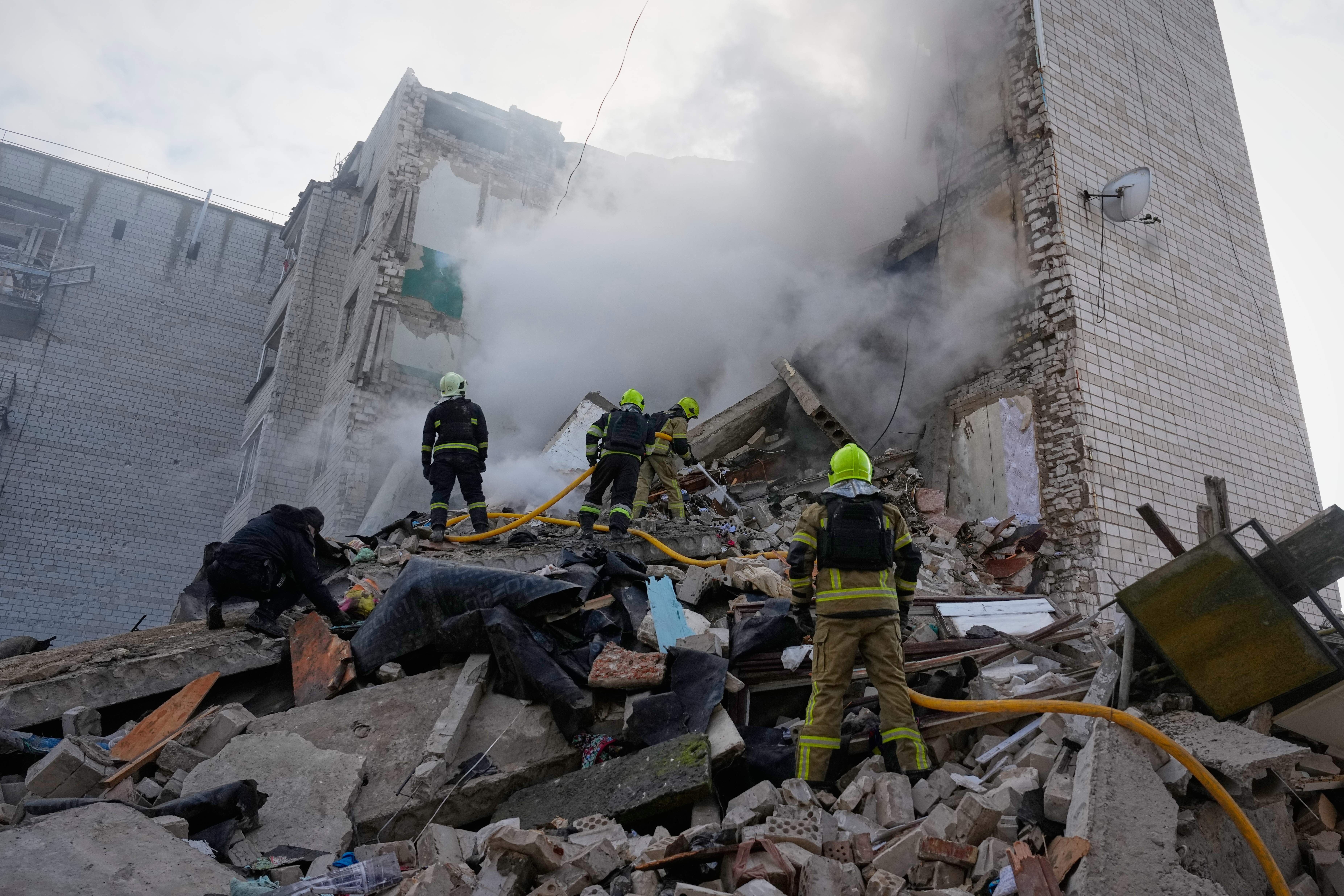
Dust. That is the first thing that greets you when you step back onto a street that spent months under occupation or artillery fire. It coats the lemon leaves until they look like gray felt. It settles inside your teeth when you speak. You can sweep it off a porch in the morning, and by noon the wind off the hills brings another layer back, fine as flour, smelling faintly of cordite, lime, and old stone.
I have stood in border towns long after the sirens stopped and watched people try to recognize their own front doors. Not their grandfathers' doors. Their own. The ones they painted seafoam green or walnut brown six months earlier, before a convoy rolled past the olive grove and the neighbors started packing suitcases with frantic, trembling hands. Watching Lebanese villagers return to wrecked homes as the Israeli army pulls back is not a tidy television segment about troop movements and diplomatic timelines. It is a slow, disorienting reckoning with space, memory, and what survives when walls come down.
A Door That Opens onto Sky
News dispatches love clean verbs. Pull back. Withdraw. Return. Advance. Those words make a border look like a sliding door on a stage set, pushed open by generals and walked through by civilians on cue.
Reality is much messier.
Consider a hypothetical family—let us call them the Haddad household, living in a stone house on a ridge overlooking terraced orchards in southern Lebanon. They are a composite of families I have met along the Blue Line, drawn here to make the abstract friction of a military pullback concrete. Suppose Nabil and his wife, Layla, left with two bags each when bombardment intensified, leaving behind a gas stove, three decades of wedding photos in a cedar chest, and a half-finished coat of plaster on the back bedroom.
Months pass. Truces are announced, tested, broken, renegotiated. Word spreads through WhatsApp voice notes and local radio that Israeli forces are pulling back from specific sectors or positions. A checkpoint thins out. A road that had been cratered and blocked is cleared enough for sedans and pickup trucks to crawl forward.
Nabil drives back first. His hands grip the steering wheel so tight his knuckles ache. He expects damage—a shattered window, maybe a cracked roof beam from nearby concussions. He is prepared to be angry. He is prepared to be sad. He is not prepared for the way his brain stumbles when the landmarks fail.
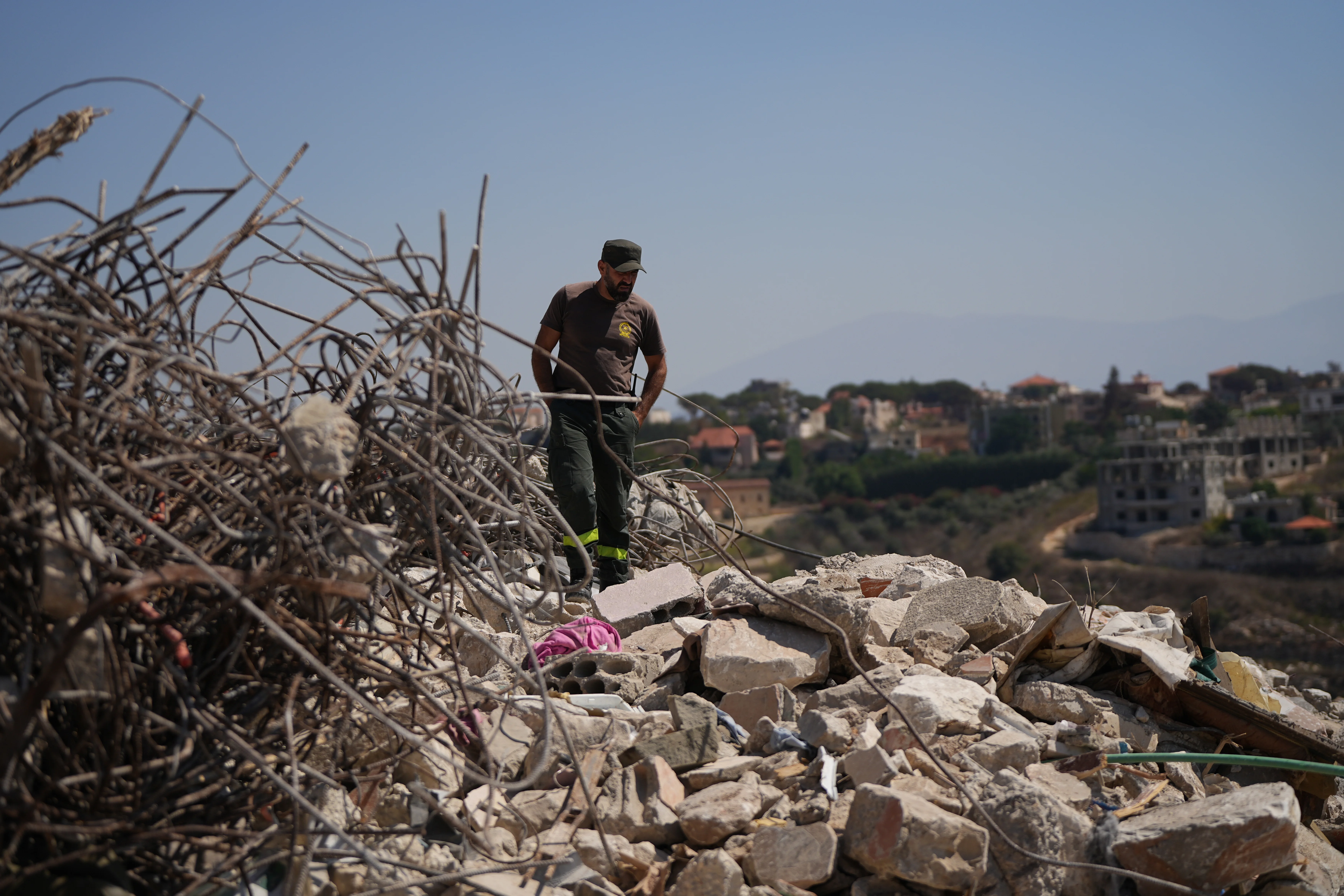
A fig tree he planted when his daughter learned to walk is sheared in half. The lane leading to his gate is buried under tumbled concrete from a neighbor's collapsed second floor. When he finally reaches his own threshold, the front wall is gone, leaving a ragged shelf of cinderblock and exposed rebar open to the valley breeze. A child's plastic sandal sits upright in the rubble, untouched, absurdly intact.
How do you grieve a room that still partially exists? A total ruin is almost easier for the mind to file away. A half-standing house plays tricks on you. You walk toward where the kitchen sink used to be and step over a pile of twisted copper pipe and pulverized tile. You reach for a doorframe that leads straight into briars and sun.
That disorientation is the invisible stake behind every headline about villagers returning home. A soldier's withdrawal is a tactical adjustment on a map. For the resident, it is an abrupt collision between memory and rubble.
The Quiet Geography of Fear
People outside the region often ask a straightforward question: why go back right away if the situation is still fragile?
It sounds logical from a distance. Wait until everything is settled. Wait until demining teams finish every lane, until electricity poles are restrung, until international monitors confirm every line is quiet.
Wait.
Easy word to type. Nearly impossible to live when your livelihood, your elders, and your sense of self are tied to soil you cannot afford to abandon forever.
In border villages across southern Lebanon, land is not merely real estate. It is family history written in dry-stone walls, ancient olive trunks, and water rights passed down through generations. When families are displaced to Beirut, Sidon, or Tyre, they do not simply move into comfortable apartments waiting for them. Many crowd into cramped rentals, schools, or relatives' living rooms, burning through savings while prices climb and jobs stay scarce. Rent drains cash. Waiting drains dignity.
Then there is the simpler, fiercer pull of presence. When people hear the Israeli army is pulling back from an area, many feel an urgent need to see with their own eyes what happened to their property before looting, weather, or squatter pressure makes things worse. They want to rescue what can be rescued—tools, family documents, copper wiring, livestock feed—before another wave of escalation locks the gate again.
Yet returning immediately carries sharp, hidden hazards. Unexploded ordnance hides in tall grass, under collapsed masonry, and along field edges where children might wander looking for scrap metal or familiar play spots. Infrastructure—water pipes, transformers, clinics, roads—takes far longer to repair than a battalion takes to redeploy. A pullback on paper does not automatically turn the tap back on.
I have seen that tension on people's faces at makeshift checkpoints. Relief and dread occupy the same breath. You want to kiss the dirt of your village, and at the exact same second you scan the ridge line wondering if the quiet will hold until sundown.
Why Pullbacks Rarely Feel Like Peace
To understand why a military withdrawal sparks both jubilation and unease, it helps to step back from the immediate headlines and look at the broader history of southern Lebanon.
Decades of conflict have layered memory upon memory here. From the 1978 incursion and the 1982 invasion to the eighteen-year occupation that ended in May 2000, the war in 2006, and the intense clashes that flared again across 2023 and 2024 into fragile ceasefires and staggered withdrawals, border communities have lived inside a recurring cycle. Entry. Entrenchment. Clash. Pullback. Reconstruction. Dread.
Think of it like a tide rolling over a sandcastle. Even when the water retreats and leaves a strip of wet sand bare, everyone on the beach knows the ocean has not vanished. You can rebuild the turret, sure. You can pack the wet sand tight and press shells into the wall. Still, you keep one eye on the surf.
Because residents have lived through this rhythm before, a pullback rarely feels like a permanent ending. Many villagers treat it as a window—a precious, uncertain opening to breathe, inspect the damage, bury the dead properly, or salvage belongings—rather than a guaranteed peace.
Diplomacy and military redeployment move on their own clocks, shaped by security buffers, ceasefire mechanics, political bargaining, and broader regional pressures. Villagers live on human time. They care about whether the school roof leaks before winter rain sets in, whether the olive harvest can still be pruned, and whether their kids will sleep through the night without jumping at the sound of a backfiring truck.
When those two clocks clash—strategic timelines on one side, daily survival on the other—friction is inevitable. A pullback can look like progress from a capital city or a diplomatic table while looking like a perilous, half-finished limbo to someone sweeping glass out of a bedroom floor.
What Gets Left Behind in the Rubble
Let us be honest about what we do not know in real time during any pullback.
We do not always know how many unexploded shells lie buried beneath a single collapsed wall. We do not know how quickly reconstruction funds will actually reach families whose savings are already gone. We do not know whether political agreements will hold next week, next month, or next year.
Admitting that uncertainty matters. Pretending every return is a triumphant homecoming—or pretending every pullback is meaningless—flattens real human lives into talking points.
What we can see clearly, whenever families make that slow trip back toward the border, is the stubbornness of attachment. Human beings are strange, resilient creatures. Even when a place has brought heartache, smoke, and loss, it holds the smell of your mother's kitchen, the path you walked to school, the graves of people who loved you.
You see an older man sitting on an overturned plastic crate beside a shattered wall, drinking bitter coffee from a thermos while his sons clear chunks of concrete with crowbars. You see a woman kneeling in the dirt trying to gather scattered notebooks or a dented brass pot. You see teenagers taking photos on cracked phone screens—partly to document losses for aid claims, partly just to prove to themselves that the neighborhood once looked whole.
Nothing about that scene is neat. Nothing about it fits cleanly into a thirty-second broadcast clip.
Yet that quiet determination is the story beneath the story. Governments draw lines and move troops. Families carry the weight of what happens between those lines.
When the dust settles on a border road and the last armored vehicle clears the bend, the war does not simply evaporate in a puff of relief. The real work begins in the quiet—measuring what is broken, deciding what can be mended, and standing amid the ruins of an ordinary life while wondering what tomorrow will bring.