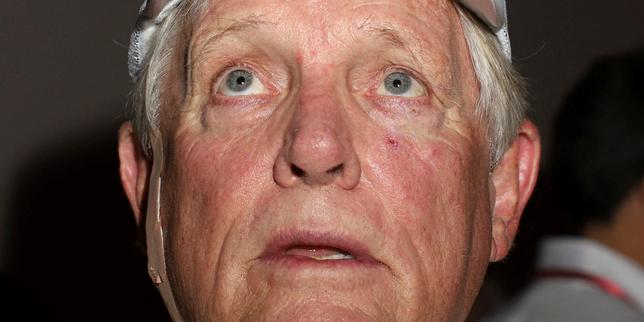
Silence. That is what settles over a campaign watch party long before the television networks actually call the race. It is not the dramatic, cinematic silence of a movie theater before the credits roll, nor the dignified quiet of a cathedral. It is a heavy, humid stillness, smelling faintly of lukewarm pizza, spilled domestic beer, and the sudden, collective realization that the math simply refuses to bend.
According to news reports and election night coverage, including French outlet Le Monde and major American networks tracking the November 2026 midterm elections, the political coalition aligned with President Donald Trump suffered significant, unexpected setbacks across key battleground states. While pundits in Washington and Paris reduced the night to flashing red and blue graphics, viral video clips of stunned commentators, and cold percentages on a screen, the real story unfolded far away from the studio lights. It happened in suburban kitchens, at union halls in the Rust Belt, and in the quiet hesitation of voters standing behind cardboard privacy screens with a black felt-tip pen in their hands.
To understand what happened in November 2026, you have to step away from the highlight reels of politicians looking grim at podiums. You have to look at the invisible weight people carried into the voting booth.
The Arithmetic of Exhaustion
Elections are rarely won on grand ideological treatises; they are decided at the intersection of expectation and daily life. When Donald Trump returned to the White House following the 2024 presidential election, his movement promised a rapid, unmistakable restoration—lower grocery bills, an energized manufacturing base, and a decisive end to political gridlock. For millions of Americans, that promise was not an abstract talking point. It was a lifeline.
Consider a hypothetical voter—let us call her Elena—a forty-two-year-old logistics coordinator living outside Grand Rapids, Michigan. Elena is not a cable news addict. She does not attend rallies, nor does she donate to political action committees. In 2024, she voted for the Republican ticket because her weekly supermarket receipt had climbed by forty percent over four years, and she believed a disruption in Washington would jolt the economy back into balance.
By the autumn of 2026, however, Elena’s reality looked stubbornly familiar. While macroeconomic indicators debated by economists on television showed mixed signals—some sectors cooling, others grappling with tariff-induced price adjustments and persistent housing costs—Elena’s household budget remained tight. Her property taxes had gone up. Her car insurance premium had jumped twice in eighteen months. When she turned on the television in October 2026, she did not see lawmakers debating supply chains or municipal tax relief; she saw endless hearings, partisan brinkmanship, and cultural battles that felt entirely disconnected from the price of eggs and diesel.
Multiply Elena by several million voters across Pennsylvania, Wisconsin, Arizona, and Nevada, and the visual shockwaves captured in election night broadcasts begin to make sense. History offers a clear, almost rhythmic warning to every sitting president: the midterm election is a referendum on patience. From Franklin D. Roosevelt in 1938 to Barack Obama in 2010 and Joe Biden in 2022, American voters have consistently used the two-year mark to pull the emergency brake when reality fails to match campaign rhetoric. In 2026, that historical gravity pulled down the governing coalition once again.
What the Cameras Missed in the Precincts
Media coverage of the 2026 midterms, particularly international dispatches framing the night as a "débâcle" for the Trump camp, naturally gravitated toward the most visceral images. Cameras captured empty chairs at victory celebrations in Florida and Texas. Microphones caught the tight, measured cadence of surrogates trying to explain why seats once considered safe were suddenly flipping or hanging by razor-thin margins.
Yet video footage of a watch party only shows the reaction, never the cause. If you spent time walking through suburban precincts in Bucks County, Pennsylvania, or Maricopa County, Arizona, during the final weeks of the campaign, the shift was palpable in the micro-interactions of ordinary people.
Door-knockers and local precinct captains—the unglamorous foot soldiers of American democracy—noticed it first. In 2024, anger had been a high-octane fuel. Voters opened their doors eager to vent, eager to argue, eager to wear their allegiance on their front lawns. By late October 2026, anger had curdled into something far more dangerous for an incumbent party: fatigue. People stopped answering the door. Yard signs stayed stacked in garages. When voters did speak, their questions were practical, pointed, and stripped of partisan loyalty.
Why hasn't the cost of living dropped?
Why are we still fighting the same battles from two years ago?
Who is actually fixing the roads and keeping the local hospital open?
This is the fundamental blind spot of modern political media. Television thrives on conflict, volume, and spectacle, which led many analysts to assume that high-decibel campaigning would automatically translate into high-turnout enthusiasm. Think of a political movement like an electrical grid. You can surge massive amounts of voltage through the wires—rallies, viral clips, aggressive messaging—but if the transformers in the neighborhoods are burned out, the lights still go dark. In 2026, the local transformers simply could not carry the load.
The Geography of a Shifting Coalition
Political analysts examining the 2026 results pointed to three distinct fault lines that fractured the coalition Republicans had assembled two years prior:
- Suburban Independents: College-educated and moderate voters in metropolitan ring counties, who had split their tickets or leaned right on economic issues in 2024, swung sharply back toward Democratic candidates. Many cited institutional instability and frustration over legislative gridlock in Congress.
- The Turnout Gap: Midterm electorates are notoriously smaller and older than presidential ones. Without Donald Trump himself physically appearing at the top of the ballot, a significant portion of low-propensity voters—individuals who show up every four years specifically for him—stayed home.
- Ticket-Splitting on Local Issues: In several states, ballot measures covering minimum wage increases, healthcare access, and state infrastructure drew voters to the polls who subsequently rejected Republican congressional and gubernatorial contenders down the ballot.
It is tempting to view these shifts as a permanent ideological realignment, a clean victory for one worldview over another. That would be a mistake. Having watched multiple election cycles up close, one learns that American voters rarely fall in love with the opposition; they simply fire the management. Democratic candidates in 2026 did not win because they discovered a magical new formula that erased voter skepticism. Many of them won precisely because they kept their heads down, avoided sweeping ideological promises, and positioned themselves as predictable, low-drama alternatives to constant political turbulence.
Even among seasoned strategists, the scale of the losses in certain districts prompted candid admissions of miscalculation. Campaigning on grievance works brilliantly when you are on the outside looking in, banging on the gates of power. Once you hold the keys to the White House and Congress, grievance becomes a liability. Voters look at the people in charge and ask why they are still complaining instead of governing.
The Invisible Stakes Behind the Headlines
When foreign newspapers publish headlines about a political collapse in Washington, readers abroad often interpret it as a sign of national paralysis or dramatic weakness. Inside the United States, the consequences are simultaneously quieter and more personal.
A shift in congressional power changes the trajectory of federal courts, alters the fate of tax provisions set to expire, and determines whether legislative committees spend the next twenty-four months drafting infrastructure bills or issuing subpoenas. For the Trump administration, losing leverage on Capitol Hill transforms the second half of a presidential term from a legislative sprint into a trench war of executive orders, judicial challenges, and budget standoffs.
Yet for the people who actually cast the ballots—people like our hypothetical Michigan logistics coordinator, Elena, or a retired machinist in Ohio watching his pension statements—the stakes are measured in much smaller increments. They are measured in whether a bridge gets repaired before winter, whether prescription drug caps hold steady, and whether the country feels like it is moving forward or merely spinning its wheels in the mud.
There is an uncomfortable truth embedded in the 2026 midterm results that neither party fully wants to confront. Modern American politics has become an industry built on permanent outrage, yet the overwhelming majority of citizens are exhausted by the noise. They do not want a revolution every two years. They want competence. They want predictability. They want to wake up on a Wednesday morning without feeling like the basic rules of their economy or their community are up for grabs.
When the television crews finally packed up their tripods in the early hours after Election Day, the fluorescent lights of high school gymnasiums and community centers across the country flickered off. Poll workers loaded metal ballot boxes into the trunks of sedans, their fingers stained faintly gray from paper and ink, driving home through empty streets where the campaign signs were already beginning to sag in the damp November air.


