European football governance has reached a breaking point with Red Star Belgrade. European football's governing body handed the Serbian powerhouse a 90,000 euro fine following explicit fan displays honoring the late Ratko Mladic.
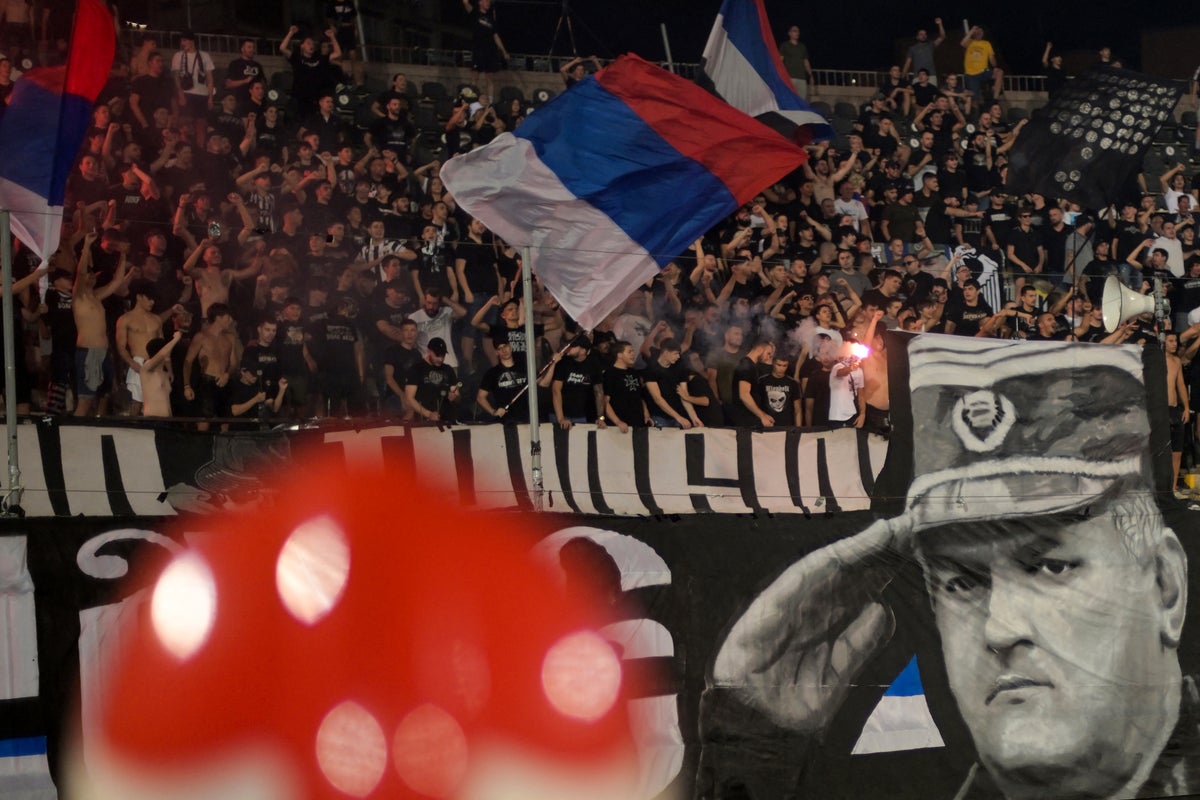
When Red Star traveled to Czechia for an August Europa League playoff match against Viktoria Plzen, the stadium atmosphere quickly turned political. The club's hardcore supporters, known as the Delije, chanted the former military commander's name and raised a large banner declaring, "General, eternal glory and thanks".
Mladic died at age 84 while serving a life sentence at the United Nations detention facility in The Hague. International courts convicted him of genocide, crimes against humanity, and war crimes, including orchestration of the 1995 Srebrenica massacre where over 8,000 Bosniak men and boys were killed. The timing of his death coincided directly with matchday, triggering the controversial tribute.
Institutional Complicity and Social Media Backlash
The disciplinary fallout went beyond standard stadium fines. Critics pointed out that Red Star's official club media channels actively amplified the offensive imagery. Photos featuring the banner praising Mladic appeared directly on the club's verified feeds.
That choice drew sharp condemnation from groups like the Srebrenica Memorial Center. They filed a formal complaint arguing that broadcasting these tributes transforms fan deviance into institutional policy. When a historic institution chooses to beam glorifications of a convicted war criminal to global audiences, it crosses from local hooliganism into systemic பிரச்சنة.
UEFA categorized the supporters' conduct as inherently discriminatory and racist. Beyond the 90,000 euro financial penalty, the club faces a ban on selling tickets to away fans for upcoming European fixtures, specifically targeting their Conference League match against Swiss side Lugano. Another suspended stadium ban hangs over the club on a two-year probationary period.
A Long History of Disciplinary Trouble
This is not an isolated incident for the 1991 European Cup champions. Red Star carries a lengthy rap sheet with UEFA's control and ethics body. Previous infractions involve racist chanting targeting marginalized groups, flare-ups during high-stakes matches, and prior instances of honoring nationalist figures.
European officials are running out of patience. Financial slaps on the wrist clearly fail to deter ultra groups who view disciplinary actions as badges of honor. Until executive leadership in Belgrade enforces strict internal bans and cuts ties with extremist factions, the club will remain trapped in this cycle of self-inflicted damage.
The path forward demands genuine accountability rather than perfunctory statements. European competition is a privilege, and repeated glorification of war criminals makes a mockery of sporting integrity. Red Star must choose whether they want to represent modern European football or remain anchored to toxic nationalist grievances.