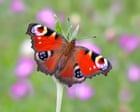
A sharp, erratic tapping woke me at dawn. It wasn’t the steady rhythm of rain on the glass, nor the heavy thud of a wood pigeon losing its footing on the gutter. It was light. Papery. Insistent.
When I pulled back the curtain, there it was. Balanced on the narrow white plastic of the window frame was a creature that looked like it had been spliced together from velvet and fire. Its wings pulsed open and shut, flashing a brilliant, crimson band against a background of midnight black, the tips dusted with a stark constellation of white spots. Meanwhile, you can read other events here: The $42 Guilt Trip and the True Cost of Dining Out.
A Red Admiral.
Most people in Britain recognize this insect, even if they can't quite name it on the spot. It is a staple of the British backyard, as woven into the fabric of our summers as the smell of cut grass or the sound of leather hitting willow on a distant cricket pitch. Yet, for generations, we treated this insect as a fleeting visitor, a beautiful vagabond passing through our lives before fleeing the harsh reality of the British winter. To understand the full picture, we recommend the excellent report by The Spruce.
But things have changed. The visitor has moved in.
Recently, the results of the massive, nationwide Big Butterfly Count confirmed what many backyard observers had long suspected. The Red Admiral has been officially crowned as Britain’s most spotted butterfly. For the first time in the history of the citizen-science project, this fiery traveler took the top spot, surging past traditional winners like the Gatekeeper and the Large White.
To understand why this matters, you have to understand the sheer scale of the effort behind that data. This wasn't a handful of scientists in lab coats peering through binoculars. This was an army of ordinary people. Close to a hundred thousand citizens stepped into their gardens, walked through urban parks, and paused in cemetery glades for fifteen minutes at a time, counting the wings that fluttered past.
Imagine a retired schoolteacher in Devon sitting on her patio with a cup of tea, ticking a box on her phone as a flash of red darts across her lavender. A few hundred miles away, a young kid in Leeds pauses his football game because something bright caught his eye on a patch of stinging nettles near the goalposts. These disconnected moments of observation, gathered by regular people doing regular things, coalesced into a massive dataset.
The numbers are staggering. Total sightings of the Red Admiral shot up by a massive 170 percent compared to the previous year.
For decades, the story of British wildlife has been a grim, monotonous list of decline. We hear about the hedgehog disappearing from the hedgerows, the song thrush vanishing from the morning chorus, and the steady, heartbreaking depletion of our native insect populations. Against that backdrop of loss, the sudden, explosive success of the Red Admiral feels like a jolt of pure electricity.
But this isn't just a simple feel-good story about a pretty bug. The rise of the Red Admiral is a symptom of a profound shift happening right beneath our noses.
Historically, the Red Admiral was a classic migratory species. Every spring, a heroic vanguard would set off from the warm, sun-baked landscapes of North Africa and Southern Europe. They would battle across the English Channel, tiny clots of life navigating immense winds, just to lay their eggs on the abundant nettle patches of the British Isles. When the autumn chills arrived, their offspring would instinctively head south again, fleeing the lethal frosts of the northern winter.
That was the rule. It was a rhythm set in stone for centuries.
Now, consider what happens next. The winters are losing their teeth. The bitter, prolonged frosts that used to lock the British landscape in ice for weeks on end are becoming rare anomalies. Our Januarys are increasingly damp, mild, and gray.
Because the cold no longer kills them, many Red Admirals are simply choosing to stay. They are overwintering right here, tucked away in the crevices of garden sheds, sheltered beneath the thick ivy climbing up suburban brick walls, or clinging to the bark of oak trees in local parks. They don't need to risk the perilous journey back across the sea because the environment they are in has fundamentally transformed.
The butterfly at my window wasn't just a beautiful insect. It was a living, breathing climate indicator. It was proof that the boundary lines of the natural world are blurring and shifting in real-time.
When you speak to conservationists, there is a distinct undercurrent of mixed emotion regarding this news. On one hand, there is genuine joy. Seeing a garden filled with these bold, inquisitive insects is a profound pleasure. They are not shy creatures; they will happily land on a brightly colored shirt or sip juice from a fallen, fermenting plum right at your feet. They bring a chaotic, tropical energy to the often-muted palette of the British countryside.
On the other hand, their dominance is a warning flare.
The same mild weather that allows the Red Admiral to thrive is wreaking havoc on other, more specialized native species. Butterflies like the Common Blue or the Small Tortoiseshell are struggling. They evolved to fit into a very specific ecological niche, relying on precise temperature cues to emerge from their chrysalises at the exact moment their food plants are at their peak. When the weather patterns become erratic, those perfectly timed connections unravel. The flowers bloom too early; the caterpillars hatch too late.
It is a stark reminder that in nature, there are rarely pure victories. Every gain for one species is often balanced by a silent, invisible struggle for another.
This reality became clear to me a few weeks after that first encounter at the window. I spent an afternoon in my neighbor’s garden, watching a patch of purple buddleia—the plant commonly known as the butterfly bush. A single Red Admiral dominated the largest flower spike. It was aggressive, actively chasing away a pair of smaller whites that tried to land nearby.
It was a microcosm of a changing world. The Red Admiral wasn't just surviving; it was taking over the space.
People often ask what they can do when faced with these sweeping ecological changes. It is easy to feel small, helpless, and entirely disconnected from the vast forces reshaping our planet. When the climate shifting is discussed in terms of melting ice caps and global temperature anomalies, the problem feels too massive for a single person to grasp, let alone influence.
But the Big Butterfly Count proves the exact opposite. It demonstrates that our individual, everyday choices have immense value.
By simply choosing to leave a patch of stinging nettles at the back of the garden instead of hacking it down, you are providing the crucial nursery for the next generation of Red Admiral caterpillars. By planting a pot of marigolds on a balcony, or letting a patch of dandelions grow in the lawn, you are creating a vital refueling station for an insect that might have just woken up from a winter sleep in February, desperate for energy.
Our backyards are no longer just private spaces for barbecues and lawnmowers. They have become the frontline of conservation. They are a vast, interconnected nature reserve that stretches across every town and city in Britain.
As the sun began to climb higher, warming the glass of the window, the Red Admiral stopped its frantic tapping. It spread its wings wide, soaking in the early morning radiation, absorbing the energy it needed to fuel its flight muscles.
With a sudden, snapping motion, it launched itself off the white frame. It danced through the air, a flash of fire and shadow, before disappearing over the fence into the wider world.
It left behind an empty pane of glass and a profound sense of perspective. The world we knew is changing, its rhythms shifting in ways we are only just beginning to map. We can choose to look away, to view the natural world as a dry collection of statistics and faraway problems. Or we can look closer, out our own back windows, and realize that we are active participants in a grand, unfolding story, shared with a resilient, flame-winged survivor that decided to make our home its own.