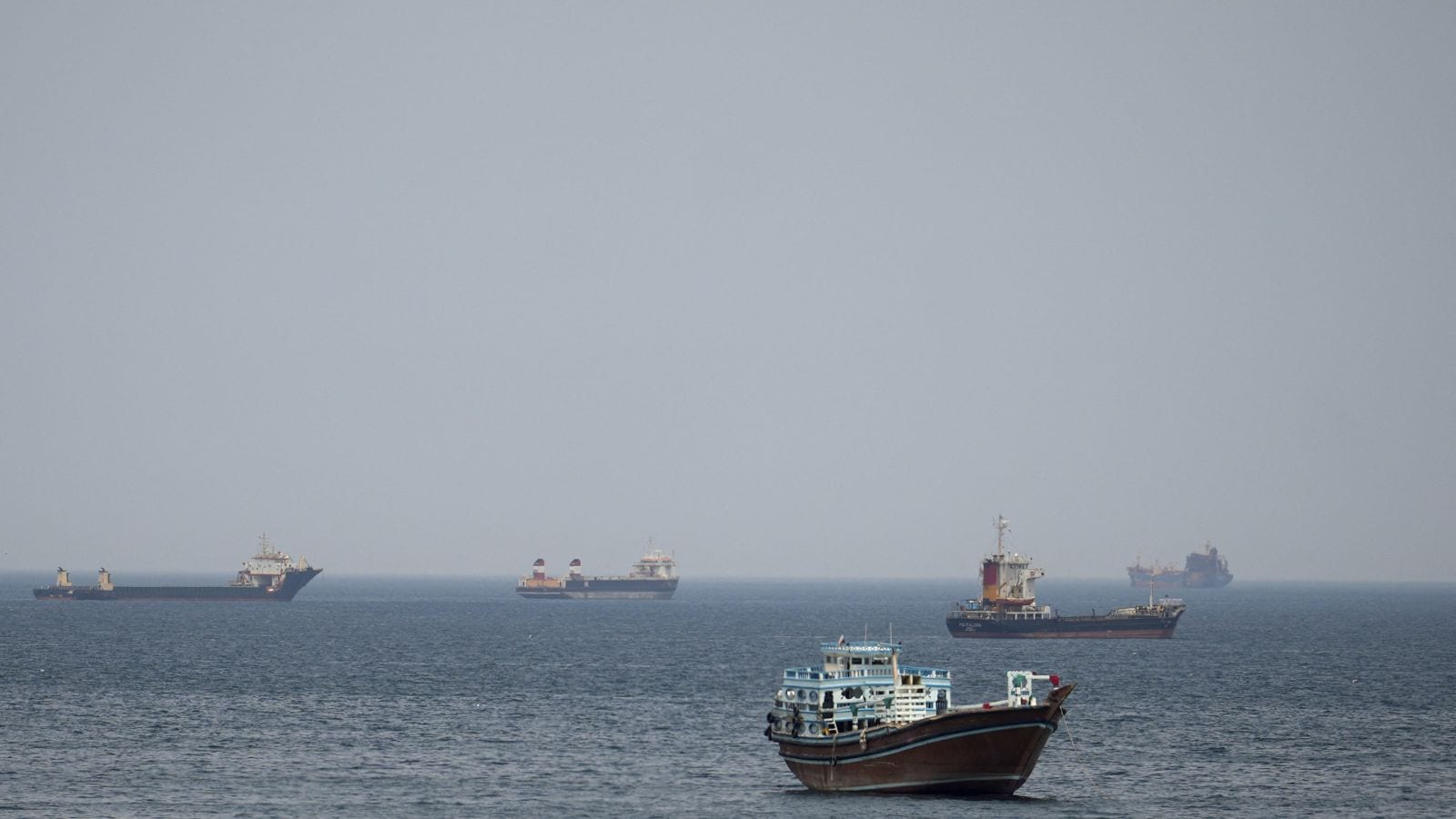
The maritime war between the U.S. and Iran just moved way beyond the Persian Gulf, and if you're watching gas prices, you should be worried. On Thursday, April 23, 2026, U.S. forces boarded and seized the Majestic X, a Guyana-flagged tanker, in the middle of the Indian Ocean. This isn't just another headline. It’s a massive escalation in a "tit-for-tat" cycle that’s now strangling global trade routes far from the actual combat zone.
You might think the conflict is contained to the Strait of Hormuz. It’s not. By hitting a vessel between Sri Lanka and Indonesia, the Pentagon is signaling that its blockade of Iranian oil is now global. If a ship has even a whiff of Iranian crude on it, it’s a target, no matter how many miles it is from Tehran.
The High Seas Chess Match
The seizure of the Majestic X didn't happen in a vacuum. It’s a direct response to Iran’s Islamic Revolutionary Guard Corps (IRGC) grabbing two container ships, the Epaminondas and the MSC Francesca, just a day earlier. Those ships were hauled into Iranian waters for allegedly breaching a blockade.
Honestly, we're seeing a breakdown of international maritime law in real time. The U.S. claims the Majestic X—formerly known as the Phonix—was a sanctioned "stateless" vessel helping Iran fund its war efforts. Iran, meanwhile, says it’s just defending its own backyard.
Why the Location Matters
- The Indian Ocean Shift: Most of the world's eyes are on the Strait of Hormuz, where 20% of global oil flows. But the U.S. is now hunting ships in the Indo-Pacific.
- The Tifani Connection: The Majestic X was intercepted near the same spot where U.S. forces grabbed the M/T Tifani earlier this week.
- China’s Stake: The Majestic X was bound for Zhoushan, China. By intercepting these ships, the U.S. is effectively cutting off the "dark fleet" that keeps the Chinese economy fueled with discounted Iranian oil.
Gas Prices and the $100 Barrel
If you've filled up your tank lately, you've felt the sting. Brent crude has officially crossed the $100 per barrel mark. That’s a 35% jump since this conflict kicked off in February. While Wall Street seems to be pretending everything is fine, the reality on the ground is different. Food costs are climbing because shipping insurance for cargo vessels has gone through the roof.
The Pentagon’s stance is blunt. They say they'll disrupt these "illicit networks" wherever they operate. But every time the U.S. seizes a tanker, Iran retaliates by harassing or capturing commercial ships in the Strait. It's a circle of chaos that basically guarantees energy prices won't stay down for long.
The Ceasefire That Isn't
President Trump extended a ceasefire on Tuesday, but it feels like a truce in name only. You can't really call it "peace" when one side is blockading ports and the other is firing on bridges of container ships. Iran has called the ceasefire extension "meaningless" as long as the U.S. naval blockade remains in place.
What This Means for Global Shipping
We're looking at a scenario where "flag of convenience" ships—vessels registered in places like Guyana or Botswana—are no longer safe. If the U.S. decides a ship is "stateless" or carries sanctioned cargo, they’re going to drop commandos onto the deck from a helicopter. I've seen the footage released by the Defense Department; it’s not a polite request. It's a full-scale military interdiction.
Ship owners are now terrified. If you're a captain, you're caught between a U.S. blockade and Iranian gunboats. The UK Maritime Trade Operations (UKMTO) is already reporting heavy damage to vessels that ignored Iranian "warnings."
- Check your supply chains: Anything coming through the Indian Ocean or the Persian Gulf is now at risk of delay or seizure.
- Energy stocks: Watch the volatility. The market hasn't fully priced in a total, long-term shutdown of the Strait.
- Insurance premiums: Expect "war risk" surcharges to become a permanent fixture on your shipping invoices.
The standoff is getting worse, and the "Majestic X" incident shows that the U.S. is willing to chase Iranian oil to the ends of the earth to win this economic war. Don't expect a quick resolution. This is the new normal for global trade.