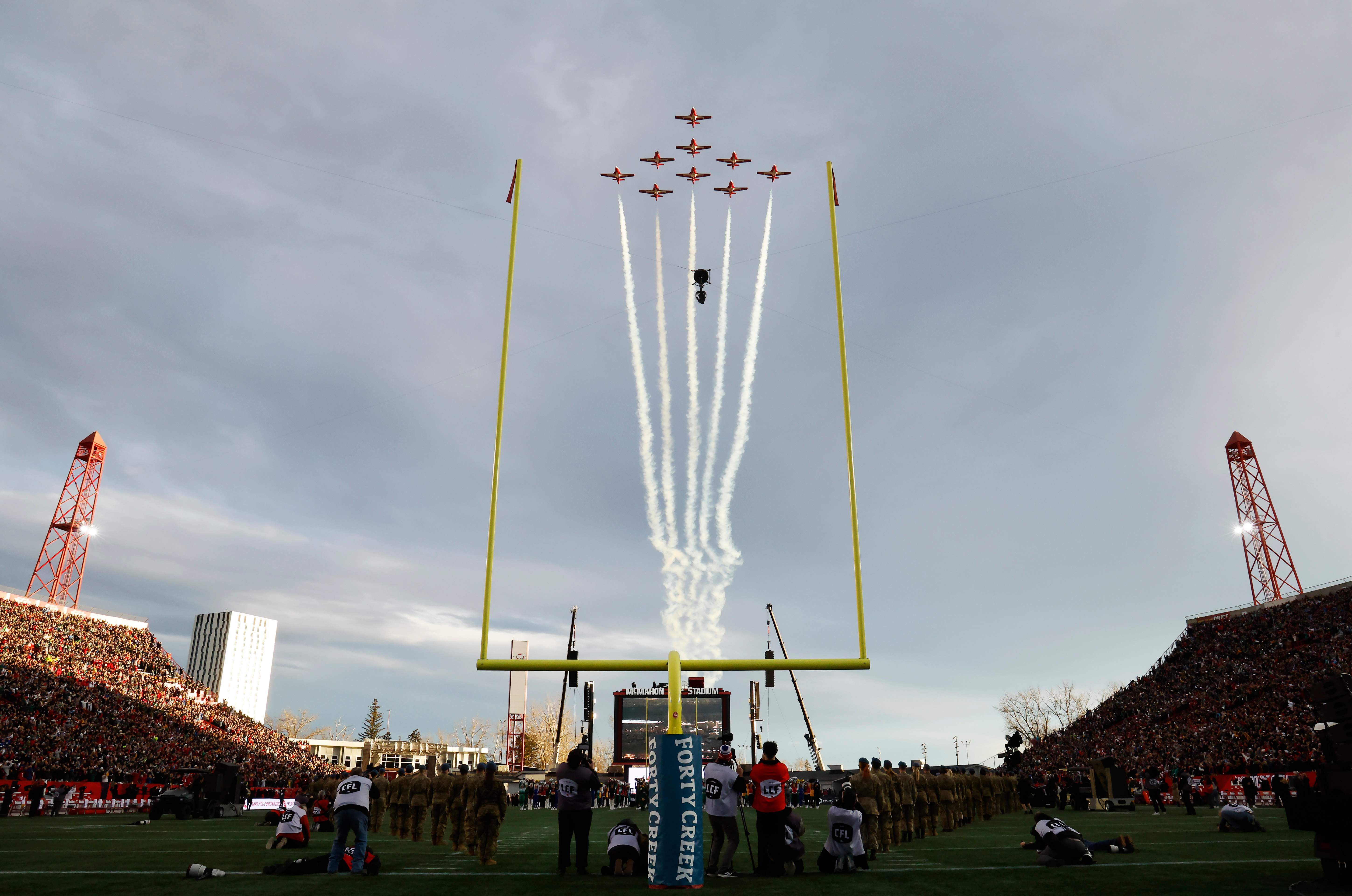
When the Royal Canadian Air Force’s iconic Snowbirds roared over the Grey Cup stadium in their CT-114 Tutor jets for the final time, the public saw a sentimental farewell to a six-decade aviation legend. Behind the red-and-white smoke trails, however, the retirement of the Tutor marks the overdue end of an expensive, high-risk maintenance crisis that pushed a 1960s-era trainer well past its structural and operational limits.
The 431 Air Demonstration Squadron has flown the Canadair CT-114 Tutor since 1971, making it one of the oldest airframes still performing precision aerobatics anywhere in the world. While fans cheered the emotional "It's been an honour" sign-off above the Canadian Football League’s championship game, military aviation analysts have spent years warning that keeping these vintage jets airworthy had become a logistical nightmare. Sourcing obsolete parts, managing metal fatigue, and maintaining safety margins in an aircraft designed during the Cold War required extraordinary effort from ground crews—and carried escalating financial and human costs.
The Anatomy of an Aging Icon
To understand why the Grey Cup flypast was both a celebration and a sigh of relief for defense planners, you have to look inside the airframe itself. Canadair designed the CT-114 Tutor in the late 1950s as a primary jet trainer for the RCAF, with the first prototype taking flight in January 1960. It was never engineered to spend fifty years pulling high-G formation maneuvers inches apart at low altitudes.
The Tutor’s appeal to demonstration pilots was always its predictability. Powered by a single General Electric J85 turbojet engine, the aircraft lacks modern fly-by-wire computers. Instead, it uses direct mechanical linkages between the pilot’s control stick and the flight surfaces. For precision formation flying, that analog feedback is gold. Pilots feel every subtle aerodynamic shift directly through their hands, allowing them to hold tight nine-ship diamond formations with millimeter-level discipline.
Yet that same simplicity became a liability over time. Because the Tutor lacks modern ejection seats capable of zero-zero recovery—meaning safe ejection at zero altitude and zero airspeed—pilots operated under narrow safety margins during low-level stadium flypasts and airshow routines. Every flight demanded intense vigilance not just from the pilots, but from the technicians inspecting stress fractures on airframes that had logged thousands of hours more than their original engineers ever anticipated.
The Supply Chain Stranglehold
Keeping a fleet of 1960s jets flying in the 2020s meant fighting a daily war against obsolescence. Canadair stopped building the CT-114 in 1966 after producing just over 200 units. By the time the RCAF retired the Tutor from its regular pilot training role in 2000, the Snowbirds became the sole operator of the type on Earth.
Being the world's only customer for a specific military aircraft destroys economies of scale.
When a hydraulic valve, canopy seal, or avionics component failed, technicians could not simply order a replacement off a shelf. Maintenance crews had to cannibalize retired airframes stored in boneyards, machine custom parts from scratch, or pay specialized defense contractors exorbitant sums to fabricate one-off components. Over the past decade, the Department of National Defence poured tens of millions of dollars into life-extension programs just to keep the fleet compliant with basic flight safety standards—upgrading radios, transponders, and navigation gear so the jets could legally enter modern civilian airspace around venues like the Grey Cup.
The Human Toll and Operational Pause
The nostalgia surrounding the final Grey Cup flypast often glosses over the sobering safety record that accelerated the Tutor’s exit. Aerobatic demonstration flying is inherently dangerous, regardless of the aircraft. However, aging hardware leaves zero room for mechanical error.
In May 2020, during Operation Inspiration—a cross-country tour meant to boost morale during the early months of the COVID-19 pandemic—a Snowbirds Tutor suffered a bird strike shortly after takeoff in Kamloops, British Columbia. The engine lost power at low altitude. Both crew members ejected, but Captain Jennifer Casey, the team’s public affairs officer, was killed when her parachute failed to fully deploy in time. The pilot, Captain Richard MacDougall, suffered serious injuries.
Two years later, in August 2022, another Tutor experienced an engine issue during takeoff in Fort St. John, British Columbia. The pilot managed to force-land the jet without fatal injuries, though the aircraft sustained heavy damage. Each incident triggered months-long operational pauses, grounding the squadron during peak airshow seasons and forcing exhaustive fleet-wide inspections.
Those groundings exposed a hard truth for Ottawa. The Snowbirds exist to serve as a premier recruiting tool and a visible symbol of Canadian aerospace excellence. When the jets spend half the summer grounded for emergency engine tear-downs or structural checks, the squadron cannot fulfill its core mission.
Why the Grey Cup Mattered So Much
Choosing the Grey Cup for the CT-114 Tutor’s ceremonial swan song was no accident. Few events in Canada command a larger, more unified national audience than the CFL championship. For decades, the pre-game or halftime flypast has been a staple of Canadian broadcast television, linking military tradition with national sport.
By staging the final public Tutor flight over the Grey Cup, the RCAF achieved two strategic goals at once:
- Maximum Cultural Resonance: Rather than quietly retiring the jets inside a hangar at 15 Wing Moose Jaw, Saskatchewan, the military gave Canadians a shared moment of closure. The "It's been an honour" message resonated precisely because generations of fans grew up watching those exact silhouettes bank over stadiums and summer waterfronts.
- Narrative Control: A high-profile, successful final flight allowed the Air Force to close the chapter on the Tutor on a triumphant note, shifting public conversation away from grounding orders, procurement delays, and aging-fleet criticisms toward the squadron’s proud legacy.
The Mechanics of a Stadium Flypast
Executing a stadium flypast looks effortless on television, yet it ranks among the most tightly choreographed tasks in demonstration aviation. Unlike an open-air waterfront show where pilots have miles of unobstructed horizon, a stadium sits inside dense urban airspace, surrounded by tall buildings, broadcast helicopters, and strict time constraints.
To hit the stadium roof at the exact second the national anthem ends, the Snowbirds rely on precise ground-to-air coordination. A mobile ground controller stationed inside the stadium monitors the live broadcast countdown and communicates directly with the team lead. Holding miles away in a designated orbit, the formation adjusts its airspeed down to the knot—burning or conserving fuel to arrive over the fifty-yard line within a two-second window.
For the final Tutor run, the wind conditions, cloud ceiling, and urban air traffic control had to align perfectly. Pulling off that final pass without a hitch was a testament to the discipline of the pilots and the tireless work of the ground crew who certified the jets one last time.
The Difficult Transition Ahead
Retiring the CT-114 Tutor solves the immediate problem of maintaining a museum piece, but it drops the RCAF straight into its next major hurdle: replacing it without losing the unique character that made the Snowbirds famous.
Modern military trainers do not fly like 1960s jets. Most contemporary air forces—including the RCAF through its Future Aircrew Training program—have moved toward turboprop aircraft like the Beechcraft T-6 Texan II or Pilatus PC-21 for basic and intermediate instruction, alongside advanced jet trainers like the BAE Hawk or Boeing T-7 Red Hawk for fighter pilots.
Each option presents trade-offs for a demonstration team:
- Turboprops offer exceptional fuel efficiency, modern digital cockpits, and low operating costs. However, propellers lack the visceral roar and visual drama of pure jet propulsion that crowds expect at major events.
- Modern Fighter-Lead-In Jets deliver thunderous speed and climb rates, yet they burn vastly more fuel, require massive runways, and operate at speeds that push formations wider apart—making it harder for spectators inside a stadium to keep all nine aircraft in view at once.
- Commercial or Light Attack Variants bridge some gaps, but modifying any airframe for inverted fuel systems, smoke-oil tanks, and formation lighting adds years of engineering certification and millions in taxpayer expense.
Canada has a long, documented history of sluggish defense procurement. Selecting, modifying, and certifying a replacement fleet—while retraining pilots and technicians who have spent their entire careers mastering the Tutor—means the Snowbirds face a complex transition period. Historically, when major air demonstration teams switch airframes, they often reduce their show schedules or fly smaller formations for a season or two while rebuilding their safety envelope from the ground up.
What the Tutor’s Exit Tells Us About Military Heritage
There is a tempting romance in keeping classic machinery alive. Aviation enthusiasts rightfully admire the engineering durability of an airframe that served through the Cold War, survived countless deployments across North America, and inspired thousands of young Canadians to pursue careers in aviation and engineering.
In reality, military aviation cannot run on nostalgia. Every dollar spent fabricating obsolete parts for a 60-year-old trainer is a dollar diverted from modern pilot training, Arctic sovereignty patrols, and fleet readiness. The technicians at Moose Jaw performed miracles keeping the CT-114 flying safely long after its contemporaries were melted down or parked on concrete pedestals outside Legion halls.
As the smoke from that final Grey Cup pass dissipated over the stadium turf, the Tutor earned its place in history not because it flew forever, but because its crews knew when the mission had outgrown the machine.