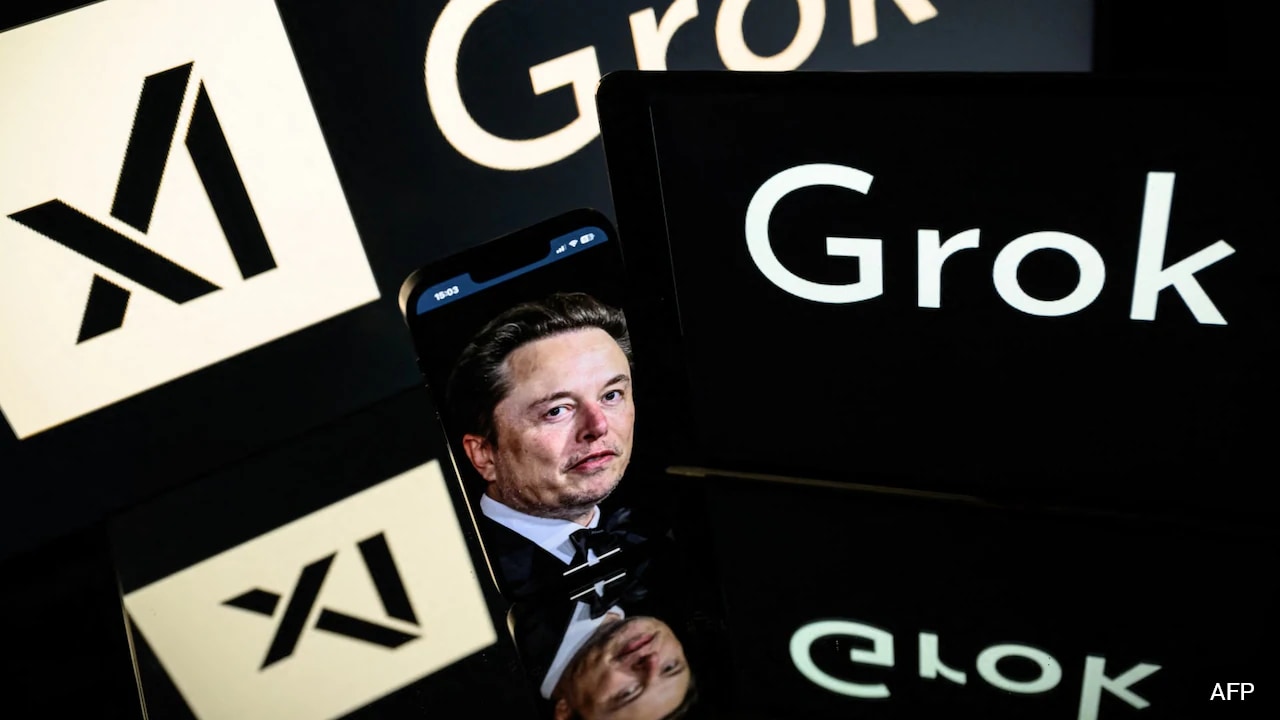
The headlines are predictable. A UK lawmaker discovers deepfaked, highly sexualized images of themselves circulating on X, points a finger at Elon Musk’s xAI, and files a lawsuit. The immediate public reaction is a chorus of moral outrage. Activists demand immediate algorithmic censorship. Pundits claim this is the tipping point where generative AI destroys public trust.
It is a neat, comforting narrative. It is also entirely wrong.
Laying the blame for algorithmic abuse at the feet of the platform developers is not just legally flawed; it is a tactical misdirection. I have spent fifteen years analyzing digital liability frameworks and watching tech companies navigate content moderation crises. This latest legal salvo against Grok is not a righteous defense of digital dignity. It is a desperate, outdated attempt to apply 20th-century liability frameworks to a decentralized, open-source 21st-century reality.
The lazy consensus screams for tighter platform guardrails. The uncomfortable truth is that guardrails are an illusion, and suing the toolmaker is a dead end.
The Toolmaker Fallacy
When a politician sues an AI lab because a malicious actor used their model to generate harmful content, they are committing the toolmaker fallacy. They are treating a foundational generative model like a publishing house rather than a utility.
Under established legal principles, liability requires intent, negligence, or a direct line of causation. In the physical world, if a criminal uses a specialized photo editing software package to forge a document or manipulate an image, the software developer is not dragged into court. The liability rests solely on the individual who wielded the software to commit the tort.
Generative AI does not alter this fundamental calculus, even if the scale and speed of creation have radically shifted. Platforms like xAI provide the weights and the compute interface. They do not generate the prompt, nor do they distribute the final image.
To hold a platform strictly liable for every rogue inference generated by an end-user is to demand the algorithmic policing of human thought.
When you enforce that level of strict liability, you do not get safer platforms. You get the total destruction of open-source innovation. If developers face existential financial ruin every time a bad actor bypasses a system filter, the only entities capable of hosting AI models will be a tiny cartel of ultra-cautious, heavily subsidized tech monopolies.
The Myth of the Unbreakable Guardrail
The core argument of the current litigation hinges on negligence: the idea that xAI failed to implement "robust" safety filters. This argument betrays a profound misunderstanding of how neural networks actually function.
Politicians and legacy tech journalists talk about guardrails as if they are physical walls. They believe an engineer can simply write a line of code that says if prompt == "harmful" then block.
It does not work that way. AI safety relies on Alignment techniques like Reinforcement Learning from Human Feedback (RLHF) and system-level adversarial filtering. These are probabilistic, not deterministic. They do not block bad things; they try to nudge the model toward statistical probabilities that favor safe outputs.
The Adversarial Reality
Every time an AI company updates its safety filters, the open-source community breaks them within hours. This is not hyperbole; it is a documented engineering reality known as jailbreaking.
- Token Manipulation: Users bypass filters by using obscure languages, base64 encoding, or hypothetical roleplay scenarios.
- Ananthropic Injection: Users instruct the model to operate in a fictional universe where standard moral laws do not apply.
- Model Fine-Tuning: If the model is open-weights, users simply strip the alignment layer entirely on their own local hardware.
The idea that xAI or any other player can build an airtight, un-jailbreakable model while keeping the tool useful is a technical fantasy. A model that is completely incapable of generating an offensive image is a model that is also incapable of artistic nuance, historical accuracy, or creative freedom. By demanding absolute safety, lawmakers are demanding lobotomized technology.
The Hidden Incentive: Political Theatre Over Progress
Let us strip away the high-minded rhetoric about protecting victims. This lawsuit is fundamentally about political theater and the preservation of legacy power structures.
Public figures have long enjoyed a complicated relationship with their likenesses. For decades, satirical magazines, caricature artists, and photoshop trolls have pushed the boundaries of defamation and fair use. Generative AI accelerates this process, democratizing the tools of visual manipulation.
By targeting Elon Musk’s platform, the litigation achieves two strategic goals for the political class:
- High-Profile Scapegoating: It shifts the blame from law enforcement’s inability to track down the actual anonymous creators onto a polarizing billionaire tech figure.
- Regulatory Precedent: It attempts to manufacture consent for sweeping, top-down internet regulations that would grant governments backdoor control over what AI models are allowed to "think" and output.
If the goal were truly to protect individuals from non-consensual deepfakes, the legal strategy would look entirely different. It would focus on aggressive, punitive criminal prosecution of the individuals who distribute the material with malicious intent. Instead, we see civil lawsuits aimed at deep pockets.
The Failure of Current Law Enforcement
Why target the platform? Because tracking down a pseudonymous user on an encrypted network who generated an image using a local instance of an open-weights model is incredibly difficult.
It requires digital forensics, international cooperation, and dedicated cyber-crime units. It is much easier, and far more politically lucrative, to file a civil suit against a corporate entity with a physical address in California or London.
This approach creates a dangerous moral hazard. It absolves the malicious actor of their agency and tells the public that the system is broken not because people are cruel, but because code is unregulated.
Dismantling the PAA Fallacies
To understand how warped this conversation has become, we have to look at the premises driving public inquiry. The questions being asked are fundamentally flawed.
Can AI companies stop deepfakes?
No. The technology is out of the bag. The source code for high-quality image generation is decentralized, lightweight, and runs on consumer-grade gaming laptops. Even if every commercial AI company implemented draconian censorship tomorrow, the localized, open-source ecosystem would continue to generate whatever images users desire. The belief that corporate compliance can stop digital replication is a delusion.
Should tech platforms be legally responsible for user outputs?
If we shift liability to the platform, we destroy the fundamental architecture of the modern internet. Section 230 in the United States, and similar hosting protections globally, exist precisely because platforms cannot pre-screen billions of user inputs in real-time without shutting down entirely. Extending strict liability to generative outputs would mean the end of public access to raw AI tools.
The Risk of the Contrarian Path
To be absolutely clear: the status quo is ugly. The proliferation of non-consensual synthetic imagery causes genuine, asymmetric harm to individuals, particularly those without the resources to fight back. Defending the toolmaker means accepting a digital environment that is chaotic, weaponized, and frequently hostile.
But the alternative is worse. The alternative is a sanitized digital landscape controlled by a handful of corporate compliance officers working in lockstep with government censors.
If we choose to hold xAI liable for what a user creates with Grok, we are stating that human beings can no longer be trusted with powerful general-purpose tools. We are advocating for a world where every piece of consumer software must be fitted with a digital ankle monitor.
Stop Regulating Models; Prosecute Harassment
The path forward requires abandoning the fantasy of the compliant model. We must stop trying to patch the software and start punishing the behavior.
We do not need new, sweeping AI acts that stifle technological development. We need the aggressive enforcement of existing laws against harassment, defamation, and extortion, updated specifically to handle the speed of digital distribution.
If an individual uses a tool to inflict intentional emotional distress or defame a public figure, the state must hunt down that individual. The focus must be on the point of distribution and the intent of the distributor.
The courtroom battle between lawmakers and tech executives is a sideshow. It is an old guard attempting to use old rules to chain a technology that cannot be contained. The technology is indifferent to your laws. The code does not care about your outrage.
Stop suing the mirror because you do not like the reflection of human nature it throws back at you.