On Veterans Day, November 11, 2026, a sentinel from the 3rd U.S. Infantry Regiment publicly reprimanded Defense Secretary Pete Hegseth, his wife, and a group of senior Pentagon advisers at the Tomb of the Unknown Soldier. As the Defense Secretary’s entourage posed for photographs and laughed near the marble sarcophagus following the annual Arlington National Cemetery ceremony, Army Specialist Thomas Iglesias halted his measured march, faced the group, and barked a standard but unmistakable order: "All visitors will maintain an atmosphere of silence and respect at all times".
Most cable news segments treated the clip as a fleeting viral embarrassment. They missed the point entirely. The sharp correction on the plaza at Arlington was not a quirky clash between a strict soldier and a forgetful politician. It was a collision between two irreconcilable cultures inside the modern American military establishment—one governed by unyielding institutional standards, and another driven by performative media politics.
What Actually Happened on the Marble Plaza
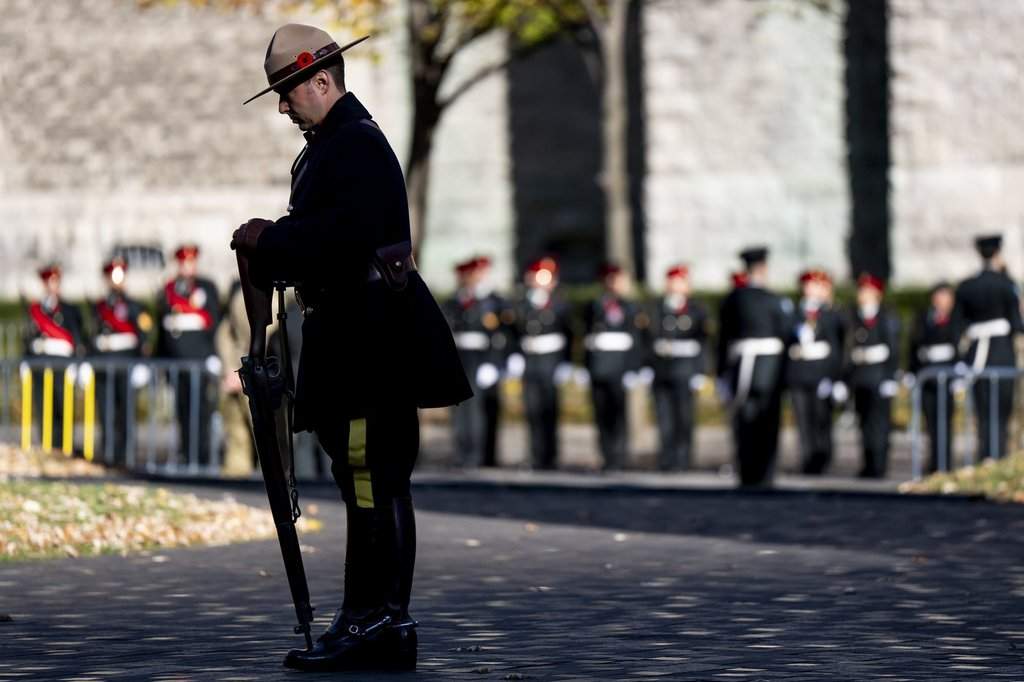
To understand why the moment resonated far beyond Washington, look closely at the mechanics of the Tomb Guard's protocol. Sentinels assigned to the Tomb of the Unknown Soldier—known colloquially as The Old Guard—operate under strict, non-negotiable rules of engagement. They take 21 steps down the black mat behind the tomb, turn, face east for 21 seconds, turn, face north for 21 seconds, and repeat the cycle 24 hours a day, 365 days a year.
When a visitor breaches the silence of the memorial plaza, the sentinel does not check rank, political affiliation, or security clearance. The protocol is binary. If noise or disruptive behavior intrudes upon the sacred ground, the sentinel breaks his cadence, brings his rifle to port arms, and issues a verbal warning to the crowd. According to past interviews with 3rd Infantry Regiment leadership, sentinels issue these verbal corrections two or three times a day to tourists who talk too loudly, cross the chains, or treat the memorial like a theme park backdrop.
What made November 11 different was the identity of the tourists. The group laughing during a photo op was not a busload of distracted middle schoolers. It was the civilian head of the Department of Defense—who has publicly branded the institution the Department of War—accompanied by his inner circle of political appointees.
The video captured by C-SPAN and network pool cameras shows the group chatting and laughing right after posing for pictures. Specialist Iglesias did not hesitate. His voice cut across the plaza with practiced authority. Hegseth and his staff immediately fell silent, visibly startled that the highest-ranking civilian in the Pentagon was subject to the exact same enforcement as an ordinary citizen.
The Pentagon's Rapid Damage Control
Within hours of the clip circulating online, the Pentagon's public affairs apparatus realized it had a serious optics problem. For a Defense Secretary who built his public persona on restoring "warrior ethos," lethality, and strict military discipline, being publicly dressed down by a junior enlisted soldier for lacking basic decorum was devastating.
Critics seized on the footage immediately. Former Republican congressman Adam Kinzinger called the behavior "truly abhorrent" and argued that "everything is a show to him". Democratic lawmakers, including Rep. Gwen Moore of Wisconsin, pointed to the clip as further evidence of what she termed "his utter lack of fitness for his office".
Rather than issuing a defensive excuse or attacking the media, Hegseth's team executed a swift pivot. The Pentagon released a statement confirming that the sentinel had "correctly and respectfully reminded everyone to maintain decorum".
The very next day, November 12, Hegseth invited members of the 3rd U.S. Infantry Regiment to his Pentagon office. In front of official military photographers, the Secretary pinned the Joint Service Commendation Medal onto Specialist Thomas Iglesias. Hegseth posted photos of the handshake on social media with a brief caption: "We love soldiers. We love standards. Well done, Specialist".
The Anatomy of a PR Pivot
That medal ceremony was shrewd political theater, yet it exposed a deeper tension. Awarding a commendation medal to a soldier simply for doing his routine daily duty—and doing it specifically because the recipient of his reprimand happened to be the Secretary of Defense—turns an institutional standard into a personal photo opportunity.
Consider the precedent. Hundreds of sentinels reprimand thousands of visitors every year without receiving a Joint Service Commendation Medal in the Secretary's office. Iglesias earned his badge through months of grueling preparation, memorizing dozens of pages of Arlington history, and passing rigorous uniform inspections where measurements are checked to the sixty-fourth of an inch. He did not need a medal to validate his adherence to the standard. The Pentagon needed the medal ceremony to neutralize a damaging news cycle.
The Political Pressure Cooker Behind the Scene
The Veterans Day incident did not happen in a vacuum. It unfolded during one of the most politically precarious weeks of Hegseth's tenure at the Pentagon.
Less than 24 hours before Hegseth walked onto the plaza at Arlington National Cemetery, he had narrowly survived an impeachment vote in the U.S. House of Representatives. The effort, forced to the floor by Kentucky Republican Rep. Thomas Massie and backed by House Democrats, accused the Defense Secretary of abusing his power and conducting unauthorized military operations, including controversial strikes in Iran and the detention of foreign leaders.
Although the House voted down the impeachment resolution on Tuesday afternoon, the political fallout was severe. Coming immediately after the 2026 midterm elections—where Republican lawmakers openly blamed the administration's handling of the conflict in Iran for voter backlash—Hegseth arrived at Arlington on Wednesday morning under intense bipartisan scrutiny. Even House Oversight Committee Chairman James Comer, a fellow Kentucky Republican, had publicly questioned the Pentagon's communication strategy.
When you examine the timeline, the behavior at the Tomb of the Unknown Soldier becomes easier to diagnose. Hegseth and his aides were operating in permanent campaign mode, treating every public appearance as content to be captured, packaged, and deployed against political enemies. At Arlington, that instinct collided with a space explicitly designed to reject politics, ego, and personal branding.
Why Tomb Protocol Exists in the First Place
To grasp why veterans and active-duty service members reacted so viscerally to the video, you have to understand what the Tomb of the Unknown Soldier represents inside military culture. It is not merely a monument to past wars. It is the physical manifestation of a sacred covenant between the American government and the men and women it sends into combat—a promise that even if a service member's remains are never identified, their sacrifice will never be forgotten or trivialized.
The rules governing the plaza are stripped of all modern distraction:
- No political campaigning. Federal law strictly prohibits partisan activities, speeches, or campaign photography inside national military cemeteries.
- No deference to rank. Once inside the plaza perimeter, a four-star general, a cabinet secretary, and a private first class are bound by the exact same expectation of silence.
- Continuous vigilance. The guard has never left its post since July 2, 1937, enduring hurricanes, blizzards, and national crises without interruption.
When senior Pentagon officials treat the immediate perimeter of the Tomb as a casual staging ground for smiling group photos, they signal a fundamental misunderstanding of the institution they lead. Leadership in the armed forces relies heavily on the principle that standards apply upward just as rigorously as they apply downward. A leader who demands strict discipline from troops deployed abroad cannot afford to appear casual about basic reverence at home.
The Collision of Two Military Cultures
There is a legitimate counter-argument worth acknowledging. Defenders of the Secretary note that human moments happen even in solemn settings, that staffers frequently coordinate photos during official visits, and that Hegseth himself did not argue with the guard or pull rank. By immediately complying with Specialist Iglesias's order and publicly praising the soldier the next day, Hegseth avoided the far worse mistake of letting his staff retaliate against a junior enlisted service member.
In an era when political appointees routinely try to bend institutional rules to suit their convenience, the fact that the sentinel felt completely empowered to bark an order at the Secretary of Defense is actually proof that the system works. Specialist Iglesias did not flinch because his training left zero room for hesitation. The standard was clear, the violation was audible, and the correction was immediate.
Still, the contrast between the soldier and the Secretary lingers. For nearly a century, the guards at Arlington have maintained their watch by stripping away everything extraneous—no smiles, no small talk, no cameras, no ego. They understand that true authority does not require an audience or a social media post to prove its strength.
Specialist Thomas Iglesias walked off the mat on Veterans Day having upheld an unbroken chain of discipline stretching back nearly ninety years. Twenty-four hours later, standing beneath the fluorescent lights of a Pentagon office while cameras clicked around him, he had to accept a medal just for reminding his boss how to behave at a grave.