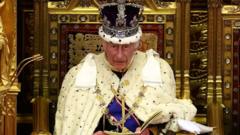
The Westminster machine has locked in May 13 as the date for the next King’s Speech, a high-stakes pivot occurring just six days after voters head to the polls for the 2026 local elections. This isn't a mere scheduling coincidence. It is a calculated tactical maneuver designed by Downing Street to either capitalize on a wave of local momentum or, more likely, to provide an immediate legislative distraction from potential losses in the devolved nations and English councils.
By placing the State Opening of Parliament on Wednesday, May 13, the government is ensuring that the traditional "pomp and circumstance" of the monarch’s arrival at the House of Lords will dominate the news cycle precisely when the post-mortem of the May 7 election results would otherwise be reaching a fever pitch.
The legislative firewall
The 2024-26 parliamentary session has been one of the longest in modern history, spanning roughly 22 months. This marathon session allowed the Starmer administration to push through a massive initial tranche of more than 50 bills, ranging from railway renationalization to significant planning reforms. However, the sheer length of this session has created a bottleneck.
As the May 13 deadline approaches, several high-profile pieces of legislation are at risk of falling into the "wash-up" period. If a bill does not clear both the Commons and the Lords before prorogation, it effectively dies and must be reintroduced from scratch in the new session.
The most contentious of these is the assisted dying legislation. Currently navigating a treacherous path through the House of Lords, the bill has faced accusations of deliberate filibustering by peers. Supporters are now looking toward the Parliament Act—a rare constitutional "sledgehammer"—to force the bill through if the Lords continue to block it in the next session. The timing of the King’s Speech sets a hard expiration date on these negotiations, forcing a "use it or lose it" moment for radical social reforms.
A shield against the Reform surge
The May 7 elections represent the first major electoral test for the government since its landslide victory, and the internal polling is reportedly grim. Reform UK, led by Nigel Farage, has maintained a dominant position in national opinion polls since early 2025 and is expected to make significant gains in both the Scottish Parliament and Welsh Senedd.
In England, the situation is equally volatile. While 29 councils have had their elections postponed until 2027 to accommodate local government reorganization, the remaining contests will serve as a referendum on the government’s fiscal discipline and its handling of the "net zero" transition.
By scheduling the King’s Speech for May 13, Number 10 strategists are attempting to change the subject. Instead of defending council losses or a weakened position in Holyrood, ministers will spend the following week debating a brand-new "Gracious Speech" filled with fresh promises. It is a classic political "dead cat" strategy, but on a constitutional scale.
The 2026 agenda shift
The upcoming speech is expected to pivot away from the broad "stability" themes of 2024 and toward more granular, culturally resonant interventions. Key pillars of the May 13 agenda include:
- Digital Protectionism: New measures to tackle "addictive features" in social media, following landmark court rulings that held tech giants responsible for adolescent harm.
- Electoral Expansion: The formal introduction of the "Vote at 16" reform, aimed at enfranchising 1.5 million young voters before the next general election.
- Local Governance Overhaul: Furthering the English Devolution and Community Empowerment Bill to accelerate the transition to unitary authorities.
This shift toward youth engagement and tech regulation is a direct attempt to claw back the narrative from populist challengers who have successfully exploited frustrations over energy bills and immigration.
The risk of a hollowed chamber
While the King’s Speech provides a powerful visual reset, it does not erase the mathematical reality of a restless backbench. A poor showing on May 7 will embolden internal critics. If the local results show a significant swing toward Reform or the Greens—who recently secured their first-ever Westminster by-election win in Gorton and Denton—the government may find that the "authority" projected by the King’s Speech does not translate to the voting lobby.
History shows that a defeat on the "Loyal Address" (the vote following the King's Speech) is technically a matter of confidence. While a government with a functional majority is unlikely to fall, the threat of amendments—such as those seen on abortion decriminalization or social media bans—can force humiliating concessions before the ink on the King’s parchment is even dry.
The week of May 7 to May 13 will be the most defining stretch of this parliament. The government is betting that the crown can outshine the ballot box. It is a gamble that assumes the public's appetite for ceremony is stronger than its dissatisfaction with the status quo.
The move to prorogue and restart is a confession that the momentum of 2024 has finally stalled.
Check the legislative trackers for the specific bills facing the axe before the May 13 reset.