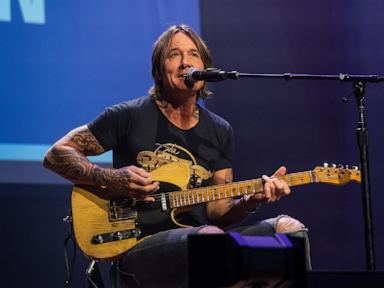
The modern country music machine requires its titans to operate like tech corporations, adhering to strict release cycles, stadium logistics, and demographic data. Yet, superstar Keith Urban threw a wrench into that assembly line by announcing Flow State, an eleven-track album comprised almost entirely of 1970s and 1980s soft rock covers. The industry framing of this project is predictably cozy, painting it as a whimsical detour born from jam sessions in his newly renovated Nashville studio. The reality is far more calculated. Urban did not merely stumble into a collection of yacht rock staples; he fled to them as a tactical escape from the grueling commercial expectations of modern country music.
For an artist whose brand relies on high-energy guitar showmanship and radio-friendly hooks, pivoting to the smooth, jazz-adjacent textures of Player, Seals & Crofts, and Stephen Bishop represents a massive commercial risk. This move highlights a growing exhaustion among country music elite who are quietly pushed to the brink by the relentless demands of the modern touring industry.
The Acoustic Mechanics of a Studio Sanctuary
To understand why an arena act would suddenly pivot to recording Walter Egan covers, you have to look at the physical space where the music was tracked. Urban recently purchased and meticulously restored the historic Tracking Room studio in Nashville, re-christening it as The Sound. The purchase happened just as he was preparing to launch his massive High and Alive World Tour. It was an expensive, demanding piece of real estate sitting empty while its owner faced months of arena stage logistics.
When Urban finally found a brief window to step inside the room, he brought in long-time producer Dann Huff and a handful of elite Nashville session players. The initial goal was purely functional: test the acoustic responses of the live room, calibrate the console, and verify the isolation booths. They chose a couple of yacht rock tracks because the arrangements are notoriously bulletproof, relying on intricate chord progressions and precise, clean instrumentation rather than raw volume or digital studio trickery.
The session band tracked two songs on the first day. The sonic chemistry was immediate, prompting Urban to book additional dates, transforming a technical acoustic test into a full-length record. What began as a practical exercise in studio calibration quickly evolved into an escape hatch from the rigid confines of his day job.
Why Bulletproof Arrangements Trump Modern Formulations
The term yacht rock, originally coined as a joke in the mid-2000s, defines a hyper-specific era of studio perfectionism. Between 1976 and 1984, artists like Michael McDonald, Boz Scaggs, and Steely Dan dominated Los Angeles tracking spaces, using highly sophisticated jazz chords disguised as pop music.
Modern commercial country music, by contrast, frequently relies on predictable three-chord structures and compressed, heavy production designed to cut through stadium PA systems. For a virtuoso guitarist like Urban, the shift to soft rock was an athletic challenge disguised as a vacation.
Consider the tracks selected for the record:
- "Summer Breeze": A masterclass in acoustic layering and vocal counterpoint originally tracked by Seals & Crofts.
- "Baby Come Back": A groove-heavy track by Player that demands flawless rhythmic pocket placement from a bassist and drummer.
- "The Guitar Man": A Bread classic that Urban uses as a vehicle for extended guitar interplay alongside John Mayer.
By diving into these compositions, Urban bypassed the typical pressures of contemporary songwriting, where tracks are heavily scrutinized by focus groups and radio programmers before they ever hit a streaming service. He was able to focus purely on performance, utilizing extended outros and spontaneous instrumental jams that would never survive the editing process of a modern country radio single.
The Michael McDonald Validation and the Track That Failed
The centerpiece of the record is "We Go Back," the lone original composition on the tracklist. The song itself is a time capsule, written by Urban alongside BRELAND, Sam Sumser, and Sean Small way back in 2020. At the time of its creation, Urban joked to his co-writers that the chorus needed the distinct, smoky baritone of Michael McDonald. For six years, the song sat on a hard drive because it did not fit the sonic landscape of Urban's mainline country releases.
The creation of the covers project gave that shelved track a purpose. Urban's management reached out to McDonald, who agreed to cut vocals for the track. Securing the literal voice of the yacht rock era transformed the album from a standard cover project into an authenticated genre entry.
Yet, the relaxed, organic process that Urban praises also introduced structural flaws to the album's rollout. The tracklist was originally supposed to feature eleven cover songs alongside the original track. At the final hour, an entire song had to be stripped from the master tape. Urban had tracked a complex duet but failed to secure the right vocal partner before the hard shipping deadlines for vinyl manufacturing arrived. In a traditional country album cycle, such a bureaucratic oversight would be viewed as a massive failure by the label; in the loose environment of Flow State, it was simply shrugged off as an acceptable casualty of the process.
The Weary Search for a Cultural Exhale
Urban has been vocal about the timing of this release, noting that the breezy optimism of the music serves as an intentional antidote to a fractured, highly divisive cultural climate. It is a savvy public relations angle, but it also reflects a deeper, industry-wide fatigue.
The machinery of modern stardom requires constant engagement, political tightrope walking, and brand management. Stepping onto a stage to sing Bill Withers' "Just the Two of Us" or Stephen Bishop's "On and On" requires nothing from the performer other than a commitment to the groove. The music is deliberately designed to lack friction.
This record is an explicit admission that the endless loop of stadium tours, high-stakes single launches, and corporate sponsorship activations can wear down even the most seasoned performers. By retreating into the smooth, sun-drenched sounds of California in 1978, Urban managed to reclaim the simple joy of playing an instrument for the sake of the music itself, even if it meant leaving his signature country boots behind on the dock.