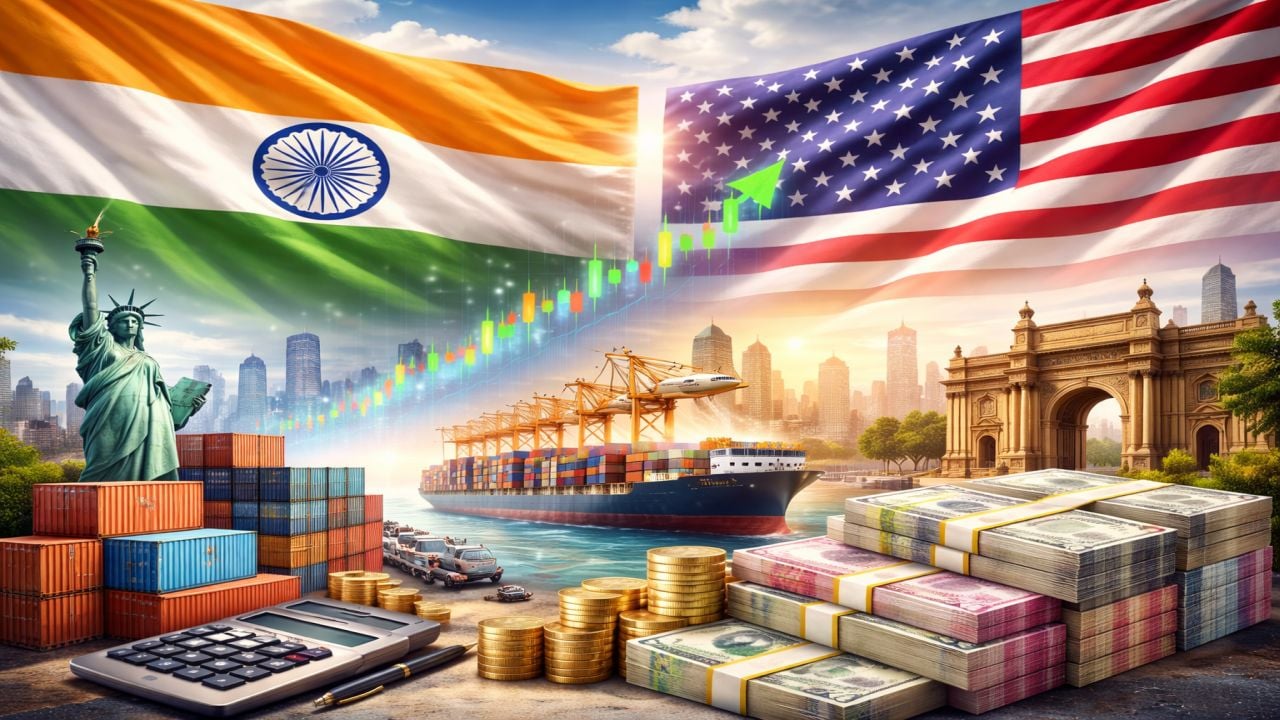
India and the United States are quietly moving to reset their economic relationship behind a wall of diplomatic pleasantries, driven by tectonic shifts in global trade and a shared anxiety over supply chain vulnerabilities. When Indian Finance Minister Nirmala Sitharaman met with US Ambassador Sergio Gor in New Delhi, the official press releases focused on routine talking points like fintech collaboration, bilateral investments, and celebratory congratulations for the upcoming 250th US Independence Day.
Beneath this polite diplomatic veneer lies a high-stakes race to salvage a stalled interim trade deal, overcome regulatory friction in cross-border digital payments, and secure critical investments before shifting Western trade policies alter global markets.
The meeting serves as an urgent effort to breathe life back into the US-India Economic and Financial Partnership dialogue. While public statements painted a picture of unblemished cooperation, the reality on the ground is far more complicated, marked by intense negotiations over tariffs, data sovereignty, and alternative energy infrastructure.
The Trade Deal in Limbo
The immediate backdrop to these high-level discussions is an interim trade framework that has hit a massive domestic legal snag in Washington.
In early February, both nations confidently announced a framework for an interim trade agreement. It was scheduled for a March signing, with implementation set for April. That timeline shattered when the US Supreme Court invalidated reciprocal tariffs levied by the US administration, throwing Washington’s trade policy into legal uncertainty.
In response, the US launched expansive trade and labor investigations into several major economies, including India. These investigations could theoretically pave the way for sudden, unilateral US tariffs once concluded. This looming threat explains why New Delhi is pushing so hard to formalize its economic boundaries with Washington.
[Trade Deal Timeline Friction]
February: Framework Agreed -> March: Planned Signing -> April: US Court Invalidates Tariffs -> May: Indian Regulators Seek Assurances
The core friction points remain deeply transactional:
- The 18% Tariff Benchmark: India previously negotiated an 18% tariff on its exports to the US. However, Indian Commerce Minister Piyush Goyal has made it clear that New Delhi will only accept this rate if it guarantees preferential market access over global competitors. If other nations receive lower tariff barriers, India expects its rates to drop in tandem.
- The Pax Silica Alignment: Ambassador Gor’s discussions heavily emphasized India’s participation in "Pax Silica"—a US-led initiative aimed at decoupling critical technology supply chains from adversarial nations. For India, entering this economic bloc requires explicit guarantees of technology transfers and protectionist exemptions that Washington has historically been reluctant to grant.
The Fintech Friction Point
Fintech collaboration was highlighted as a primary success story during the Sitharaman-Gor meeting, yet this sector represents a significant regulatory battleground.
India’s Unified Payments Interface (UPI) has transformed domestic commerce, and New Delhi is eager to export this architecture globally. The country’s digital public infrastructure allows for instantaneous, low-cost domestic transactions.
The US financial system remains heavily reliant on legacy banking infrastructure and credit card networks that charge substantial merchant fees.
[Cross-Border Payment Efficiency Gap]
Traditional SWIFT Wire: 2-5 Days | High Fees | Multiple Intermediary Banks
India-US Fintech Vision: Instantaneous | Nominal Fees | Direct Central Bank Settlement
When Sitharaman talks about fintech collaboration, the underlying goal is to create interoperability between India’s digital payment rails and US financial institutions. This is not simple.
US regulators express deep reservations regarding India's strict data localization mandates, which require foreign financial firms to store all transaction data exclusively within Indian borders. US tech giants view these rules as protectionist trade barriers, while the Reserve Bank of India views them as non-negotiable for national security and financial sovereignty.
Furthermore, cross-border remittance costs remain stubbornly high. India is the largest recipient of global remittances, with a massive portion originating from the diaspora in the United States. Lowering these transaction costs through digital collaboration would immediately benefit millions of citizens, but it requires the US Federal Reserve and Indian regulators to align on anti-money laundering compliance and real-time data sharing.
The Nuclear Transition and Industrial Power Demands
The economic partnership is also expanding rapidly into industrial energy infrastructure. While Gor was meeting with finance officials in New Delhi, an executive delegation from the US Nuclear Energy Institute was touring Indian industrial hubs.
The timing is not accidental. India's rapid industrialization, particularly the massive buildout of data centers and advanced manufacturing plants, has triggered an unprecedented surge in electricity demand.
Take the state of Maharashtra, which attracts more than 40% of India's total foreign direct investment and hosts nearly 60% of the country's data center capacity. The rise of domestic semiconductor fabrication plants, logistics networks, and artificial intelligence infrastructure means that traditional renewable sources like solar and wind are no longer sufficient to provide stable baseload power.
To meet this demand, India has opened its nuclear research and energy sectors to private investment for the first time.
This policy shift creates a massive commercial opening for American energy companies. US vendors are eager to supply small modular reactors and advanced nuclear tech to Indian states racing to secure carbon-free, industrial-scale electricity.
Yet, historical liabilities remain a shadow over this sector. US firms have long sought exemptions from India’s strict nuclear liability laws, which hold equipment suppliers—rather than just operators—accountable in the event of an industrial accident. Resolving this legal gridlock is a prerequisite for any significant deployment of American capital into India’s nuclear grid.
Balancing National Interests
The diplomatic choreography in New Delhi cannot obscure the fundamental reality of India-US relations: it is an alliance built on shared geopolitical necessity rather than perfect economic alignment.
The Indian rupee recently touched historic lows against a strengthening US dollar, finishing near 96.86. This currency depreciation increases the cost of India's dollar-denominated imports, particularly crude oil and advanced electronics, putting severe pressure on the country's trade deficit.
[Macroeconomic Pressures]
Stronger US Dollar -> Weakens Rupee (96.86 Low) -> Elevates Indian Import Costs -> Direct Pressure on Trade Deficit
To counter these headwinds, India needs a massive, sustained influx of American foreign direct investment. Washington, conversely, needs India as a stable manufacturing alternative to insulate Western supply chains from geopolitical shocks.
Achieving this mutual security requires more than just high-level handshakes and references to shared democratic values. It requires both nations to dismantle deeply entrenched protectionist policies, iron out conflicting regulatory frameworks on data privacy, and resolve complex trade disputes that have lingered through multiple administrations.
The upcoming high-level negotiations in Washington will show whether both sides can move past superficial communiqués and build a functional economic framework that matches their shared strategic rhetoric.