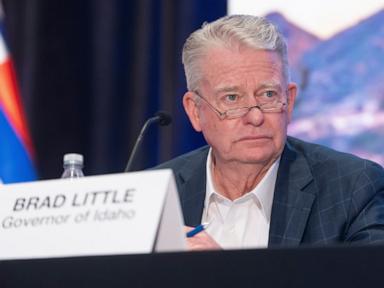
Establishment Republicans crushed insurgent challengers across Idaho on Tuesday night. Incumbent Governor Brad Little secured the Republican nomination for a third term, capturing roughly 60 percent of the vote and easily brushing aside a crowded field of seven primary opponents. Longtime U.S. Senator Jim Risch similarly defended his seat, commanding nearly 64 percent of the vote against three GOP challengers. In the congressional districts, Representatives Mike Simpson and Russ Fulcher easily fended off their respective intra-party challengers. For a state often viewed as the vanguard of far-right anti-establishment politics, the 2026 primary results reveal that the old guard still holds the levers of power through immense financial advantages, deep institutional ties, and strategic endorsements.
Political observers spent months predicting a populist reckoning in Boise, but the actual returns show that running a campaign on pure ideological fervor cannot substitute for institutional cash.
The Million Dollar Firewall
The primary story of the 2026 Idaho gubernatorial primary is cash. Brad Little did not wage a conventional public campaign filled with raucous grassroots rallies or high-stakes televised debates. He did not need to. By mid-May, Little had amassed roughly $1.9 million in campaign contributions, leaving him with over $1.2 million in cash on hand to deploy during the critical closing weeks of the race.
His closest competitor, local bar owner and former police officer Mark Fitzpatrick, positioned himself as a fiery outsider untainted by corporate politics. Yet Fitzpatrick raised only about $185,000, entering the final stretch with a meager $35,000 in his war chest. The remaining six challengers operated on shoestring budgets that failed to buy the television airtime, digital advertising, or direct mail campaigns required to move a state-wide electorate. Money builds a firewall in state-wide politics. Little utilized his immense financial advantage to quietly reinforce his position, letting his legislative record speak to moderate conservatives while relying on his financial dominance to choke out the oxygen needed by his underfunded rivals.
Federal Defenses Hold Firm
The narrative repeated itself at the federal level. Senator Jim Risch, seeking a fourth term at 83 years old, faced vocal criticism from activists who argued his lengthy tenure exemplified the Washington establishment. Risch simply ignored the noise, declined to participate in various candidate surveys, and leaned on his structural advantages. He secured 63,064 votes in early returns, leaving challenger Joe Evans distant at 18 percent, followed by Josh Roy at 16 percent and Denny LaVé at 4 percent.
In the House races, Mike Simpson and Russ Fulcher encountered similar institutional smooth sailing. Simpson, a frequent target of the hard-right wing for his pragmatic approach to federal spending, relied on his deep roots in the second congressional district to dismantle primary challenges from Brian Keene and Perry Shumway.
The Closed Primary Paradox
To understand how these incumbents keep winning, one must understand the mechanics of Idaho's primary framework. The state uses a strict closed primary system for Republicans, meaning only voters officially registered with the party can participate in choosing the GOP nominees.
Idaho Registered Voters (February 2026)
Total Registered: ~1,000,000
│
├── Registered Republicans: 628,000 (62.8%)
├── Unaffiliated Voters:     259,000 (25.9%)
└── Registered Democrats:   120,000 (12.0%)
Out of roughly one million registered voters in the state, approximately 628,000 are registered Republicans, while 259,000 are unaffiliated and 120,000 are Democrats. On paper, this closed structure is designed to protect the party from outside influence, yet it creates an interesting dynamic for incumbent survival.
Populist insurgents often assume that a closed primary favors the loudest, most ideologically pure candidate. However, historical turnout trends show that the voters who actually show up to primary elections in May are disproportionately older, habitual voters who are deeply embedded in local civic institutions, agricultural bureaus, and traditional business networks. These voters value stability and predictability over radical upheaval. While unaffiliated voters can choose to register as Republicans at the polling place on Election Day, the barrier to entry keeps the electorate older and more conservative in a traditional, business-friendly sense. Insurgent campaigns failed to mobilize a massive wave of newly registered voters to alter this math.
The General Election Realities
The primary victories set up an asymmetric general election battleground for November 3, 2026. In the gubernatorial race, Brad Little will face Democratic nominee Terri Pickens, a Boise attorney who secured her party's nomination against a three-candidate field. Pickens led the Democratic field in fundraising, but she faces an uphill battle in a state that has not elected a Democratic governor since 1990.
The November ballot will also feature independent retired Idaho Supreme Court Justice John Stegner, independent Jacob Burnett, and Constitution Party nominee Pro-Life. While independent and third-party candidates have occasionally disrupted Idaho races in the past—most notably Ammon Bundy capturing over 17 percent of the gubernatorial vote as an independent in 2022—the absence of a unified third-party challenger leaves Little in an exceptionally secure position. Major national political forecasting bodies, including the Cook Political Report and Sabato's Crystal Ball, consistently rate the race as a Safe or Solid Republican hold.
The Federal General Election Matchups
Senator Jim Risch will advance to face Democrat David Roth, who won his primary with 65 percent of the vote against Brad Moore and Nickolas Bonds. Roth previously ran for the U.S. Senate in 2022 and the House in 2024, giving him name recognition among the state's Democratic minority, but federal campaign finance records indicated his campaign was largely out of funds by the spring. Risch will also share the November ballot with Libertarian Matt Loesby and various independent challengers, but the structural partisan breakdown of Idaho ensures that the Republican nominees remain overwhelming favorites to retain their seats, helping national Republicans protect their congressional margins.
The Illusion of Upheaval
The 2026 primary results show that Idaho's political climate is often misread from afar. National media frequently highlights the state's vocal far-right factions, high-profile legislative culture clashes, and influx of conservative newcomers fleeing coastal states. This creates an expectation of imminent political transformation.
The actual ballots cast tell a different story. When inside the voting booth, Idaho Republicans chose the familiar faces that have steered the state's economic and agricultural policies for over a decade. Activism can dominate school board meetings and county GOP central committees, but winning state-wide office requires a machine built on millions of dollars, broad organizational support, and appeal to the quiet majority of traditional voters who prefer governance over grievance. Insurgents will continue to push the boundaries of Idaho policy from the legislative flanks, but for now, the executive power remains firmly in the hands of the establishment.
