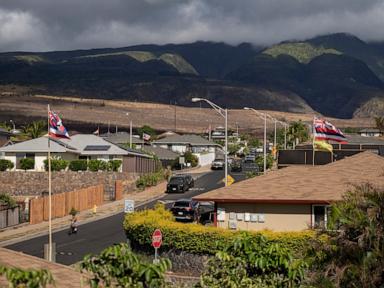
A ticking constitutional bomb has finally been detonated in Honolulu. A federal lawsuit filed by the Pacific Legal Foundation on behalf of a lifelong Hawaii resident named Eric Ryan targets the 105-year-old Hawaiian Homes Commission Act (HHCA). The core challenge targets the "blood quantum" rule, a strict mandate requiring beneficiaries to prove they possess at least 50% Native Hawaiian blood to secure a 99-year homestead lease for $1 a year. For decades, the legal establishment treated this program as an untouchable monument to historical restitution. It is not. It is a fragile structure built on a legal foundation that the current U.S. Supreme Court is actively dismantling.
The lawsuit argues that gating a valuable state benefit behind a biological percentage test constitutes blatant racial discrimination, violating the Equal Protection Clause of the Fourteenth Amendment. Local officials, including Governor Josh Green, have vowed to defend the program to the end. But a clear-eyed analysis of contemporary federal jurisprudence reveals that the state is marching into an ambush. The legal architecture protecting Native Hawaiian entitlements is fundamentally flawed because it relies on a colonial-era compromise designed to ensure the program would eventually self-destruct. If the defenders of the homestead system do not fundamentally pivot their legal defense strategy away from racial biology and toward political sovereignty, the entire 200,000-acre land trust will be struck down, leaving tens of thousands of Hawaiians with absolutely nothing.
The Colonial Trap of the Fifty Percent Rule
To understand why the homestead program is vulnerable today, one must understand the corporate cynicism that birthed it. In 1920, Hawaii's territorial delegate to Congress, Prince Jonah Kūhiō Kalanianaʻole, championed the HHCA to return displaced Hawaiians to the land. Recognizing that intermarriage was already shifting the demographic reality of the islands, Prince Kūhiō originally proposed a blood quantum requirement of just 1/32nd Hawaiian ancestry—roughly 3.13%.
Powerful white sugar plantation barons and industrial ranchers fiercely resisted this proposal. They did not want valuable Crown and government lands permanently locked away from their corporate enterprises. The oligarchs utilized their leverage in Washington to force a compromise, insisting on a strict 50% blood quantum threshold. Their logic was simple, calculated, and deeply sinister. They calculated that through natural assimilation and interracial marriage, the population of "50% or more" Hawaiians would eventually dwindle to zero. The high blood quantum was never an indigenous metric of belonging; it was a demographic poison pill designed by white settlers to ensure the land trust would eventually default back to the state or commercial interests.
The mathematical reality of this poison pill is now playing out across generations. While a 1986 amendment allowed spouses and children with at least 25% Hawaiian blood to inherit existing leases, the pool of qualified applicants for new leases continues to shrink dramatically. Families that have held homesteads for generations face the agonizing prospect of losing their homes because their grandchildren possess 24% or less Hawaiian blood. The system forces a proud people to quantify their identity by fractions, acting as a bureaucratic engine of slow-motion cultural erasure.
The Legal Ambush Under the Fourteenth Amendment
The Pacific Legal Foundation is not launching a random attack; they are executing a highly sophisticated legal strategy tailored for an increasingly colorblind federal judiciary. In federal court, government classifications based on race or ancestry trigger strict scrutiny. This is the highest standard of judicial review. To survive, the state must prove that the racial classification serves a compelling government interest and is narrowly tailored to achieve that interest.
The state's traditional defense has been historical remediation: correcting the wrongful overthrow of the Hawaiian Kingdom in 1893 and the subsequent dispossession of indigenous lands. However, the current U.S. Supreme Court has repeatedly signaled that general historical grievances do not justify ongoing, explicit racial gatekeeping for public benefits.
Consider the precedent established in Rice v. Cayetano (2000). In that landmark case, the Supreme Court struck down a law that limited voting for trustees of the Office of Hawaiian Affairs (OHA) to people of Native Hawaiian ancestry. The Court ruled that ancestry was a proxy for race, and the state could not use it to restrict voting rights under the Fifteenth Amendment. The current lawsuit seeks to extend that exact logic from voting rights to property rights under the Fourteenth Amendment.
If the case reaches the Supreme Court, Hawaii's defense will likely crumble. The state cannot argue that the 50% requirement is "narrowly tailored" when more than 30,000 people are languishing on the Department of Hawaiian Home Lands (DHHL) waitlist—many of whom have died waiting for a plot of land while pristine acreage sits vacant due to administrative failure and infrastructure funding deficits. The law blocks a massive portion of the indigenous population while failing to deliver timely benefits to the few who qualify.
| Metric of the Crisis | Current Figure |
|---|---|
| DHHL Trust Land Area | Approximately 200,000 Acres |
| Applicants on Waitlist | Over 30,000 |
| Annual Lease Cost | $1 per year |
| Original Blood Quantum Requirement | 50% Native Hawaiian |
| Successor Inheritance Threshold | 25% Native Hawaiian |
The Myth of the Level Playing Field
The plaintiff’s legal counsel asserts that they do not wish to take anything from anyone. They claim their sole objective is to ensure the program is available to everyone on an equal footing, regardless of blood quantum.
This rhetoric ignores the unique socio-economic realities of Hawaii. The islands face a devastating housing shortage driven by hyper-inflated real estate markets, corporate land speculation, and a deluge of wealthy mainland buyers purchasing second homes. The median price of a single-family home on Oahu routinely hovers near $1 million. Local families are being priced out of their own ancestral home at an alarming rate, forcing a mass exodus of Native Hawaiians to states like Nevada, Texas, and Utah.
Stripping the blood quantum requirement to make the program open to "everyone on equal footing" would not democratize the homesteads; it would instantly annihilate them. If the 200,000 acres of trust land are thrown open to the general public, the program will transform into a standard state housing lottery. The land would immediately be swallowed by the insatiable broader market, effectively completing the dispossession that began over a century ago. The homesteads are not merely a real estate benefit; they are critical cultural enclaves that preserve language, agriculture, and community traditions that cannot survive in a commercial suburban development.
The Only Path to Survival
The state of Hawaii cannot win this fight by double-downing on the validity of blood quantum. Defensive arguments rooted in biological percentages are a relic of 19th-century eugenics and are entirely indefensible under modern constitutional law. To save the homesteads, the state must completely reframe the legal status of Native Hawaiians.
Federal Indian law provides a clear blueprint. Under long-standing Supreme Court precedent, such as Morton v. Mancari (1974), government preferences for members of federally recognized Native American tribes are classified as political preferences, not racial ones. Because tribes are sovereign political entities, programs benefiting them are subject only to rational basis review—a incredibly low legal hurdle that the government almost always passes.
Native Hawaiians are indigenous peoples with a distinct sovereign history, but they currently lack the formal, federal tribal recognition enjoyed by Native American and Alaska Native groups. This political ambiguity is the precise vulnerability that conservative legal foundations are exploiting.
To fix this, the defense must aggressively pursue a multi-pronged approach:
- Codify Political Recognition: The state must aggressively support federal and local efforts to formalize the political reorganization of a unified Native Hawaiian governing entity. This entity can then establish citizenship requirements based on lineal descent rather than arbitrary biological percentages.
- Abandon the Fraction Test: The Hawaiian Homes Commission must work alongside Congress to systematically reduce the original entry blood quantum from 50% down to lineal descent. By shifting the standard from a biological fraction to historical lineage, the program moves away from a vulnerable racial classification and toward a defensible model of political and historical succession.
- Aggressively Fund the Infrastructure: The state must rapidly clear the 30,000-person waitlist by investing heavily in developing vacant trust lands. A functional, efficient program that successfully settles indigenous people on the land is far easier to defend in court than a stagnant, bureaucratic ledger of unfulfilled promises.
The Pacific Legal Foundation’s lawsuit is a clear warning shot. If Hawaii’s political leadership continues to rely on a defensive strategy that protects a colonial-era biological metric, they are actively participating in the destruction of the homesteads. The only way to preserve Kūhiō's legacy is to dismantle the century-old poison pill from within before the federal judiciary uses it to erase Native Hawaiian land rights forever.
This video provides a detailed breakdown of the legal filings and the state's initial defensive response regarding the Hawaiian blood-quantum lawsuit.
Federal lawsuit challenges Hawaiian blood-quantum requirement