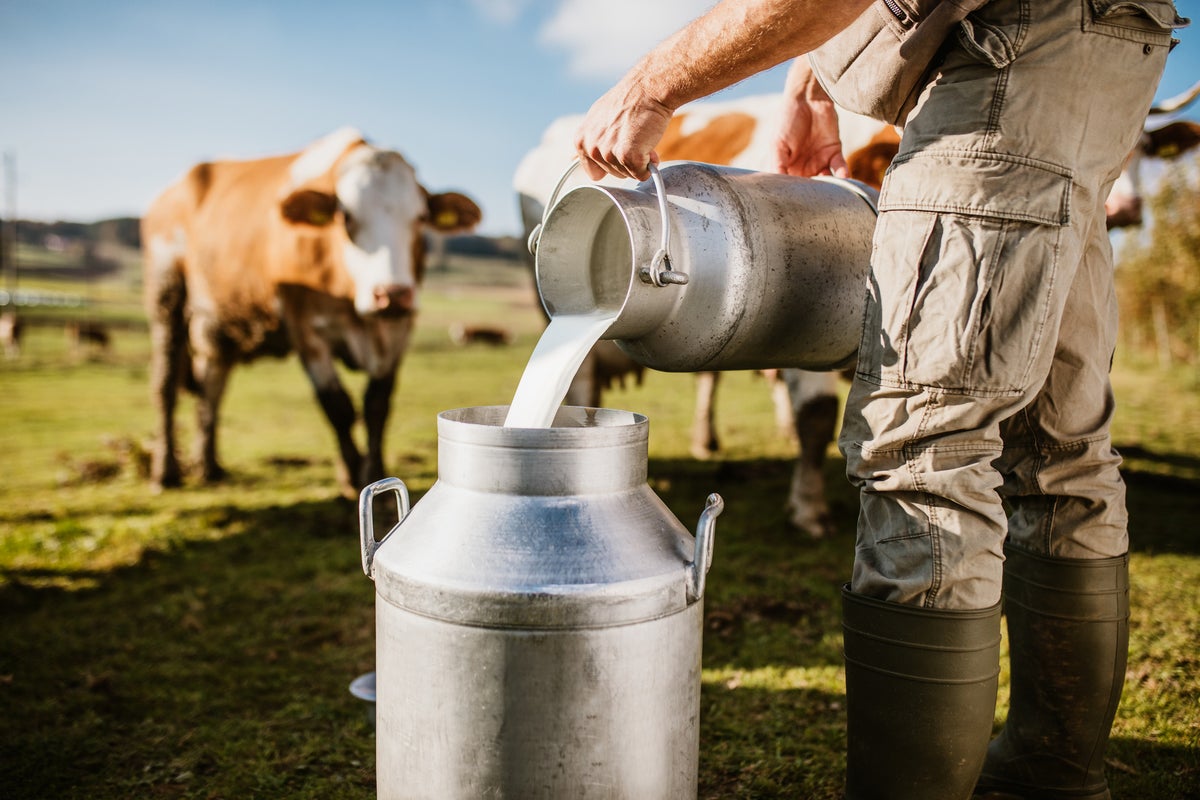
You probably grew up with the famous advertising question asking if you had milk. For decades, Americans didn't think twice about the gallon jugs lining grocery store shelves. It was a reliable, cheap staple of the morning bowl of cereal or the post-workout protein shake. But something is happening out on the dairy farms that most people aren't paying attention to, and it's changing the very liquid in your glass.
Climate change isn't just about melting glaciers or extreme weather events on the news. It's actively altering the milk supply right now. A massive new study from Cornell University highlights a problem that has been flying entirely under the radar. Rising temperatures are hitting dairy cows hard, and the consequences go way beyond just getting less milk. The actual quality, the fat content, and the protein levels of the milk are taking a major hit.
If you think this is just a minor issue for farmers to sort out, you're mistaken. It affects what you pay at checkout, the nutritional value your family gets, and the survival of independent American farms.
The Stealth Dilution of America Milk Supply
For years, scientists and farmers knew that cows don't like excessive heat. When it gets too hot, cows eat less, produce less, and get sluggish. That's a well-documented concept called the yield effect. But the Cornell University study, led by agricultural economists like Ariel Ortiz-Bobea, exposed a much deeper problem.
The research analyzed data from 6.5 million cows across 43 states over a decade, matching it with hyper-local weather data. What they discovered should alarm anyone who cares about food security. Warm weather doesn't just cut down the total volume of milk. It literally waters it down.
When temperatures rise, the concentration of crucial components like milk fat and protein drops significantly. This isn't just happening during brutal July heatwaves. The dilution effect starts at surprisingly mild temperatures.
Why Mild Days Are Part of the Problem
You might think a comfortable day in the high 60s or low 70s is perfect weather. Humans love it. Holstein cows, the iconic black-and-white animals that dominate the American dairy sector, do not.
High-yielding dairy cows are essentially heavy internal combustion engines. They generate massive amounts of metabolic heat just by digesting food and creating milk. Because they are so efficient at producing volume, their comfort zone is much lower than ours. Their optimal temperature range sits between 41°F and 77°F.
Once the thermometer creeps into the late 60s, the cow's internal cooling system starts to struggle. The Cornell study showed that while a mild 70-degree day won't cause a drop in the total gallons of milk a cow produces, it immediately triggers a drop in the milk's solid components. The milk starts getting diluted gradually.
Because this happens during spring, autumn, and mild summer days, it occurs all year round. It's a continuous, invisible drain on the system.
The Economic Equation That Doubles the Damage
To understand why this matters to the economy, you have to look at how dairy farmers actually get paid. Dairy cooperatives don't just buy raw milk by the gallon. They buy it based on component pricing.
The checks that keep a farm afloat are calculated largely on the pounds of milk fat and protein delivered. These components are what make cheese, butter, and yogurt possible. Less fat and protein means the milk is less valuable to processors.
The Cornell research team calculated that a mere 10-point increase on the standard temperature-humidity index leads to a 1.2% drop in overall milk yield. That sounds small. However, when you factor in the simultaneous dilution of fat and protein, the revenue loss for the farmer jumps to 2.8%.
- The loss in milk components equals the loss in volume.
- This effectively doubles the economic damage to the agricultural sector.
- The broader industry faces an estimated $1.65 billion annual loss from this combined hit.
This financial strain arrives at the worst possible time. Small and medium-sized American dairies operate on razor-thin margins. Feed costs are high, labor is scarce, and wholesale milk prices are volatile. When climate pressures cut into the actual value of the milk, it pushes smaller operations over the edge.
How Heat Stress Overwhelms Bovine Biology
To understand what's happening inside the barn, you have to look at the basic biology of a lactating cow. When a cow encounters heat stress, her body shifts into survival mode.
Her heart rate climbs, her respiration speeds up, and she begins panting to dump excess heat. This physical effort burns energy that would otherwise go toward milk production. To keep from generating even more internal heat, the cow naturally reduces her dry matter intake. She simply stops eating as much.
The Problem with Less Feed
When feed intake drops by 10% to 30%, the cow isn't taking in enough nutrients to sustain her output. The direct result is a drop in blood flow to the mammary glands as the body diverts blood to the skin to facilitate cooling.
With less blood delivering nutrients to the udder, the synthesis of casein, alpha-casein, and beta-casein plummets. Casein is the essential protein required for cheese production. Summer milk historically shows a notable drop in these proteins compared to spring milk, making it less efficient for manufacturing dairy products.
Fertility Rates Take a Long Term Hit
The damage isn't confined to the milk tank during a heatwave. Heat stress wreaks havoc on a herd's reproductive cycle.
High internal body temperatures impair follicle development and lower the quality of the cow's eggs. Even worse, the effects aren't short-lived. It typically takes two to three full reproductive cycles for a cow's system to recover from a single severe bout of heat stress.
This explains why dairy advisors frequently see crashing conception rates in September and October, long after the summer heat has broken. If a cow can't get pregnant, she won't start a new lactation cycle, threatening the future volume of the entire operation.
Traditional Safeguards Are Falling Short
Farmers aren't just sitting around watching this happen. Walk into a modern dairy barn in Wisconsin, New York, or California, and you will see serious engineering meant to combat the weather.
Massive industrial fans line the ceilings, pushing high-velocity air across the herd. Automated sprinkler systems mist the cows with water to encourage evaporative cooling. Sophisticated sensors track the temperature-humidity index in real-time, kicking on mitigation systems before humans even register the humidity.
These tools help, but they aren't a magic fix. They require massive amounts of electricity and water to run continuously. As electricity rates climb and water scarcity worsens across agricultural regions, the cost of keeping cows cool is eating up whatever profits remain.
The Limits of Bovine Resilience
The most frustrating takeaway from recent agricultural data is that cows aren't naturally adapting to the changing climate. The Cornell researchers looked closely to see if certain groups of cows were handling the heat better over time. They analyzed different age groups, farm sizes, and geographic regions.
The results were uniform. There was almost no variation in how the animals responded to heat. A cow in a northern state handles a sudden spike in temperature just as poorly as a cow in the South.
The primary way the industry has adapted so far is structural. Dairies are consolidations that shift operations to different regions or consolidate smaller herds into massive, corporate-owned facilities that can afford million-dollar climate-controlled barns. This consolidation permanently alters the economic fabric of rural America.
What This Means for Your Grocery Bill
If you're buying milk, cheese, or butter, you're already paying for these climate realities. When processors receive raw milk with lower fat and protein content, it takes more total gallons of milk to produce a single pound of cheddar cheese or butter.
This inefficiency drives up production costs for food brands. Those costs get passed directly to you at the supermarket. You end up paying more for products that might have slightly lower baseline nutritional profiles during peak heat months.
The issue also threatens the supply stability of specialized dairy products. Organic dairies, which rely heavily on pasture grazing rather than enclosed, fan-cooled barns, face an even steeper challenge. Pasture-raised cows are entirely exposed to the elements, making their milk yields and component percentages highly erratic as summers lengthen.
Actionable Steps for the Dairy Sector
Relying solely on bigger fans isn't a viable long-term strategy for American dairy. The industry requires a fundamental shift in how it approaches breeding, management, and resource allocation to protect the national food supply.
Shift Breeding Metrics Toward Resilience
For decades, the dairy industry focused almost exclusively on maximizing total milk volume per cow. This strategy worked incredibly well on paper, but it created highly sensitive animals that function like delicate sports cars.
Breeding programs must intentionally prioritize heat tolerance and component stability over raw volume. Scientists are looking into crossing traditional Holsteins with heat-hardy breeds like the Girolando or using genomic selection to identify specific cows that maintain stable protein and fat levels under thermal stress.
Rethink Rations and Nutritional Strategies
What cows eat changes how they handle heat. High-fiber diets cause the rumen to generate immense amounts of heat during fermentation.
During high-risk months, nutritionists need to formulate diets with highly digestible fibers and increased fat content. Fats bypass rumen fermentation, providing the cow with dense energy without raising her internal body temperature. Adding specific electrolyte supplements helps maintain the cellular fluid balance that cows lose through increased panting.
Invest in Localized Microclimate Management
Relying on broad weather reports doesn't cut it anymore. Dairies need to utilize localized barn sensors that track the precise microclimate at the cow level.
Installing smart soaking systems that target cows specifically when they gather at the feed bunk or the milking parlor saves water while maximizing cooling efficiency. Farmers should also focus on structural modifications, such as reflective roofing materials and strategically planted shade trees around pastures, to minimize solar radiation before it hits the barn walls.


