Midnight in Northern Virginia smells like ozone and warm plastic.
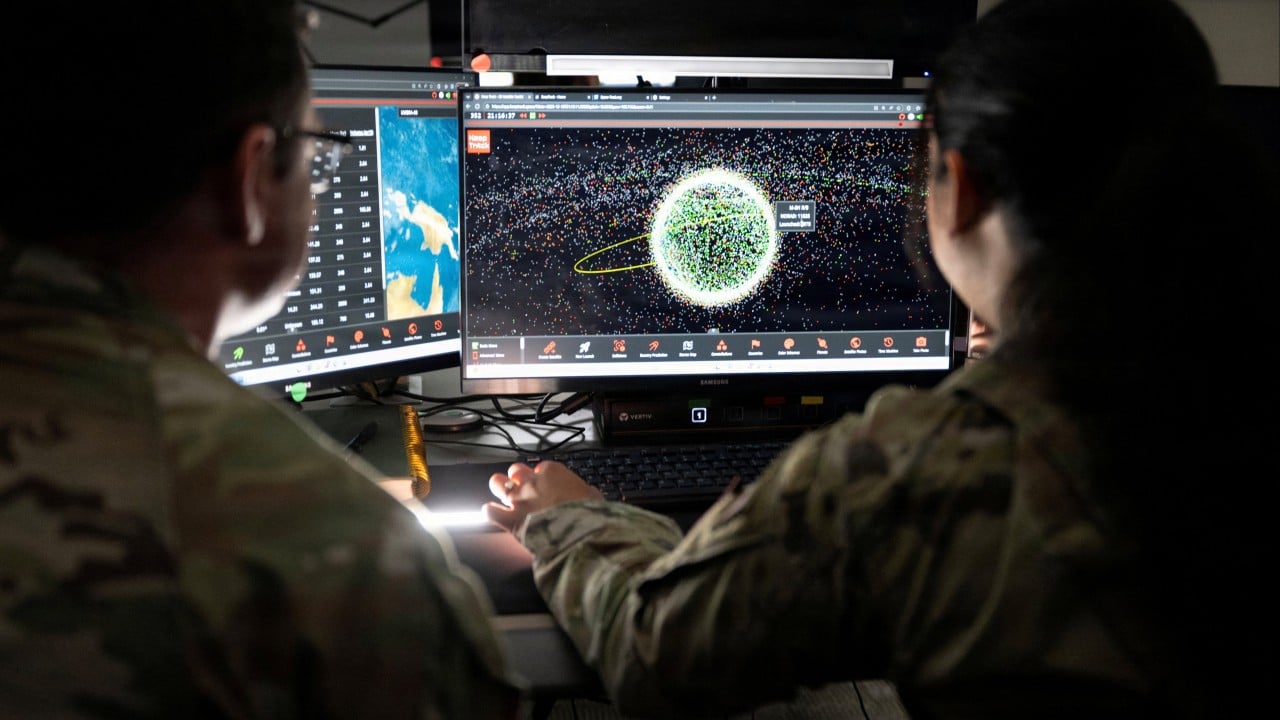
Inside a windowless warehouse buried behind a thicket of pine trees, rows of black server racks hum with a terrifying, steady pitch. Millions of dollars worth of silicon chips pull raw power from the grid, their tiny circuits glowing with microscopic bolts of electricity. They are processing data. They are mapping language, physics, human behavior, and nuance into vast matrices of mathematical weights.
Marcus stands in the cold aisle, his breath fogging slightly in the hyper-conditioned air. He is a machine learning architect, a man who once believed that writing code was a pure, neutral act of creation. Now, he watches a loss curve drop on his monitor, converging toward zero with a terrifying velocity. The model he is tending is learning faster than any biological mind can track. It is synthesizing centuries of human art, science, and conflict into a single, seamless stream of algorithmic intuition.
And somewhere, thousands of miles away across an ocean, another warehouse is humming. Another team of engineers is staring at a similar screen. Another loss curve is dropping.
This is the invisible front line of the modern world. It is a war fought not with bullets or artillery shells, but with floating-point operations, electrical current, and intellectual capital. And over the past few years, a fierce ideological fracture has ripped through the capitals of the West. It is a debate that transcends traditional party lines, splitting Silicon Valley and Washington into two armed camps: the cautious philosophers who want to hit the brakes, and the realpolitik strategists who argue that hitting the brakes is national suicide.
When Donald Trump stepped into this arena and dismissed calls to slow down artificial intelligence development as a "sick conspiracy," he was not merely offering a political talking point. He was voicing a raw, unfiltered instinct about global power dynamics. To understand why his words struck such a massive nerve, you have to look past the political theatre and examine the brutal arithmetic of geopolitical competition.
For months, a chorus of well-meaning academics, safety researchers, and tech executives had argued for a global pause. They published open letters. They warned of existential risk. They painted dystopian portraits of rogue neural networks outsmarting their human creators, manipulating financial markets, and upending the fragile fabric of global stability. Their solution was simple, elegant, and profoundly naive: stop. Freeze the training runs. Put the giant clusters under lock and key. Take six months to figure out alignment, ethics, and control.
To Trump and those who share his hard-nosed worldview, that proposal sounded less like prudence and more like unilateral disarmament.
Imagine two runners toeing the line of an Olympic sprint, knowing that the winner takes absolute economic and military dominance for the next half-century. Now imagine one runner turning to the other and saying, "Let’s both tie our shoelaces together and walk the first hundred meters so we don't trip."
The other runner does not tie their shoes. They sprint.
That is the fear animating the accelerationist argument. In the eyes of critics like Trump, the Chinese Communist Party is not pausing its national AI strategy. Beijing has poured billions of state dollars into its domestic tech sector, integrating neural networks directly into its surveillance apparatus, its economic planning, and its military modernization programs. For Beijing, artificial intelligence is the ultimate shortcut to overtaking American hegemony. To suggest that the United States—alongside its allied democracies—should voluntarily shackle its own laboratories because a group of Silicon Valley ethicists feels nervous is, from this perspective, an act of supreme geopolitical folly.
It is a conspiracy of caution, critics argue, that would hand the crown to a strategic rival on a silver platter.
History offers grim reminders of what happens when nations misjudge technological inflections. The nuclear age did not pause because physicists feared the mushroom cloud. The space race did not halt because rocket scientists worried about debris. When a transformative technology emerges, it becomes an existential imperative. You either master it, or you are mastered by it. There is no middle ground. There is no neutral territory where nations can pause to draft polite treaties while their rivals build superior capabilities in the dark.
Yet, dismissing the safety camp entirely is equally dangerous.
Marcus knows this better than anyone. He has seen models hallucinate dangerous chemistry protocols with a tone of absolute, chilling authority. He has watched algorithms generate hyper-realistic disinformation campaigns that can manipulate public sentiment in real time. He knows that the technology is outpacing our social institutions, our legal frameworks, and our psychological capacity to process truth.
The dilemma we face is not a choice between reckless speed and safe stagnation. It is a terrifying race between two distinct kinds of catastrophe: the risk of building something we cannot control, and the risk of being left behind by a rival who does not care about our philosophical anxieties.
This is the psychological weight pressing down on Washington boardrooms and research labs alike. Every line of code written today is a vote cast for tomorrow's balance of power. Every cluster of GPUs brought online shifts the center of gravity of human civilization just a fraction of a degree.
When politicians frame this debate, they often reduce it to soundbites. They talk about jobs, about regulation, about antitrust laws and data privacy. But those are surface currents. The deep undertow is about who writes the rules for the twenty-first century. If American innovation is stifled by endless regulatory hurdles, court battles, and self-imposed moratoria, the vacuum will not remain empty. Nature abhors a vacuum. Silicon Valley abhors stagnation even more.
And so the servers keep humming.
Back in the warehouse, the cooling fans roar like a jet engine preparing for takeoff. Marcus watches the numbers tick upward on his dashboard. The model has just completed another training epoch. It is smarter than it was an hour ago. It is smarter than it was yesterday. It is part of an unstoppable torrent of human ingenuity that has broken its banks and is now reshaping the landscape of reality itself.
We cannot uninvent this fire. We cannot negotiate a treaty with a mathematical equation. We are passengers on a runaway train of our own making, hurtling into a future where the only way out is straight through.
The machine pauses for no one. And as the global race accelerates into uncharted territory, the world waits with bated breath to see who will cross the finish line first—and what will be left of us when we get there.