Silence arrives in a corporate headquarters long before the layoff notices are printed.
You hear it first in the subtle drop in ambient noise around the coffee machines on a Tuesday morning. You see it in the way senior managers walk down corridors with their eyes fixed slightly below eye level, carrying manila folders they do not open until a glass conference room door clicks shut behind them. For anyone who has ever survived a restructuring—or watched a parent pack a cardboard box in the fading light of a Friday afternoon—the sensation is unmistakable. It is the cold, metallic taste of arithmetic overriding human history.
Right now, that arithmetic is playing out across the United Kingdom. BAE Systems, the country's largest defense contractor and an industrial anchor employing more than 100,000 people worldwide, is preparing to cut roughly 1,000 jobs across its head office and its air sector.
On a financial terminal in London or New York, 1,000 positions looks like a rounding error. A margin adjustment. A tidy bit of operational housekeeping meant to keep shareholders smiling while order books swell to record highs.
Look closer, though, and the numbers stop behaving like ink on a balance sheet. They turn into mortgages in Lancashire, pension calculations in Farnborough, and thirty years of institutional memory walking out through turnstiles that will never beep for those badges again.
The Paradox of the Full Order Book
To understand why these cuts sting so sharply, you have to sit with a contradiction that makes no sense to an outsider.
BAE Systems is not failing. Far from it. Across Europe and around the globe, defense spending has surged to levels unseen since the final years of the Cold War. Governments are rushing to replenish munitions stockpiles, upgrade radar networks, and secure next-generation fighter programs. BAE's backlog sits in the tens of billions of pounds. Revenue is climbing. Demand for hardware—from submarines in Barrow-in-Furness to combat aircraft components in Warton and Samlesbury—has rarely been stronger.
So why, in the middle of a historic boom, is the company shrinking its head office and trimming its air division?
Think of a master watchmaker whose shop is suddenly flooded with orders for ten thousand identical timers. For decades, the watchmaker employed bespoke artisans, prototype designers, and floor supervisors who knew how to coax temperamental gears into alignment by hand. Now, the shop no longer needs fifty people arguing over the curvature of a brass spring. It needs automated lathes, fewer middle managers, and a leaner front office to process invoices at speed.
That is the quiet transition happening inside modern aerospace and defense.
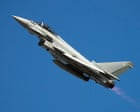
As legacy programs like the Eurofighter Typhoon mature and shift from complex developmental engineering into predictable maintenance and sustainment, the labor profile changes. Meanwhile, next-generation initiatives—such as the Global Combat Air Programme (GCAP), Britain's joint sixth-generation fighter venture with Italy and Japan—rely heavily on digital twins, synthetic testing environments, and automated manufacturing cells rather than sprawling administrative layers.
Efficiency has a ruthless appetite. When a defense giant decides to "streamline" its corporate center and air operations, it is rarely reacting to today's crisis. It is clearing deck space for tomorrow's margin targets.
The People Behind the Org Chart
Numbers protect executives from guilt, which is why corporate announcements always arrive wrapped in bloodless nouns like headcount, overheads, and realignment. To feel the real weight of a thousand lost roles, we have to step away from the press release and construct a composite portrait—a hypothetical example built from the exact job profiles sitting directly in the crosshairs of head office and air-sector cuts.
Consider Arthur, a fifty-four-year-old procurement and compliance coordinator based in Lancashire. (Arthur is an invented name, though versions of him sit at desks across Samlesbury and Farnborough every single day.)
Arthur does not rivet titanium wings onto fuselages. He does not test-fly jets over the Irish Sea. His job is invisible until the moment it goes wrong: he tracks export-control paperwork, audits third-tier component suppliers, and ensures that a specialized alloy shipped from the Midlands meets every regulatory stipulation before it touches an assembly line. When a young engineer panics because a vendor misses a delivery window, Arthur is the person who knows which phone number to dial in Sheffield to get a replacement batch expedited by Thursday.
In a head-office restructuring, Arthur's role is classified as "indirect overhead."
On a spreadsheet, eliminating an administrative coordinator or consolidating two compliance teams into one digital dashboard saves a tidy six-figure sum once salary, employer National Insurance contributions, and pension matching are tallied. Nothing breaks on Monday morning. The assembly line still hums. The quarterly investor presentation still shows unbroken upward momentum.
The fracture happens eighteen months later.
It happens when a supply-chain bottleneck hits a critical airframe component, and nobody left in the building remembers the informal workaround Arthur used back in 2019. It happens when a junior analyst stares at an automated procurement warning, unaware that the software flags false positives every time a supplier changes batch codes.
Organizations rarely collapse from the cuts they make today. They hollow out slowly from the unwritten knowledge they discard in the name of agility.
Why Lancashire Feels the Tremor First
Geography turns corporate strategy into community fate.
In London, a thousand job losses scattered across banking or media vanish into the metropolitan roar within a few news cycles. People update their LinkedIn profiles, meet recruiters for flat whites near Liverpool Street, and land somewhere else by autumn.
The aerospace corridor of northern England operates on a completely different physics.
Drive through the towns surrounding Preston, Blackburn, and the Ribble Valley, and you quickly realize that BAE's air division is not merely an employer. It is an ecosystem. Generational families have worked the sites at Warton and Samlesbury since the days of English Electric and British Aerospace. Grandfathers built Canberras and Lightnings; fathers worked on Tornados; daughters and sons stepped into apprenticeships on the Typhoon line.
When BAE tightens its belt in the air business, the shockwave does not stop at the perimeter fence.
It travels straight down the high street. It hits the independent sandwich shop outside the factory gates that relies on lunchtime foot traffic. It hits the local machine shops and specialist coating firms that survive on subcontracted overflow work. It hits the pub landlord who notices that Friday evenings have grown noticeably quieter because salaried staff are suddenly hoarding cash against redundancy rumors.
I still remember sitting at a kitchen table years ago watching an older relative trace his finger down a voluntary severance calculation sheet with a Bic pen. The math on the page was generous by legal standards—weeks of statutory pay multiplied by decades of service, a lump sum meant to soften the landing. Yet his hands trembled slightly as he circled the final figure. He wasn't calculating whether he could pay the electricity bill next month. He was calculating what happens to a man's sense of usefulness when an institution tells him, politely and lawfully, that it can run faster without him.
That is the invisible tax of every corporate downsizing. Severance checks buy groceries. They do not buy back identity.
The Structural Shift Nobody Wants to Say Out Loud
If you are trying to make sense of why a booming defense contractor is shedding staff, you are colliding with an uncomfortable truth about twenty-first-century industry: growth no longer guarantees employment.
For most of the twentieth century, industrial expansion followed a simple, reassuring equation. More orders meant more factories; more factories meant more engineers, more clerks, more HR officers, and more middle managers. Rising tides lifted entire towns.
Digital engineering broke that equation permanently.
Modern aerospace design relies on model-based systems engineering—virtual simulations where thousands of aerodynamic and structural tests occur inside supercomputers before a single sheet of aluminum is cut. Artificial intelligence assists with supply-chain forecasting, contract review, and routine administrative triage. Tasks that once required a floor of twenty coordinators in a head office can now be supervised by four specialists running enterprise software.
At the same time, defense ministries across Europe are demanding faster delivery cycles and tighter unit costs. Taxpayers and politicians want drones, missiles, and combat aircraft delivered in months rather than decades. To protect profit margins under fixed-price contracts, prime contractors scrutinize every pound spent outside direct manufacturing.
Head offices—with their layers of strategy teams, internal communications, facilities administration, and overlapping management tiers—are always the first targets when the pressure mounts.
Does this mean Britain's sovereign air capability is shrinking? Not necessarily. BAE continues to invest heavily in apprenticeship schemes, software engineering, and next-generation combat air research. The company will likely hire hundreds of specialists in cyber defense, autonomous systems, and digital manufacturing even as it exits a thousand roles in legacy administration and air-sector support.
Cruel symmetry defines modern capitalism: the door marked Exit and the door marked Hiring frequently swing open on the exact same floor, just for entirely different people.
Navigating the Storm Inside the Building
For the employees currently waiting for formal consultation meetings to begin, macroeconomic explanations offer cold comfort. Nobody cares about model-based systems engineering when they are wondering whether their mortgage renewal rate will spike before their severance package clears.
Having watched colleagues navigate similar restructurings across heavy industry and corporate headquarters, a few hard-won realities separate those who weather the shock from those who get blindsided by it:
- Silence from upper management is never neutrality. When leadership announces a review without immediate names, the criteria are usually already drafted. Document your concrete deliverables—cost savings, audit pass rates, vendor rescues—before access to internal systems is restricted.
- Voluntary redundancy windows close fast. In unionized UK defense and aerospace environments, early voluntary packages often carry enhanced terms that disappear once compulsory selection begins. Running the personal tax and pension numbers early, with an independent advisor rather than company HR, prevents panic decisions.
- Transferable skills hide behind industry jargon. Someone who has managed defense export compliance or aerospace supplier quality possesses rare regulatory discipline sought after in medical devices, nuclear energy, rail infrastructure, and civil aviation—provided they translate military acronyms into plain commercial language.
None of these steps cures the sting of being treated as a line item. They simply return a fraction of control to people who suddenly feel passengers in their own careers.
What Remains After the Lights Dim
Walk past a major corporate headquarters at seven o'clock on a winter evening during a restructuring, and the building looks almost serene from the street. Warm architectural lighting washes over glass facades. Security guards nod politely behind reception desks. Inside, cleaning crews empty wastebaskets beside desks that will soon be reassigned or cleared entirely.
On paper, the enterprise is becoming leaner, sharper, and better positioned for a volatile world. Investors will applaud the discipline. Analysts will adjust their earnings-per-share forecasts upward by a fraction of a penny.
Yet somewhere in a quiet suburban cul-de-sac outside Preston or Farnborough, a security pass sits next to a set of house keys on a hallway table, waiting to be handed back for the last time—carrying thirty years of unspoken know-how out the door with it.