Silence.
That is the actual currency of modern power, not cash, not stock options, and certainly not the breathless press releases pushed out at four in the afternoon on a Friday before a holiday weekend. When a major executive steps up to a microphone, adjusts the cuffs of a tailored shirt, and tells a room full of hungry reporters that ongoing discussions with a trillion-dollar technology giant are strictly "confidential," the public usually yawns and scrolls past. We have been trained to treat corporate non-denials like beige wallpaper. They feel bureaucratic. They feel distant. They feel like someone else’s problem.
They are not.
Behind that single word—confidential—sits a locked conference room, a stack of non-disclosure agreements thick enough to stop a door, and a series of quiet compromises that will decide what you see when you wake up tomorrow morning, how much your privacy is worth on the open market, and who gets to own the digital footprint of your daily life. When reports surface of a potential deal between a major media or infrastructure player and Meta, followed immediately by an official refusal to confirm or deny anything beyond the veil of secrecy, we are witnessing the most consequential form of modern theater. Miller—whether representing a legacy publisher, a telecommunications carrier, a hardware innovator, or an artificial intelligence startup—isn't just protecting a stock price. Miller is holding the curtain shut while the stagehands rearrange the entire room around us.
To understand why those four syllables matter so much, you have to strip away the boardroom jargon and look at what actually happens when an independent entity sits across the table from Menlo Park.
The Anatomy of a Whisper
Consider a hypothetical scenario, grounded in the real-world mechanics of Silicon Valley dealmaking over the past decade. Imagine a mid-sized newsroom or a regional tech firm—let’s call the leader Sarah, though her real-world counterparts go by names like Miller every single week. Sarah has spent fifteen years building something real. She hired reporters who knocked on doors in the rain, or engineers who stayed up until three in the morning fixing broken code without venture capital safety nets. Her company has trust. It has an audience that actually cares. What it does not have is an infinite well of cash to survive an algorithmic winter.
Then the phone rings.
On the other end is a business development executive from Meta. The voice is warm, casual, maybe even a little flattering. They love what Sarah has built. They want to talk about a "strategic partnership." Maybe it is licensing content to train the next generation of large language models. Maybe it is integrating a new hardware protocol, or striking a distribution agreement that promises to put Sarah’s work in front of three billion pairs of eyes.
Before Sarah even hears the dollar figure, a document lands in her inbox. The Non-Disclosure Agreement.
In the business world, NDAs are treated like handshakes—a polite prerequisite before anyone gets down to brass tacks. In reality, when a giant negotiates with a mortal, confidentiality is a weapon of asymmetry. Meta has dozens of these conversations running simultaneously across every continent. If one falls through, it is a rounding error on a quarterly earnings call. For Sarah—or for Miller, facing reporters after a leak hits the financial press—that single negotiation is existential. If she admits they are talking and the deal collapses, her board panics, her competitors smell blood in the water, and her employees start updating their resumes. If she denies it and the deal closes next Tuesday, she loses every shred of credibility she ever earned.
So she uses the word. Confidential.
I remember sitting in a cramped, glass-walled office in midtown Manhattan a few years ago, watching an editor-in-chief try to navigate this exact trap. The air conditioning was broken, and the smell of burnt coffee hung heavy over a table littered with printed term sheets. A major platform had leaked that they were "in talks" to rescue the publication’s struggling video division. The editor’s hands were shaking slightly—not from fear, but from the sheer cognitive dissonance of having to lie by omission to the very staff he had spent years lecturing about radical transparency. "If I tell them the truth," he told me quietly after the press call ended, "the deal dies before five o'clock. If the deal dies, forty people lose their health insurance by November."
That is the human friction hidden inside every sterile headline about confidential corporate talks. It is rarely a cartoon villain twirling a mustache. It is almost always a leader backed into a corner, trading transparency today for survival tomorrow.
Why Leaks Happen Before the Ink Dries
If confidentiality is so vital to both sides, why do reports of these deals keep spilling into the public domain right before the official announcement?
Follow the incentives. Nothing in corporate media leaks by accident.
When a rumor surfaces that Miller is in talks with Meta, someone wanted that rumor out there. Usually, it falls into one of three buckets:
- The Price Check: One side feels the valuation is stalling. By leaking that Meta is at the table, the target company suddenly becomes infinitely more attractive to Google, Apple, or Microsoft. Nothing makes a tech billionaire open a checkbook faster than the thought of Mark Zuckerberg getting there first.
- The Trial Balloon: Regulators in Washington and Brussels have grown teeth over the past five years. Before filing formal paperwork that might trigger a massive antitrust investigation, dealmakers sometimes let a whisper slip to see how fiercely the politicians and the public bark.
- The Internal Revolt: Inside almost every company negotiating with Meta, there is a faction that believes they are making a deal with the devil. A mid-level executive or a disillusioned engineer sees a calendar invite they weren't supposed to see, realizes what is being sold off, and picks up an encrypted phone to call a journalist.
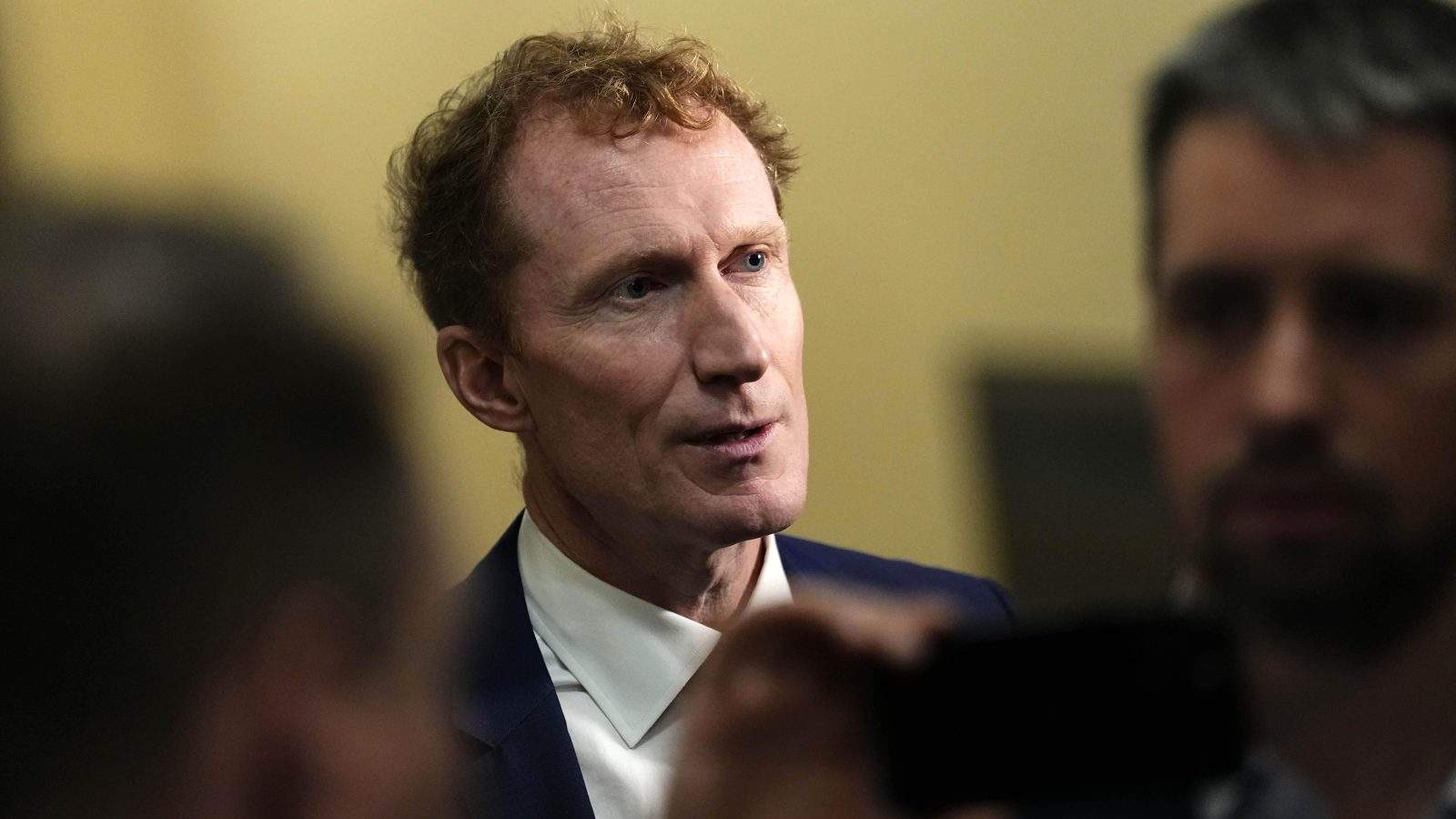
Look closely at the phrasing when the inevitable follow-up question comes: "Talks with Meta 'confidential' following reports of possible deal, Miller says."
Notice what is not there. There is no flat denial. In public relations, a flat denial is cheap and easy when a rumor is false. If I am not talking to Meta, I say, "We are not in talks with Meta." Done. Story dead. The moment an executive invokes confidentiality instead of issuing a denial, they have functionally confirmed that a conversation is happening. They are just begging the press not to turn on the lights before everyone gets their pants on.
The Invisible Stakes for the Rest of Us
You might wonder why any of this should matter to someone who doesn't own stock in either company, doesn't work in tech, and hasn't updated their Facebook profile since 2016.
Because you are the asset being traded in that room.
Whether the deal involves news licensing, artificial intelligence data pipelines, virtual reality hardware, or advertising telemetry, Meta does not write eight- or nine-figure checks out of charity. Think of Meta not as a social network, nor even as a technology company, but as an immense, planetary-scale attention and data refinery. Crude oil is useless sitting in the ground; it only becomes valuable when it is pumped, refined, and burned in an engine. For twenty years, Meta has built the largest refinery on Earth. Now, as traditional user growth hits the ceiling of the global population and privacy rules choke off old tracking methods, the refinery needs new feedstock.
When Miller sits across from Meta in a confidential meeting, the raw material on the table is human behavior.
If it is a media deal, your curiosity and trust in a journalistic brand are being packaged and licensed to train an algorithm that will eventually summarize that journalism without ever sending you to the original website. If it is a software or telecom deal, your daily habits, location pings, or messaging metadata are the grease that makes the integration worthwhile. Even when the deal looks purely technical—a chip partnership, a cloud infrastructure agreement, a cross-platform authentication tool—the downstream effect is always the same: the walls of the digital garden grow six inches higher, and the gates become a little harder to walk out of.
History has a very clear record of what happens after the "confidential" phase ends and the celebratory press release goes live.
Look back at 2014, when WhatsApp was acquired. In the months leading up to the announcement, secrecy was absolute. When the deal finally broke, the promises were ironclad: nothing would change for users, independence would be preserved, privacy remained untouchable. For a few years, that held true. Then, slowly, almost imperceptibly, the terms of service shifted. The data pipelines connected. The walls came down from the inside. Look at Oculus—a scrappy, beloved virtual reality pioneer that promised gamers they would never need a social media account to strap on a headset. Confidentiality shielded the transition, assurances calmed the early adopters, and within a few product cycles, the integration was total.
It is an old pattern, older than Silicon Valley itself. In the nineteenth century, railroad barons held secret parlor meetings in New York and Chicago to merge regional lines, promising local farmers that freight rates would stay fair once the tracks connected. By the time the ink was dry and the confidentiality agreements expired, the farmers had only one train to put their grain on, and the price of a ticket had doubled.
The Weight of Not Knowing
There is a deep, unsettling vulnerability in realizing how little say we have over the digital infrastructure we rely on every single day. It is completely reasonable to feel a flash of cynicism—or just plain exhaustion—every time another headline like this scrolls past. We are asked to care about privacy, to read terms of service that stretch longer than Hamlet, and to make informed choices as consumers, all while the actual terms of engagement are hammered out behind closed doors under strict legal silence.
Even for those of us who spend our lives watching these industries, the fog is thick. You look at a brief wire report quoting an executive's non-answer, and you have to read the negative space like an archaeologist examining a footprint in hardened mud. Who initiated the call? Is this a position of strength, where Miller is dictating terms to a desperate tech giant, or a fire sale disguised as a strategic alliance? Until the regulatory filings drop—or until the talks collapse and the bitter post-mortems leak to the press six months later—nobody outside that room knows for sure.
That uncertainty is deliberate. Secrecy buys time for the dealmakers while depriving the public of the one thing needed for real accountability: sunlight before the concrete sets.
When the Door Finally Opens
Eventually, every confidential negotiation reaches its breaking point. Either the lawyers find a way to bridge the gap between what the smaller company is worth and what the giant is willing to pay, or someone walks away from the table, furious and empty-handed.
If the deal dies, you will probably never hear about it again. Miller will go back to running the business, quietly looking for another partner, and Meta will simply pivot to the next name on a spreadsheet of three hundred potential targets.
If the deal lives, however, you will know within a week. There will be a glossy announcement filled with words about "shared vision," "empowering communities," and "building the future together." There will be smiling photos of executives shaking hands in front of clean, minimalist backdrops. Nobody will mention the tense, late-night calls, the redlined contracts, or the moment a reporter asked a simple question and got shut down with a single, rehearsed word.
And the next morning, when you unlock your phone, open an app, or read a headline before your first sip of coffee, something subtle in the machinery beneath your thumb will have shifted. You won't see a notification about it. You won't be asked to vote on it. Somewhere in a sunlit campus in California, a line of code will simply reroute a tiny stream of information from one server to another, sealing a bargain that was already finished before you even knew the conversation had begun.