Silence.
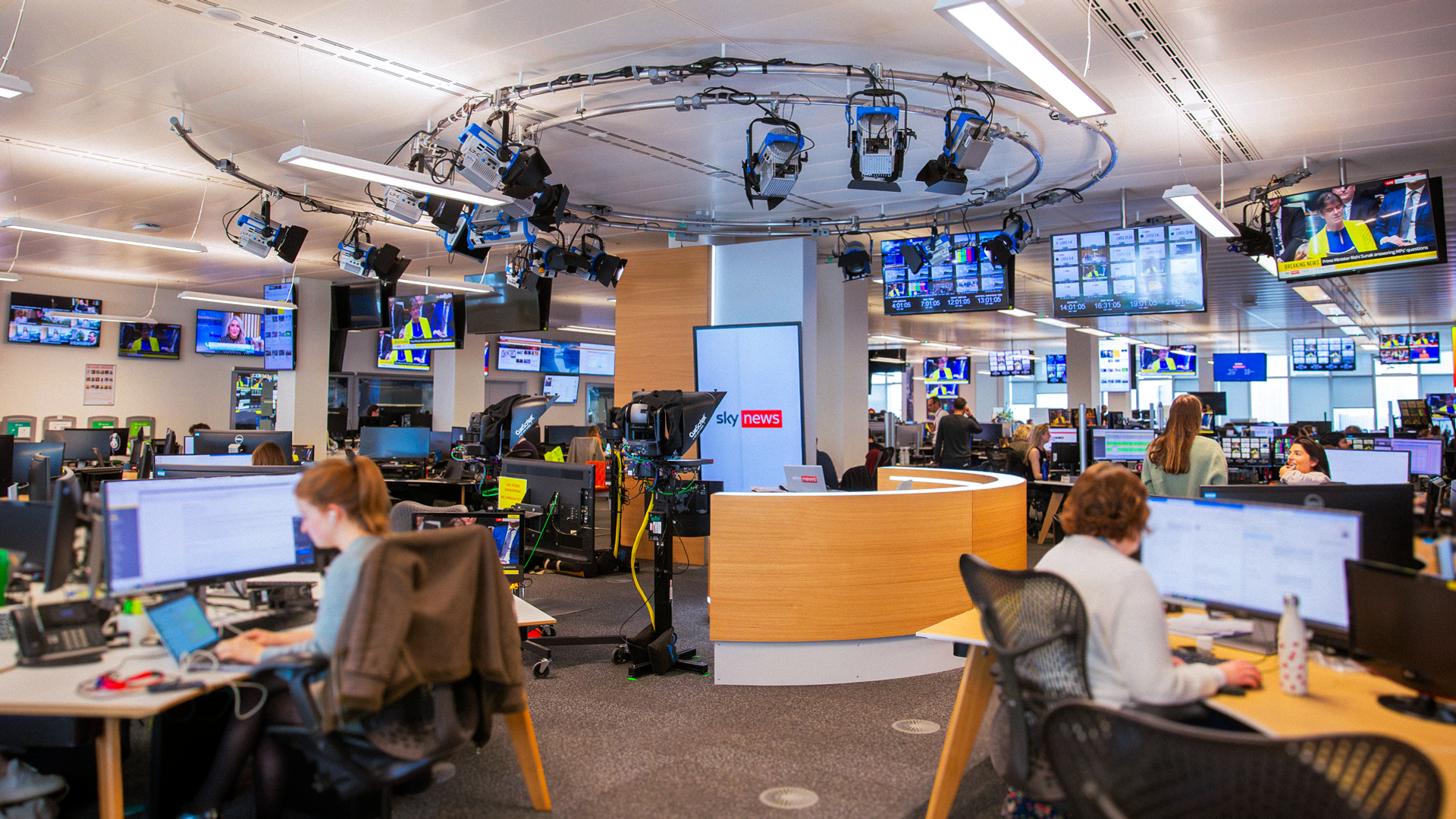
In a live television newsroom, silence is not peaceful; it is the sound of an impending heart attack. I remember standing behind a producer’s shoulder in a cramped London editing suite years ago when an unverified wire report flashed across the monitor—a major political resignation, sudden and seismic. Within eleven seconds, four different screens flickered, three phone lines began screaming simultaneously, and someone knocked a lukewarm flat white directly onto a keyboard. In those chaotic sixty seconds between hearing a rumor and broadcasting a fact, the enemy isn't a rival network. The enemy is friction. Every extra click, every frozen browser tab, every clumsy handoff between a reporter in the rain and an editor at a desk threatens to turn a historic scoop into an embarrassing footnote.
Most people only ever see the polished surface of modern journalism. You wake up, reach for your phone with one eye half-open, and tap a push notification. The video loads instantly. The headline is crisp. The live blog updates smoothly while you brush your teeth. You never see the rusted plumbing underneath that digital house—the decades-old content management systems held together by digital duct tape, prayer, and exhausted engineers working overnight shifts.
That invisible plumbing is exactly why Sky News decided to tear down its digital foundation and rebuild it alongside Arc XP.
On paper, an expanded partnership between a major British broadcaster and a cloud-based digital experience platform sounds like dry corporate housekeeping. Press releases love to dress these moments up in sterile suits, talking about multi-year agreements, unified publishing workflows, and modernized front-end architecture. Nobody cries reading a software procurement announcement. Yet if you pull back the curtain on what Sky News and Arc XP are actually doing—reimagining the Sky News website and mobile app from the chassis up—you find a high-stakes survival story about how truth travels in an era engineered to distract us.
The Anatomy of a Three-Second Abandonment
To understand why a legacy broadcaster would bet its entire digital future on a single platform overhaul, meet Sarah. Sarah is a hypothetical commuter—let’s place her on a packed Northern Line train rattling beneath central London at 8:14 AM—whose attention span has been ruthlessly conditioned by billion-dollar algorithms.
Sarah isn't actively looking for deep investigative journalism while squeezed between a wet umbrella and someone else's backpack. She wants to know why her train is delayed, whether interest rates just jumped, and what happened overnight in Washington or Kyiv. She opens the Sky News app. If that app stutters for three seconds—just three heartbeats—she doesn't patiently wait. Her thumb flicks upward without conscious thought, closing the window and opening a social media feed where an unverified, rage-baiting influencer is already yelling about the exact same headline with twice the speed and zero editorial accountability.
That is the brutal reality facing every legitimate news organization on earth. Accuracy takes time, yet speed dictates survival.
For years, newsrooms treated their websites and apps as secondary storefronts—places where television scripts went to retire after the six o'clock broadcast. That mindset nearly killed traditional media. By the time mobile traffic overtook desktop browsing in the mid-2010s, broadcasters found themselves trapped inside rigid, monolithic software built for an era when people still typed full URLs into Internet Explorer. Journalists were forced to copy-paste text across three different publishing tools just to get one story onto a homepage, a mobile app, and a social feed.
I once watched a brilliant foreign correspondent in Beirut dictate a breaking dispatch over a crackling satellite phone while an editor in London manually reformatted bullet points because the publishing backend couldn't recognize basic spacing from a mobile device. Minutes evaporated. The momentum of the story died in the bottleneck of bad code.
Why Arc XP Became the Newsroom's Secret Weapon
When Jeff Bezos bought The Washington Post in 2013, most observers assumed he bought a newspaper. In reality, he bought a technology problem—and ended up building a software company inside a newsroom. Out of that internal transformation came Arc XP, a cloud-native platform designed specifically for the relentless, unpredictable violence of breaking news cycles.
Think of a standard corporate website like a suburban driveway: traffic is predictable, maybe a few cars at nine in the morning and five in the evening. A breaking news website is an eight-lane highway during an emergency evacuation. Traffic doesn't gently rise; it detonates. Ten thousand readers become four million readers in forty-five seconds when an election is called or a monarch passes away. Conventional software buckles under that sudden weight, throwing up dreaded error screens right when the public needs clarity most.
Sky News was already using Arc XP’s core publishing tools behind the scenes, letting reporters write and file stories into a central hub. Expanding that partnership to power the actual consumer-facing website and mobile app represents a fundamental shift in philosophy. Instead of using Arc XP merely as a digital typewriter, Sky News is handing over the entire stage—the layout engine, the personalization architecture, the video delivery pipeline, and the user experience itself.
Consider what happens next when a major story breaks under this unified roof:
- One single source of truth. A producer in Isleworth cuts a thirty-second vertical video clip from a live parliamentary feed while a correspondent in Brussels files three paragraphs of context. Both assets drop into the exact same cloud environment instantaneously.
- Simultaneous transformation. Rather than rebuilding the story separately for desktop browsers, iOS devices, and Android screens, the platform automatically adapts the visual hierarchy for whichever glass screen the reader holds in their hand.
- Zero-latency resilience. Because the infrastructure scales elastically in the cloud, a sudden tsunami of global readers checking a live election map won't slow down the video stream for someone watching on a spotty 4G connection in rural Scotland.
It sounds effortless when broken into steps, though anyone who has ever migrated a massive digital publication knows the truth is terrifying. Moving a live, 24-hour news operation onto a new digital engine is like changing the tires on a Formula 1 car while it's doing two hundred miles an hour down the straightaway. You cannot put up a "Be Back Soon" sign on breaking news. Wars don't pause for server maintenance. Markets don't wait for beta testing.
The Invisible War for Credibility
There is a deeper, quieter anxiety driving this technological overhaul, and it has very little to do with font choices or sleek menu bars. We are living through an epistemic crisis—a fancy way of saying nobody agrees on what is real anymore.
Synthetic media, automated content farms, and hyper-partisan echo chambers have flooded the information ecosystem with cheap noise. When falsehoods can be generated in milliseconds for fractions of a penny, trusted journalism becomes an expensive luxury good that has to fight twice as hard just to be heard. If a reputable outlet's app feels clunky, dated, or slow, subconsciously the user associates that technological friction with institutional decay. If they can't even make a video load properly, the cynical brain whispers, how can I trust their reporting?
Design, speed, and reliability are no longer superficial luxuries; they are the visual language of trustworthiness.
Sky News occupies a unique, almost paradoxical space in British and global media. Founded in 1989 as the UK’s first dedicated 24-hour news channel, it spent its early decades fighting to be taken seriously alongside the towering institutional weight of the BBC. Over thirty-five years, it earned its stripes through sheer relentless presence—on the ground in Baghdad, inside Downing Street corridors, live from courtroom steps when verdicts dropped. Yet heritage alone doesn't protect a brand when an entire generation gets its news from glowing vertical rectangles without ever turning on a television set.
By rebuilding its app and website on Arc XP’s modern front-end framework, Sky News is making a clear declaration: its digital products are no longer companions to the TV broadcast. They are the flagship.
What Changes When the Friction Disappears
Let’s return to Sarah on that delayed Northern Line train, six months after the new platform goes live.
The train lurches to a halt inside a dark tunnel between Euston and King's Cross. Her signal drops to a single weak bar. She taps the Sky News icon. Instead of a spinning white wheel of death, the interface snaps open immediately, cached intelligently so headlines and core text appear before the heavier graphics even finish rendering.
She taps into a developing story about a sudden rail strike. Inside the article, she doesn't have to hunt for context or open four new tabs to understand the backstory. A clean, native video player sits right beside a live timeline, letting her watch a sixty-second briefing with automatic captions—no headphones required—while scrolling down to see an interactive map of affected routes. If she wants deeper analysis, the architecture quietly surfaces related reporting without bombarding her with intrusive pop-ups that hijack her screen.
Nothing about that experience feels revolutionary on the surface. And that is precisely the point. Great technology doesn't wave its arms demanding applause; it steps out of the way so human storytelling can breathe.
For the journalists inside the newsroom, the transformation is even more visceral. When editors aren't wrestling with broken formatting templates or waiting twenty minutes for a video file to transcode across incompatible servers, they reclaim something priceless: time to think. Time to make one more phone call to verify a dubious claim. Time to sharpen a muddy headline. Time to ask the harder follow-up question during a live interview.
I remember talking to a veteran digital editor after a similar platform overhaul at a European daily a few years back. I asked him what his favorite new feature was, expecting him to mention analytics dashboards or automated social publishing. He looked at his watch, smiled faintly, and said, "My team went home on time on a Tuesday."
Burnout has quietly hollowed out modern journalism over the past decade. Asking reporters to be television correspondents, podcast hosts, social media managers, and amateur web developers simultaneously has pushed thousands of talented people out of the profession. A unified publishing backbone won't cure every economic pressure squeezing the media industry, nor will it magically restore public faith in institutions overnight. Software cannot replace shoe-leather reporting, courage in conflict zones, or stubborn skepticism in press briefings.
The Heavy Cost of Standing Still
Of course, betting heavily on a single external technology partner carries its own quiet risks. Media executives still carry the scars of the 2010s, when entire newsrooms pivoted recklessly toward third-party social platforms, chasing viral reach only to have algorithm changes wipe out half their traffic overnight. Handing your core digital infrastructure to any vendor requires trust—and leverage.
Yet Arc XP occupies a fundamentally different territory than social networks. It isn't an aggregator trying to trap readers inside someone else's walled garden; it is an engine room built so publishers can own their direct relationship with their audience again. In an era where search engines increasingly summarize news without sending clicks back to the reporters who actually gathered the facts, owning a fast, habit-forming app and website isn't just a smart business move. It is an existential necessity.
Every time a reader chooses to open a dedicated news app directly rather than stumbling across a distorted headline in a chaotic social feed, a tiny piece of civic sanity is preserved.
Late one evening, long after the prime-time broadcasts wrap up and the studio lights dim down to a low blue hum, a single breaking news desk remains awake in west London. Monitors glow softly in the dark. Somewhere across an ocean, a quiet tremor registers on a seismograph, or an unexpected diplomatic cable leaks onto a secure server. Within seconds, a reporter types forty words into a clean white screen, hits publish, and sends a signal racing through cloud servers across continents. Three thousand miles away, a phone vibrates on a bedside table, lighting up a dark room with clear, verified light before the rumors even have a chance to wake up.