The fluorescent lights in the breakroom of a mid-sized manufacturing plant in Ohio hum at a frequency that slowly drills into your skull.
It is 6:15 AM. A man named Marcus—a hypothetical composite, yes, though you have met him a dozen times at gas stations and Little League bleachers—stares at a lukewarm mug of coffee. His lower back aches from twenty years of lifting steel casings. On the small television bolted to the cinderblock wall, a cable news ticker flashes red and blue. A congressman in a tailored suit is shouting about subpoenas, special counsels, and the urgent moral necessity of another four-year investigation into the former president.
Marcus does not turn up the volume. He reaches for the remote, hits the power button, and sits in the sudden, blessed silence.
To the political class in Washington, that television screen is the center of the universe. To Marcus, it is static. It is background noise competing with the very real, very loud panic of a grocery bill that has jumped thirty percent in three years and a local hospital that just closed its maternity ward.
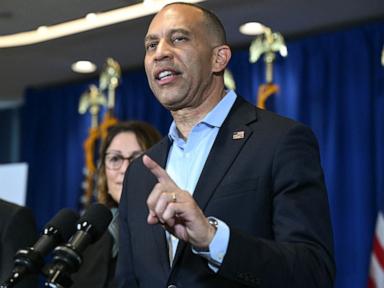
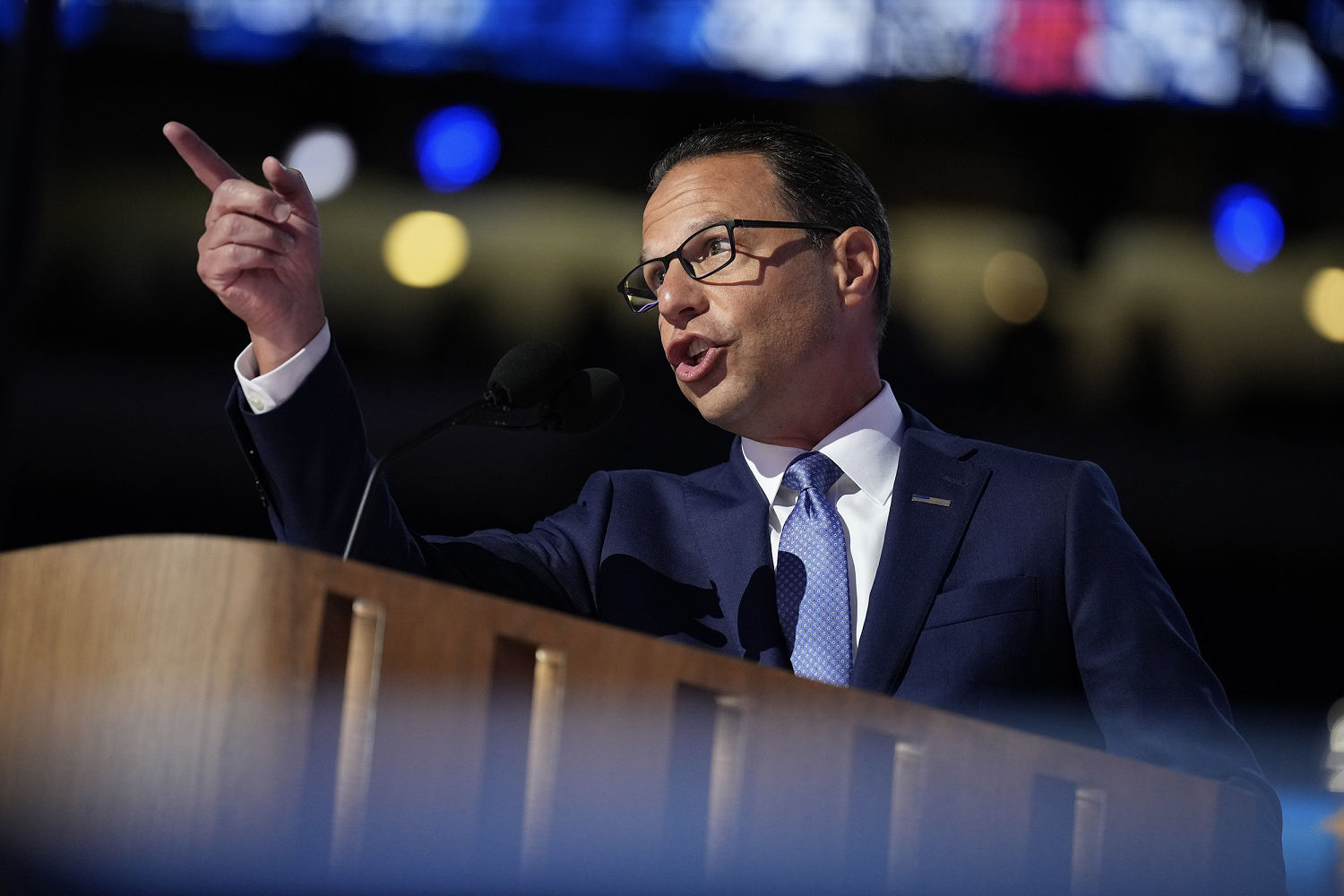
This is the exact fault line where American politics is currently fracturing. And when Senator-elect Adam Hamilton recently stepped in front of a microphone and announced he would be "disappointed" if Democrats spent the next congressional session focused on investigating Donald Trump, he wasn't just offering a mild procedural preference. He was throwing a wrench into the most profitable, addictive machine in modern political history.
To understand why Hamilton’s comment sent tremors through the partisan establishment, you have to look past the surface-level cable news chatter. You have to examine what happens to a democracy when outrage becomes its primary currency, and what it costs the people left holding the worthless paper.
The Seductive Trap of the Spectacle
Politics has always been theater, of course. From the Lincoln-Douglas debates to the televised Watergate hearings, Americans have long gathered around the glow of civic drama.
There is a crucial difference, however, between accountability and obsession.
Think of the federal government like a massive, aging cargo ship crossing a stormy ocean. There are leaks in the hull. The engine is sputtering. The crew is exhausted. Investigating a past captain for steering the ship into an iceberg is a valid, necessary part of maritime law. You need to know what went wrong so it doesn't happen again.
But what happens when the entire crew abandons the engine room, ignores the rising water on the lower decks, and spends four years holding dramatic trials on the poop deck? The courtroom drama might be riveting. The speeches might go viral. Meanwhile, the ship quietly sinks.
I remember sitting in a crowded diner in Scranton during the height of the 2019 impeachment hearings. The television above the counter was tuned to C-SPAN. Two elderly men in faded union jackets were eating eggs. One glanced up at the screen, shook his head, and said to the waitress, "They spend millions of dollars to tell us what we already know, and they still can't fix the potholes on Mulberry Street."
That moment has stayed with me for years because it captured a profound, unspoken exhaustion. When political parties dedicate their finite bandwidth—their committee hours, their floor time, their media oxygen—to endless investigative cycles, they are making an invisible trade. They are trading tangible, kitchen-table governance for the cheap dopamine hit of partisan warfare.
Adam Hamilton’s warning cuts right to the heart of this trade-off. As a newly minted senator-elect, Hamilton enters Washington without the scar tissue of decades spent in the Capitol’s trench warfare. He is looking at the institution with fresh eyes, and what he sees is a party risking its future on a backward-looking crusade.
The Economy of Outrage
Why is it so hard for Washington to stop? Why would lawmakers even consider pouring billions of dollars and thousands of legislative hours into investigating a political rival when voters are screaming about housing costs and healthcare?
Follow the incentives.
In the modern media ecosystem, passing a bipartisan bill to streamline supply chain logistics or expand rural broadband is boring. It doesn't trend on social media. It doesn't get you booked on primetime cable panels. It certainly doesn't trigger an avalanche of five-dollar panic donations from across the country.
Subpoenas, on the other hand, are pure rocket fuel.
Every time a committee chair bangs a gavel and announces a new probe into Donald Trump’s finances, his rhetoric, or his past administration, the fundraising emails fly out within minutes. We are the last line of defense, the subject lines scream. Chip in $15 right now to hold him accountable.
It is a closed-loop system that rewards conflict and punishes compromise. Politicians get airtime and campaign cash; media networks get ratings; partisan activists get the emotional catharsis of seeing their enemies hauled before a microphone. Everybody inside the Beltway wins.
Except the people who actually pay the bills.
Consider what happens next when a legislative session is hijacked by investigative theater. The Congressional calendar is notoriously rigid. Once you account for weekends, district work periods, and holidays, the Senate and House are often in session for fewer than 150 days a year. Every single day spent drafting subpoenas, fighting executive privilege battles in federal court, and staging televised hearings is a day stolen from writing legislation.
Let’s look at the math of legislative bandwidth. During the 116th and 117th Congresses, major investigative committees consumed hundreds of staffers and tens of millions of taxpayer dollars. While some of that work uncovered genuine constitutional concerns, the sheer volume of overlapping probes created a logjam that stalled movement on everything from immigration reform to prescription drug pricing.
Voters are not stupid. They can feel the difference between a government that is working for them and a government that is performing for them.
The Ghost in the Machine
There is a deeper, more psychological danger in making Donald Trump the permanent centerpiece of Democratic strategy.
When a political movement defines itself entirely by who it opposes, it slowly hollows itself out. It forgets what it actually stands for. It loses the ability to articulate an affirmative vision of the future because it is too busy litigating the past.
Imagine a marriage where one partner spends every single dinner listing the terrible things the other partner did three years ago. Even if every single accusation is factually accurate, the relationship cannot survive on grievance alone. Eventually, the kids at the table just want someone to pass the potatoes and talk about tomorrow.
American voters are the kids at the table.
For nearly a decade, Donald Trump has functioned as a massive gravitational anomaly in American politics. He bends light, warps time, and pulls every conversation, every news cycle, and every legislative priority into his orbit. By threatening to launch a fresh wave of investigations, Democrats risk handing him the exact thing he thrives on: relevance, victimhood, and total control of the narrative.
When Hamilton says he would be disappointed by a focus on investigations, he is recognizing a fundamental truth about political psychology. You do not defeat a populist movement by putting it on trial in Washington. You defeat it by proving that democratic institutions can actually deliver material improvements to people's lives.
If a family in Arizona sees their energy bills drop because of smart grid investments, they care a lot less about partisan shouting matches. If a small business owner in Michigan can finally hire two new mechanics because of targeted tax credits and vocational training grants, the cable news ticker loses its power.
Competence is the ultimate antidote to chaos.
A Different Kind of Courage
It takes a strange, quiet kind of courage to tell your own side to stand down.
In the hyper-polarized climate of 2026, moderation is often mistaken for weakness. Nuance is treated like treason. When a newly elected senator suggests that the party should pivot away from investigating its greatest foil, the immediate backlash from the activist base is fierce and predictable. Are you saying he is above the law? Are you giving up on accountability?
These are fair questions, and we shouldn't brush past them lightly. The rule of law matters. Equal justice under the law is the bedrock of the republic, and no president—past, present, or future—should be immune from legitimate legal scrutiny.
Yet there is a vast chasm between the independent work of the justice system and the partisan theater of congressional investigations. Courts exist to determine guilt and innocence based on evidence. Congress exists to pass laws, fund the government, and solve systemic national problems. When Congress tries to play prosecutor, it usually does a terrible job at both prosecuting and legislating.
I remember talking to a seasoned Capitol Hill staffer a few years back, late at night in a quiet dive bar near Union Station. He had worked on three major congressional investigations. He looked exhausted, aged well beyond his thirty-something years. I asked him what he was proudest of from his time on the Hill.
He didn't mention a single subpoena. He didn't mention a single viral hearing clip. He pulled out his phone and showed me a photo of a newly built bridge in his home state—a project funded by a quiet, unglamorous infrastructure bill he had helped draft at two in the morning. "That thing will stand for eighty years," he told me. "Nobody knows my name, and nobody watched it on TV. But people drive across it to get to work every day."
That is the standard Adam Hamilton is trying to resurrect.
The Heavy Cost of Looking Backward
Think about the sheer scale of the challenges staring down the barrel of the next decade.
Artificial intelligence is rapidly reshaping the labor market, threatening white-collar and blue-collar jobs alike with zero regulatory guardrails in place. The national debt is climbing at a trajectory that threatens to crowd out essential investments in education and defense. Our electrical grid is straining under the weight of extreme weather and soaring data center demand. Healthcare costs continue to swallow family budgets whole.
None of these problems will be solved by a subpoena.
Not a single kilowatt of clean energy will be generated by a heated exchange in a Senate hearing room. Not a single insulin vial will become cheaper because a committee chair scored a clever soundbite on evening television.
When politicians choose to fight yesterday’s battles, they are actively neglecting tomorrow’s emergencies. It is a form of institutional procrastination disguised as righteous indignation. And the longer it goes on, the more cynical the public becomes.
Look at the trust metrics in almost every major Western democracy right now. Confidence in legislative bodies hovers near historic lows. Young people are increasingly disengaged from traditional party politics, viewing both sides as trapped in an endless, narcissistic loop of mutual destruction. They look at Washington and see a nursing home for old grievances rather than an engine for future progress.
Hamilton’s intervention is a lifeline thrown to those disillusioned voters. By signaling that his priority is forward-looking governance rather than backward-looking retribution, he is offering a rare commodity in modern politics: adulthood.
The Test Ahead
Of course, words are easy when you haven't yet taken the oath of office.
Once Adam Hamilton walks onto the Senate floor, the gravitational pull of the institution will immediately begin working on him. Party leaders will ask for his loyalty. Fundraising consultants will warn him that playing nice doesn't pay the bills. Cable bookers will dangle primetime slots in front of him if he’s willing to throw a little red meat to the base.
The Washington machine is designed to grind down idealists and turn them into reliable soldiers for the permanent campaign.
Whether Hamilton can hold his ground—and whether enough of his colleagues will join him—remains the defining question of the upcoming session. If Democrats take his warning to heart, they have a genuine opportunity to break the cycle of perpetual outrage. They can force the political conversation back onto terrain where actual results matter: wages, housing, healthcare, energy, and national security.
If they ignore him and plunge headfirst into another round of endless investigations, they will be walking straight into a trap of their own making. They will give their opponents an endless supply of political ammunition while leaving millions of working families wondering why nobody in Washington seems to care about their lives.
Back in that quiet breakroom in Ohio, Marcus finishes his coffee. He stands up, stretches his aching back, and walks out onto the factory floor where the heavy machinery is already roaring to life. He doesn't care who wins the next cable news debate. He doesn't care which senator gets the most retweets before noon. He just wants to know that when he clocks out at the end of the day, the country he is building will still be standing.