The smell of chlorine never really leaves your nostrils. Even months after you peel off the last yellow Tyvek suit, scrub your forearms until the skin turns raw, and board a commercial flight back to a city where people complain about traffic, a whiff of bleach in a hotel hallway will drop your heart straight into your stomach.
Ask anyone who worked the red zones in West Africa in 2014, or North Kivu in 2018, or Uganda in 2022. You do not forget the heat trapped inside three layers of impermeable plastic, the fogging goggles that turn a patient’s face into a smear of watercolor, or the terrifying arithmetic of a ward where half the beds empty out by morning—not because people went home, but because they died. Meanwhile, you can find related events here: The Quiet Terror of an Ordinary Cough Seven Thousand Miles From Home.
When a dry press release crosses a news desk announcing that the World Health Organization has approved clinical trials for two new Ebola vaccines, most people scroll right past it. It sounds bureaucratic. Routine. Like a footnote in a medical journal meant for infectious disease specialists in Geneva or Atlanta.
It is not a footnote. It is a flare fired into a very dark sky. To explore the bigger picture, check out the detailed report by World Health Organization.
To understand why two new vaccine trials matter so profoundly right now, you have to strip away the sterile language of regulatory approvals and step onto the red dirt of a rural clinic where a nurse is staring at a vial of clear liquid, praying it matches the strain of virus currently tearing through the next village over.
The Trap of the Single Key
For the past decade, global health officials have leaned heavily on a triumph of modern science—Ervebo, the Merck vaccine that proved remarkably effective during the 2014–2016 West African epidemic and subsequent outbreaks in the Democratic Republic of the Congo. Along with Johnson & Johnson’s two-dose regimen, Zabdeno and Mvabea, humanity finally had a shield against a pathogen that once carried a fatality rate hovering around 90 percent.
We breathed a collective sigh of relief. We put Ebola in the "solved" column of our mental ledger.
That was a dangerous mistake.
Consider a hypothetical scenario—one that keeps epidemiologists awake at three in the morning. Imagine a small trading town on the border of Uganda and the DRC. A hunter carries bushmeat home from the forest. Three days later, he develops a fever that feels like malaria, followed by blinding headaches, vomiting, and the unmistakable, terrifying cascade of internal bleeding. By the time health workers arrive with refrigerated coolers packed with existing Ebola vaccines, a genetic test comes back from the lab.
The nurses freeze. The coolers are useless.
Why? Because Ebola is not one single virus. It is a family of distinct species, and the vaccines we have stockpiled in our global emergency vaults were built almost exclusively to fight one specific culprit—Zaire ebolavirus.
When the Sudan ebolavirus flared up in Uganda in late 2022, killing 55 people before sheer, exhausting contact tracing stamped it out, doctors had zero approved vaccines to deploy. None. They were fighting a twenty-first-century biological fire with nineteenth-century buckets of water—isolation, hydration, and desperate prayer.
Think of the Ebola virus like a master thief who changes the locks on a house every time he breaks in. Our current vaccine is a precision-cut brass key that opens the Zaire door effortlessly. Against the Sudan door, or the Bundibugyo door, that brass key will not even slide into the keyhole.
This is the invisible vulnerability behind the WHO’s decision to greenlight trials for two new vaccine candidates. We are not merely adding extra bottles to a shelf that is already full. We are trying to forge a master key before the thief kicks down the front door again.
Inside the Cold Chain Nightmare
Even when we have the right key, getting it to the lock is an ordeal that defies imagination.
If you have never seen a "cold chain" break down in equatorial heat, it is hard to appreciate how fragile our medical miracles actually are. Ervebo, the frontline Zaire vaccine, must be stored at ultra-cold temperatures—minus 60 to minus 80 degrees Celsius. That is colder than a winter night in Antarctica.
Now picture transporting that vaccine across a region where paved roads dissolve into knee-deep mud during the rainy season, where armed militias control river crossings, and where the local clinic’s sole generator sputters out because a fuel truck got stuck forty miles back. You are carrying millions of dollars of life-saving biotechnology in specialized Arktek coolers, racing against a ticking clock before the ice melts and the doses turn into expensive saltwater.
I remember watching a logistics coordinator in eastern Congo sit on an overturned crate outside a treatment center, holding his head in his hands because a power surge had fried a freezer unit overnight. Four hundred doses. Gone. Four hundred people—nurses, ambulance drivers, mothers who had washed the bodies of their dead sisters—suddenly left naked against a virus that spreads through a single drop of sweat or blood.
The two new vaccine candidates entering WHO-backed trials are designed specifically to dismantle these traps. Researchers are hunting for formulations that can survive at standard refrigerator temperatures—or even ambient room temperature for weeks—while triggering rapid immunity after a single shot, and critically, broadening protection across multiple Ebola species, especially the lethal Sudan strain.
Wait. Let that sink in.
A single shot. Stable without arctic freezers. Capable of blocking more than one flavor of the deadliest filovirus on earth.
If these trials succeed, the entire geometry of outbreak response shifts overnight. Instead of flying in specialized deep-freeze equipment from Switzerland while a virus quietly multiplies through three generations of human transmission, a local nurse on a motorbike with a standard insulated lunchbox could vaccinate an entire village before sunset.
The Architecture of a Clinical Trial in the Shadow of Fear
Of course, approving a trial on paper and executing it in the real world are two entirely different beasts.
When people hear "clinical trial," they picture gleaming glass towers in Boston or Zurich, clipboards, polite volunteers sipping water in air-conditioned waiting rooms, and neat spreadsheets. Ebola trials do not happen in Zurich. They happen in the exact communities where distrust of outsiders runs deepest, and for painfully understandable reasons.
Let us be honest about the history here, because pretending otherwise is how public health campaigns fail.
In communities scarred by decades of resource extraction, civil conflict, and broken promises from distant capitals, a convoy of white SUVs rolling into town with men in space suits asking to inject healthy people with an experimental liquid looks less like salvation and more like a threat. During the 2018–2020 DRC outbreak, armed groups burned Ebola treatment centers to the ground. Rumors spread faster than the pathogen itself—whispers that the clinics were harvesting organs, or that the vaccines themselves were causing the bleeding.
You cannot bully frightened people into trusting science. You have to earn it, inch by agonizing inch, through local voices.
In these newly approved WHO trials, researchers use an ingenious, battle-tested strategy called "ring vaccination"—the exact blueprint that eradicated smallpox from the earth in the 1970s. Rather than trying to vaccinate an entire country of ninety million people, teams draw a protective circle around every confirmed patient. They vaccinate the patient’s immediate family, the neighbors who shared a meal, the motorbike taxi driver who drove them to the clinic, and the contacts of those contacts.
They build a firewall of human immunity around the spark so the forest never catches fire.
Yet running a trial during a lull—or at the fragile, chaotic edge of an active flare-up—carries a profound ethical weight. Researchers have to explain randomized placebos or comparator arms to a mother whose brother just died in an isolation tent. They have to obtain genuine informed consent when panic is thick enough to choke on. It is messy, emotionally exhausting work, and anyone who tells you vaccine development is pure, detached laboratory math has never looked a grieving father in the eye while holding a syringe.
Why a Virus in a Remote Forest Is Your Problem Too
There is a persistent, comforting illusion in wealthy nations that hemorrhagic fevers are a tragic local issue—something that happens "over there," confined to dense rainforests and remote river basins.
We should know better by now. We lived through 2020. We watched a respiratory virus leap from a single market to every zip code on the planet in less than ninety days.
Ebola does not spread through the air like measles or coronavirus, which is the only reason it has not already leveled major global metropolises. It requires direct contact with bodily fluids. That biological quirk is our sole grace period.
Yet the world is shrinking at breakneck speed. Deforestation is pushing logging crews, mining operations, and subsistence farmers deeper into untouched bat habitats—the suspected natural reservoir where Ebola sleeps between human outbreaks. Meanwhile, regional airports connect towns once separated by weeks of jungle travel to international hubs in Nairobi, Addis Ababa, Brussels, and New York in under twelve hours.
In 2014, a single infected traveler stepped off a plane in Dallas, Texas. Two nurses who treated him contracted the virus. The panic that rippled through American hospitals—and the billions of dollars spent scrambling to retrofit isolation wards—proved beyond any shadow of a doubt that a breach anywhere is a vulnerability everywhere.
Investing in these two new Ebola vaccines is not charity. It is global self-defense. Every dollar spent testing a thermostable, multi-strain vaccine in a trial today saves thousands of lives and billions of dollars in emergency containment tomorrow.
What the Trial Actually Tests
Strip away the drama, and three unforgiving questions sit at the heart of these WHO-approved trials.
First: Safety. Does the vaccine provoke an acceptable immune response without triggering severe fever, joint pain, or neurological complications? When you are asking healthy people to take a preventative shot, the bar for safety is absolute.
Second: Immunogenicity—and speed. How fast does the human immune system build its wall after the needle leaves the arm? In an Ebola outbreak, a vaccine that takes six weeks and two booster doses to work is virtually useless for ring vaccination. The virus incubates in two to twenty-one days. The vaccine has to outrun the pathogen inside the human bloodstream. Researchers will measure antibody titers at day seven, day fourteen, and day twenty-eight, looking for a sharp, vertical spike in neutralizing defenses.
Third: Durability. Does the shield hold for six months, or five years? Healthcare workers on the front lines—the doctors, burial teams, and ambulance drivers who absorb the highest risk—cannot afford protection that evaporates before the next rainy season brings another spillover event.
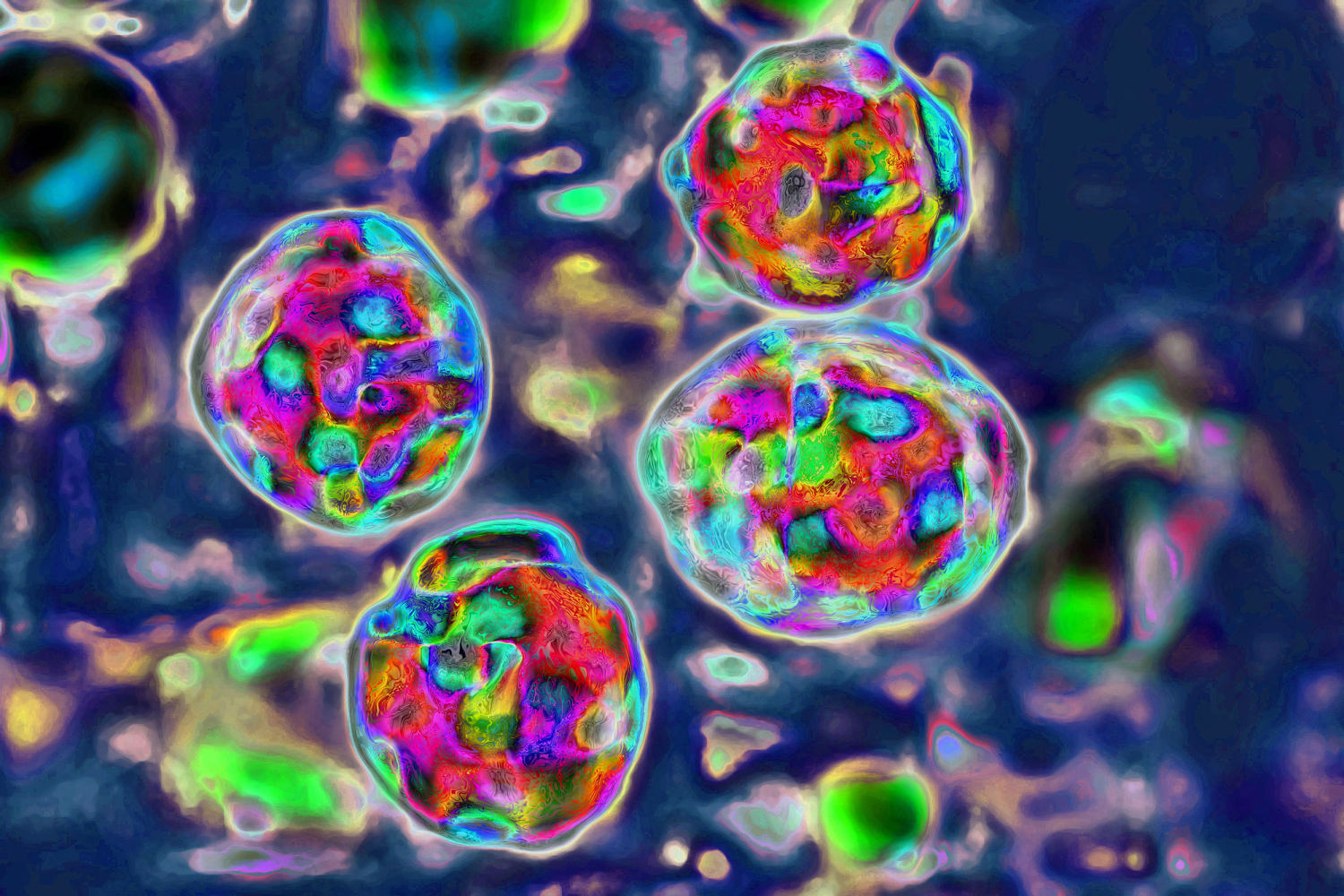
The science behind these candidates often relies on viral vectors—harmless, hollowed-out carrier viruses like modified chimpanzee adenoviruses or vesicular stomatitis viruses, engineered to carry a single surface protein from the Ebola virus. Think of it like showing a wanted poster to the body’s security guards. The vector carries the mugshot of Ebola’s outer spike protein into your cells. Your immune system studies the mugshot, manufactures targeted antibodies and killer T-cells, and memorizes the face—all without ever encountering the live, lethal virus itself.
It is elegant. It is precise. And until it survives the crucible of human trials, it is still just a hypothesis.
The Silence Between Outbreaks
Right now, in laboratories from Oxford to Kinshasa, technicians are labeling glass vials, calibrating centrifuges, and training community health workers on how to log adverse reactions on ruggedized tablets.
There are no sirens wailing today. No headlines screaming about rising death tolls or overwhelmed morgues. In the public consciousness, Ebola is quiet.
That silence is deceptive. Somewhere in the canopy of the Congo Basin, a fruit bat carries a strand of viral RNA that has existed for millennia, waiting patiently for the next accidental encounter with a human hand. It does not care about regulatory timelines, funding shortfalls, or election cycles. It only knows how to replicate.
Years ago, outside a treatment center in Sierra Leone, I watched a young survivor walk through the gate after beating the virus. She had lost her husband and two children inside those plastic walls. Her clothes hung loose on a frame wasted by fever, and she squinted against the blinding afternoon sun like someone emerging from a cave. The local staff clapped and sang as she walked out, stamping her discharge certificate with ink that bled slightly in the humidity.
She stopped at the edge of the gravel road, looked back at the white tents, and then down at her own trembling hands—hands that were now, by some brutal miracle of biology, immune to the monster that had taken everything she loved.
We cannot ask people to earn their immunity by surviving a slaughterhouse. Not anymore. Two new vials are heading into the field, carrying the quiet, stubborn refusal to wait for the next grave to be dug before we sharpen our weapons.