The ballots had barely finished cooling when the maps on the wall changed shape.
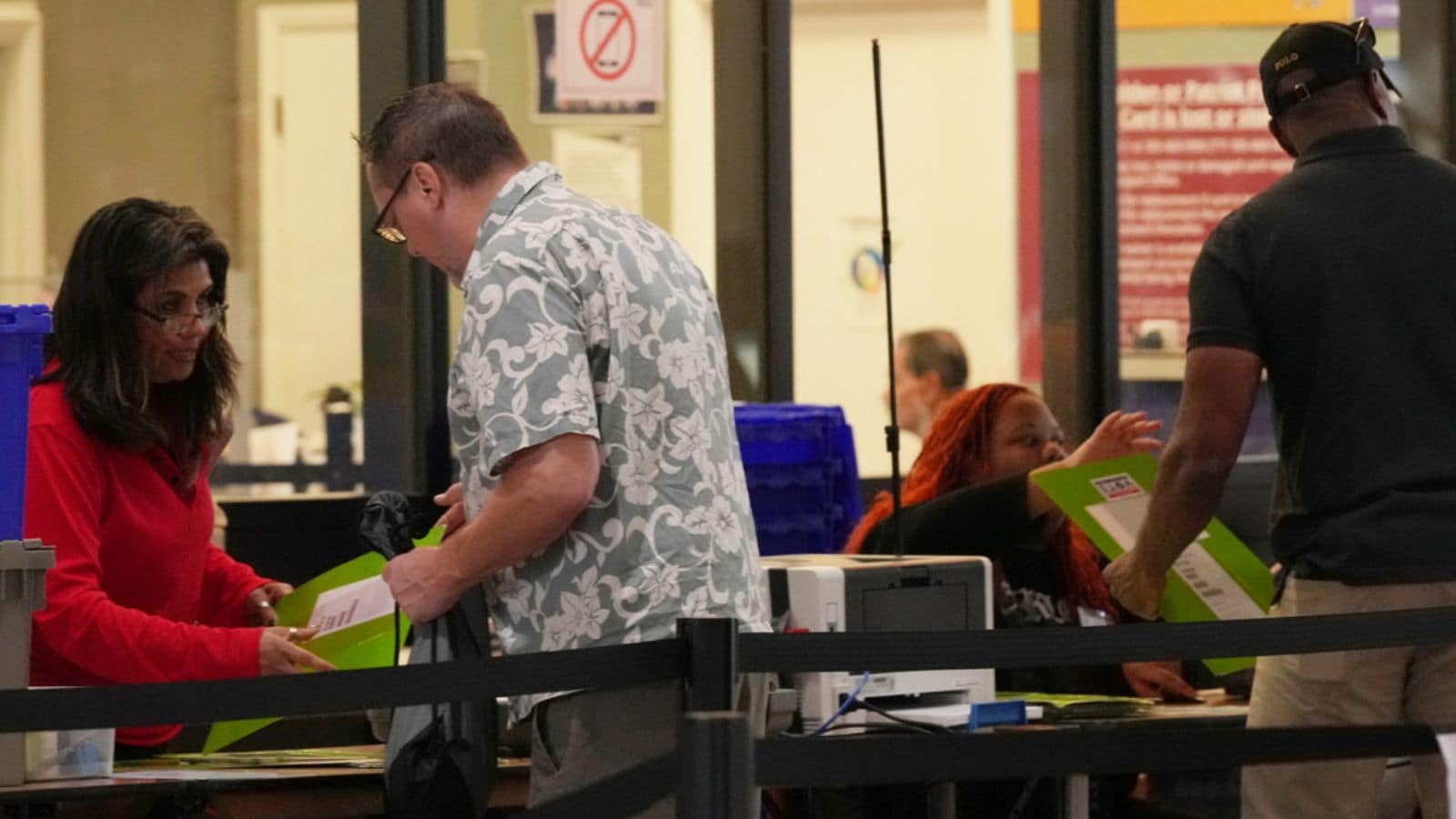
Not on the coasts of the Persian Gulf, not yet, though carrier strike groups and dozens of warships still loomed over choppy blue water. The shift happened inside a quiet suburban precinct in Ohio, at a kitchen table in Pennsylvania, inside a Tel Aviv apartment listening to sirens that had grown too familiar over nearly nine months of war. Voters went to the polls in November 2026, exhausted by rising prices at the pump and grocery aisle, weary of promises of quick victories that stretched on and on. Democrats won control of both chambers of Congress, handing Washington a new political arithmetic just as American and Israeli planners weighed whether to resume strikes against Iran.
War, on paper, looks like a neat ledger of targets, timetables, and troop counts. Nuclear sites, missile arsenals, energy infrastructure, naval blockades, a four-to-seven-day campaign. In real life, it feels like holding your breath underwater while someone argues on shore about how long you can stay under.
Three Lives Caught Between Ballot Boxes and Sirens
To understand what a post-midterm strike plan actually means, step away from the Situation Room and look at three people whose days are ruled by decisions made thousands of miles away. (Note: The following three characters are hypothetical composites created to illustrate real human pressures reported around the conflict and its economic fallout.)
In Columbus, Ohio, Hannah, a logistics coordinator for a regional food distributor, watches diesel prices climb every Tuesday morning. When the war started earlier in 2026, pundits talked about energy markets as if they were weather forecasts—clouds rolling in, clouds rolling out. For Hannah, a spike in freight fuel means arguing with suppliers over thin margins, explaining to warehouse staff why overtime is tight, and wondering whether her own grocery bill will bite harder next month. When she voted in the midterms, she wasn't reading intelligence assessments about Iran's missile recovery. She was voting against the quiet erosion of her household budget.
Four thousand miles east, in a high-rise outside Tel Aviv, Yael, an emergency room nurse, keeps a small go-bag by the front door even during lulls. She has lived through months of tension since the joint US-Israeli war began, listening to politicians debate whether airstrikes will deter Tehran or invite massive retaliatory missile fire. To Yael, deterrence isn't an abstract theory in a defense journal. It is the hum of air-defense batteries, the strain in her colleagues' eyes after twelve-hour shifts, and the dread that a short, sharp campaign could widen into something far harder to contain.
Across the Gulf in Shiraz, Farhad, a small-business printer whose shop relies on imported paper and spare parts, lives inside a different kind of squeeze. Sanctions, naval pressure, and the looming threat of renewed bombardment have turned ordinary planning into guesswork. If strikes resume, power cuts could follow; if negotiations stall, the blockade and economic strain grind on. Farhad doesn't control his government's nuclear posture or its regional proxies, yet every shift in Washington or Jerusalem lands on his doorstep like a sudden change in barometric pressure.
None of these three people asked to be characters in a geopolitical drama. Yet all three are living inside its consequences.
Why Election Calendars Bend Military Clocks
Diplomacy often moves at the pace of glacial ice, while politics moves like a strobe light.
Throughout the autumn of 2026, the calendar itself became a weapon and a constraint. Ahead of the November midterms, leaders in Washington weighed domestic political costs, with President Donald Trump signaling restraint before the vote even as reports emerged of joint US-Israeli contingency planning for renewed strikes afterward. Meanwhile, Prime Minister Benjamin Netanyahu and Israeli security officials pressed the case for decisive action—including visits to Washington by senior figures such as Mossad chief Roman Gofman to meet with US counterparts like CIA Director John Ratcliffe—arguing that Iran's missile and nuclear capabilities required firm pressure.
Think of it like two drivers sharing a car when one reaches for the brake and the other taps the accelerator.
Inside the US administration, reports pointed to sharp friction over intelligence reliability, strategic payoff, and voter frustration over war-driven inflation. Even Vice President JD Vance reportedly felt the political heat from the GOP's midterm losses before being steered back toward domestic priorities, while Senate Republicans blocked a war-powers measure aimed at curbing or requiring congressional approval for the conflict. And yet, public statements from Trump swung between sounding ready to "finish it off" and insisting he was "not rushing into any decision," leaving open the possibility that major choices might wait until 2027.
That gap between now and January, when the newly elected Democratic majority takes office in Congress, creates a narrow, tense window. Incoming lawmakers have signaled efforts to restrict funding or force greater accountability over the war, which means any decision made in late 2026 carries a ticking clock.
What People Keep Asking About a Renewed Strike
Whenever reports surface about fresh military plans against Iran, the same urgent questions ripple through dinner-table conversations and news feeds.
Why talk about attacking again if strikes have already happened?
Military campaigns rarely settle everything in a single chapter. Even after heavy strikes on military infrastructure over the course of the war, intelligence concerns have centered on whether Iran has rebuilt parts of its missile stockpile or pushed ahead with sensitive programs. For hawks and Israeli officials arguing for a short, intensive push, the logic is blunt: hit hard to degrade capabilities and force concessions at the negotiating table. Critics, however, warn that strikes can harden resolve, invite wider retaliation, and fail to produce a durable deal.
How does a blockade or war in the Gulf affect someone who never visits the Middle East?
The Strait of Hormuz is one of the world's vital energy arteries. When conflict disrupts shipping, raises insurance costs, or threatens energy infrastructure, the shock travels along global supply chains faster than most people realize. Higher fuel costs raise the price of moving food, building materials, and manufactured goods. A standoff thousands of miles away quietly taxes every trip to the supermarket.
Could a new round of strikes spin out beyond a few days?
Plans drawn up for a brief, concentrated campaign exist on paper, but wars have a notorious habit of ignoring neat schedules. Tehran has warned that renewed open hostilities could trigger broad missile responses with no geographical limits, while regional states in the Gulf watch nervously for spillover. A "short" operation only stays short if every adversary chooses restraint at the exact same moment—a bet that has failed more than once in modern history.
The Honest Uncertainty at the Center of It All
Let's be candid. Nobody outside the tightest circles of decision-making knows for certain whether strikes will resume in weeks, months, or not at all.
Conflicting signals are part of the fog. One day brings reports of intense consultations and potential strike windows; the next brings public remarks suggesting patience, or warnings that the stalemate could drag into 2027. Indirect talks aimed at a ceasefire and reopening maritime routes have struggled against deep mistrust and competing demands, including disputes over naval blockades, sanctions relief, and nuclear limits.
Admitting that uncertainty isn't a weakness; it's the starting point of clear-eyed judgment. When leaders themselves appear divided over intelligence, timing, and political cost, certainty from afar is an illusion. What we can see clearly is the tug-of-war between three forces: military pressure aimed at weakening an adversary, diplomatic deadlock over terms neither side trusts, and domestic exhaustion among voters and citizens paying the price in higher costs, anxiety, and instability.
History reminds us of a sobering pattern. Leaders frequently enter escalations believing a sharp blow will compel a quick settlement, only to discover that adversaries adapt, economies absorb shocks unevenly, and political calendars shift beneath their feet. Voters in November sent a unmistakable message about economic pain and prolonged conflict, yet strategic rivalries rarely pause simply because citizens are tired.
A Question Worth Carrying Forward
Watch what happens not only in the skies above the Gulf, but in the quiet rooms of Washington and Jerusalem over the coming weeks. Notice who gains leverage as January approaches, which diplomatic channels survive or collapse, and how ordinary families—in Ohio, in Tel Aviv, in Shiraz—absorb the shockwaves of choices made in their names.
Because power in a crisis isn't measured solely by the weight of munitions on a target list. Sometimes it is measured by how much more strain ordinary people can bear before the whole system snaps.
New York Times Report on US and Israel Plans for Strikes on Iran
This video is relevant because it highlights the reporting on U.S. and Israeli contingency plans for renewed strikes on Iran following the midterm elections, connecting directly to the article's discussion of post-election military planning.