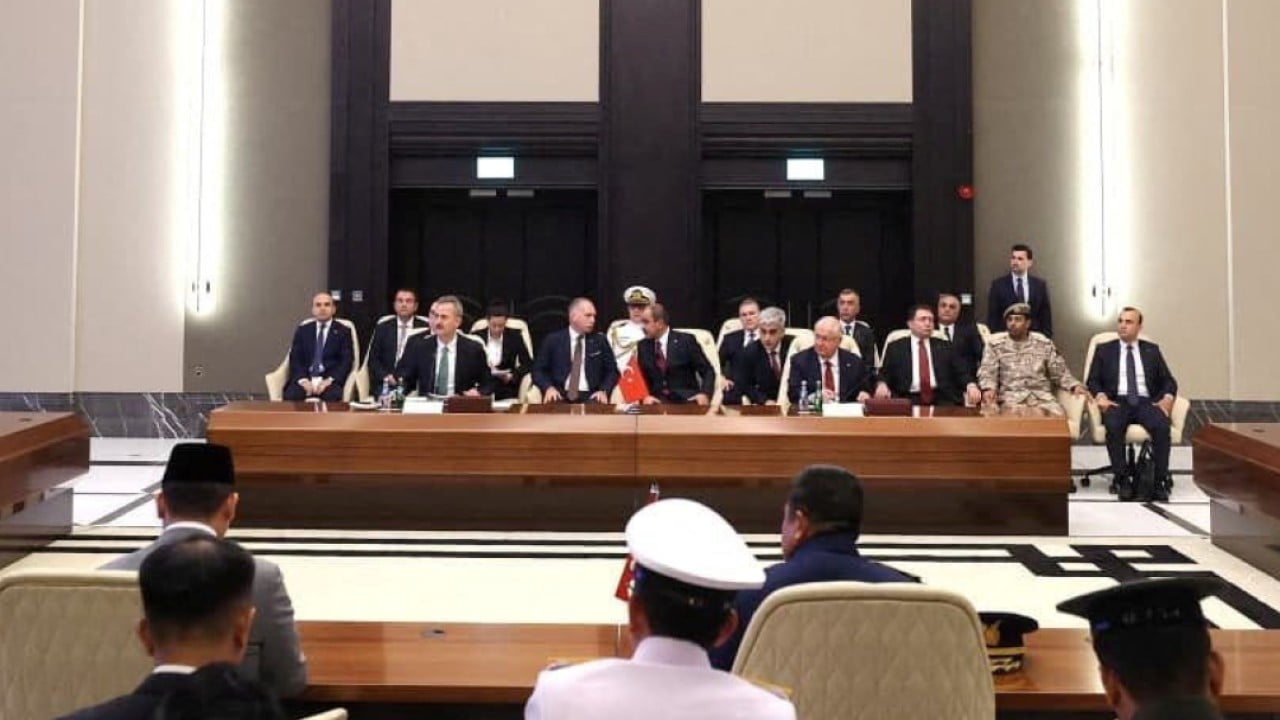
Diplomacy between Iran, Saudi Arabia, Turkiye, and Pakistan regarding Houthi maritime interdictions is not a humanitarian peace initiative; it is a regional risk-transfer protocol designed to insulate domestic economic transformations from asymmetric kinetic disruption. When four major regional powers commit to sustained dialogue amid ongoing Red Sea attacks, they are executing a collective hedging strategy against two distinct threats: the systemic collapse of regional trade corridors and the uncontrolled escalation of a localized proxy conflict into a direct multi-state war.
Standard geopolitical coverage treats these talks as routine diplomatic friction management. That framing misses the structural incentives driving the participants. Each state enters the negotiation room with a specific balance-sheet vulnerability, an asymmetric capacity to absorb maritime shocks, and a distinct set of coercive or persuasive tools aimed at Tehran and Sanaa.
The Structural Incentives of the Four-Party Coalition
To understand why these four nations have converged on a unified diplomatic track, one must examine the specific economic and security variables governing each capital. None of the participants are acting out of ideological alignment; they are responding to acute domestic exposure.
Saudi Arabia and the Vision 2030 Capital Preservation Imperative
Riyadh’s primary objective is the insulation of its multi-trillion-dollar economic diversification program from regional kinetic spillover. For Saudi Arabia, any sustained escalation in the Red Sea threatens both port infrastructure along its western coastline and the foreign direct investment required to fund mega-projects. Riyadh has effectively transitioned from a posture of military rollback in Yemen to one of defensive containment. By engaging Tehran directly alongside Turkiye and Pakistan, Saudi Arabia seeks to raise the diplomatic cost for Iran if Houthi forces target Saudi territory or vital Bab el-Mandeb shipping lanes, while simultaneously avoiding a direct military confrontation that would trigger immediate capital flight.
Iran and the Calibration of Asymmetric Deterrence
Tehran operates on a dual-track doctrine: maintaining plausible deniability over Houthi tactical decisions while utilizing the resulting maritime disruption as strategic pressure against Western naval coalitions and regional adversaries. However, uncalibrated Houthi attacks carry diminishing returns for Iran. Excessive disruption threatens the economic stability of Iran’s own regional partners and risks provoking overwhelming retaliatory strikes against Iranian strategic assets. Participating in structured talks allows Tehran to position itself as an indispensable regional power broker—capable of modulating the intensity of the crisis without formally surrendering its proxy capability.
Turkiye and the Supply Chain Arbitrage Dilemma
Ankara views the Red Sea crisis through the lens of trade corridor competition and domestic inflation control. As a manufacturing hub reliant on maritime logistics connecting Asian components to European markets, Turkiye suffers direct input-cost inflation when vessels reroute around the Cape of Good Hope. While Turkiye possesses alternative overland and northern transit ambitions—such as the Iraq Development Road project—short-term maritime paralysis damages its immediate export competitiveness. Ankara enters these talks to leverage its diplomatic channels with both Tehran and Western capitals, positioning itself as a stabilizing mediator while protecting its commercial shipping interests.
Pakistan and the External Balance of Payments Vulnerability
Islamabad’s participation is dictated by macroeconomic fragility and border security imperatives. Operating under stringent International Monetary Fund stabilization parameters, Pakistan cannot absorb sustained spikes in global energy prices or freight insurance premiums caused by Red Sea instability. Furthermore, Pakistan shares a volatile border with Iran, making bilateral security coordination non-negotiable. By joining a multilateral framework with Saudi Arabia—a critical financial backer—and Iran, Islamabad aligns its diplomatic posture with its primary creditors while mitigating the risk of cross-border militant spillover.
The Cost Function of Maritime Disruption
The diplomatic urgency displayed by these four nations is a direct function of the compounding economic penalties imposed by Houthi anti-access/area-denial (A2/AD) operations in the Bab el-Mandeb Strait. Rather than viewing the attacks merely as security incidents, regional planners model them as a tax on regional gross domestic product.
- War Risk Insurance Amplification: Every kinetic strike on a commercial vessel forces maritime underwriters in London and global reinsurance markets to recalibrate risk premiums. When war risk insurance jumps from a negligible fraction of hull value to a full percentage point or more per transit, the marginal cost of operating through the Suez Canal approaches the cost of rerouting around southern Africa.
- Transit Time and Inventory Carrying Costs: Rerouting vessels around the Cape of Good Hope adds approximately ten to fourteen days to Asia-Europe transit schedules. This delay breaks just-in-time manufacturing supply chains, forces retailers to hold larger working-capital inventories, and absorbs global container capacity, driving up spot freight rates across unrelated maritime routes.
- Suez Canal Revenue Compression: The sharp decline in northbound and southbound transits directly reduces hard-currency transit fees flowing into the Egyptian economy. Because Egypt’s macroeconomic stability is heavily subsidized by Gulf Cooperation Council (GCC) states—chiefly Saudi Arabia—a prolonged collapse in Suez revenue translates into an indirect fiscal liability for Riyadh.
- Energy Basis Risk: While the majority of Persian Gulf crude exports transit the Strait of Hormuz rather than the Bab el-Mandeb, refined products and liquefied natural gas destined for European markets rely heavily on the Red Sea corridor. Disruptions create localized supply bottlenecks and price volatility that complicate fiscal planning for energy-importing states like Pakistan and Turkiye.
Operational Mechanics of Multi-Track Diplomacy
When four states with divergent ideological foundations agree to "more talks," the operational reality involves separating issues that can be resolved bilaterally from those requiring multilateral enforcement. Attempting to solve the entire Yemeni civil war within a single summit guarantees paralysis. Instead, practitioners partition the diplomatic workflow into three distinct tracks.
Track One: De-Confliction and Maritime Red Lines
The immediate operational priority is establishing clear thresholds regarding what constitutes an unacceptable escalation. This involves communicating explicit boundaries to Tehran regarding attacks on vessels directly flagged to, owned by, or bound for the ports of the negotiating states. In practice, this creates a tiered maritime environment where ships linked to participating nations receive de facto immunity from proxy targeting in exchange for those nations refusing to join Western offensive strike coalitions against Houthi infrastructure.
Track Two: Economic Linkages and Sanctions Relief Signaling
Diplomacy without economic carrots lacks enforcement power. In these discussions, regional powers explore non-dollar trade mechanisms, bilateral investment commitments, and border trade zones that offer Tehran incremental economic relief. By tying quiet economic accommodation to verifiable reductions in Houthi operational tempo, Saudi Arabia, Turkiye, and Pakistan attempt to alter Iran’s internal cost-benefit calculus. If Tehran perceives that regional economic integration yields greater regime security than prolonged maritime chaos, it gains an incentive to restrain Houthi targeting parameters.
Track Three: Intelligence Sharing and Border Interdiction
While public communiqués emphasize dialogue, parallel security channels focus on the physical supply chains sustaining Houthi missile and drone inventories. Pakistan and Saudi Arabia share acute interests in monitoring illicit maritime smuggling networks operating across the Arabian Sea and the Gulf of Oman. Structured talks provide a venue to establish joint maritime domain awareness protocols, quietly constricting the flow of dual-use components without triggering overt diplomatic ruptures with Tehran.
Structural Limitations of the Quartet Framework
Relying on a regional quartet to stabilize the Red Sea carries severe structural limitations. Decision-makers and market analysts must account for four primary points of failure that could invalidate diplomatic progress.
- The Principal-Agent Problem in Sanaa: Standard diplomatic analysis assumes Iran exercises absolute command and control over the Houthi movement (Ansar Allah). The operational reality is far messier. While Tehran supplies critical propulsion, guidance, and warhead components, the Houthis possess an autonomous domestic political agenda. Achieving regional relevance through high-profile maritime strikes consolidates Houthi domestic legitimacy inside Yemen and strengthens their hand in final status negotiations with Riyadh. Consequently, Houthi leadership may resist Iranian requests to stand down if doing so sacrifices their primary source of international pressure.
- External Kinetic Variables: The quartet operates within an open system heavily influenced by external actors—specifically the United States, the United Kingdom, and Israel. An uncoordinated military strike by Western forces against Houthi leadership, or an escalation on the northern Israeli-Lebanese border, immediately alters the regional escalation ladder. When external kinetic shocks occur, Tehran’s incentive shifts from diplomatic restraint back to asymmetric retaliation, rendering prior regional agreements temporarily obsolete.
- Asymmetric Enforcement Capabilities: Turkiye, Pakistan, and Saudi Arabia lack a unified military enforcement mechanism to penalize non-compliance. Unlike formal defense alliances with mutual defense clauses, this quartet relies entirely on diplomatic signaling and economic incentives. If Iran or the Houthis violate an informal understanding, the remaining three states have no credible collective kinetic response available; their only recourse is reverting to individual defensive postures.
- Divergent Endgame Visions for Yemen: Beyond stopping immediate maritime attacks, the four states hold incompatible visions for the political future of Yemen. Saudi Arabia requires a compliant, stable southern neighbor free of Iranian ballistic missile bases. Iran benefits from a permanent, heavily armed proxy on the Arabian Peninsula capable of threatening global chokepoints at will. Turkiye and Pakistan remain largely indifferent to Yemen's internal governance provided maritime trade flows unimpeded. These conflicting endgames ensure that any agreement reached will be tactical and temporary rather than a permanent strategic settlement.
Strategic Execution for Regional Stakeholders
Because the quartet framework cannot guarantee permanent maritime security, states and commercial enterprises operating within the region must treat these talks as a temporary volatility dampener rather than a structural resolution.
- Institutionalize Dual-Corridor Logistics: Commercial shippers and regional supply chain managers must abandon single-corridor dependency. Maintain standing freight contracts split between Suez-Red Sea transits and Cape of Good Hope routings, utilizing overland multimodal bridges across the Arabian Peninsula (connecting Persian Gulf ports to Red Sea terminals via rail and road) to bypass the Bab el-Mandeb chokepoint entirely for high-value, time-sensitive cargo.
- Monitor Proxy Procurement Bottlenecks, Not Diplomatic Communiqués: Analysts tracking the efficacy of these talks should ignore joint ministerial statements and track physical metrics: war risk insurance spreads for non-Western flagged vessels, AIS transponder dark-periods in the Gulf of Oman, and the frequency of medium-range ballistic missile launches versus lower-cost one-way attack drones. A shift away from complex ballistic systems indicates successful supply-chain interdiction or Iranian restraint.
- Price in Recurring Escalation Cycles: Sovereign wealth funds, infrastructure developers, and multinational corporations operating in Saudi Arabia and Turkiye must model recurring 60-to-90-day cycles of heightened maritime friction into their capital expenditure budgets. Until a formal, verifiable political settlement is codified inside Yemen—an outcome that remains structurally blocked by conflicting regional endgames—the Red Sea will remain a managed conflict zone governed by fragile, transactional deterrence.