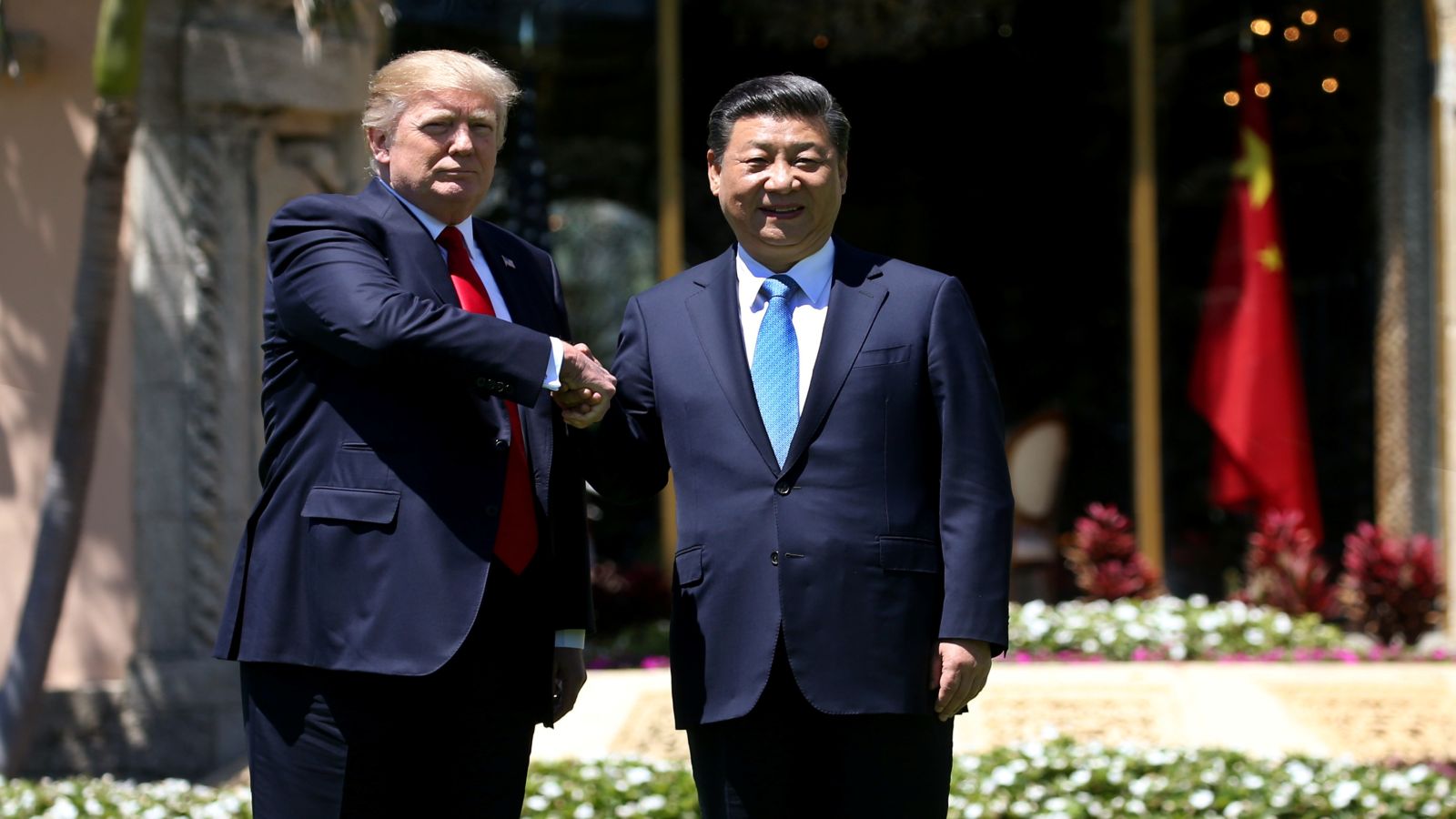
Foreign policy circles are comforting themselves with a dangerous lie. The prevailing consensus argues that bilateral deals between Washington and Beijing will not undermine the Quadrilateral Security Dialogue. They claim the Quad is a permanent fixture of Indo-Pacific architecture, insulated from the transactional whims of superpower diplomacy.
This view is not just naive; it ignores how regional security actually operates. If you found value in this article, you should check out: this related article.
The idea that the United States can engage in intensive, direct negotiations with China while keeping its minilateral alliances intact assumes that America’s partners are blind. They are not. Every time Washington cuts a direct deal with Beijing, the foundational premise of the Quad—collective deterrence against a revisionist power—fractures. The Quad is not a resilient, self-sustaining monolith. It is a fragile diplomatic construct built on a shared fear of American abandonment and Chinese aggression. Remove or alter either variable, and the calculus collapses.
The Myth of the Parallel Track
Geopolitics does not operate on parallel tracks. It is a zero-sum scramble for leverage. Establish a direct, highly transactional line of communication between the world's two largest economies, and you fundamentally alter the strategic value of secondary coalitions. For another perspective on this story, check out the latest coverage from USA Today.
Mainstream analysts love to look at joint naval drills and vague communiqués about a "free and open Indo-Pacific" as proof of life. They mistake activity for achievement. The hard truth is that the Quad has always suffered from an identity crisis. Is it a security alliance? India says no. Is it a climate and vaccine distribution club? The Pentagon says that is not enough.
When a US administration prioritizes direct bilateral engagement with China—whether to stabilize trade, handle global crises, or establish economic guardrails—the Quad is instantly relegated to a secondary theater. Beijing knows this. China’s strategy has never been to fight the Quad as a united front; its strategy is to peel individual members away by proving that the ultimate arbiter of regional stability is the Washington-Beijing axis, not a four-nation committee.
India's Hard Pivot to Autonomy
To understand why the mainstream view is flawed, look at New Delhi. For years, Western analysts have treated India as the indispensable anchor of the Quad. They assumed India’s border tensions with China would permanently bind it to a US-led security architecture.
They misread Indian foreign policy completely.
India does not join alliances; it manages vulnerabilities. New Delhi’s participation in the Quad was always a hedging strategy, a way to use American leverage to check Chinese ambitions while maintaining its cherished "strategic autonomy." The moment Washington signals that it is willing to cut bilateral deals with Beijing over the heads of its partners, India’s incentive to invest heavily in the Quad evaporates.
Consider the data. India still relies heavily on Russia for military hardware. India actively participates in the BRICS grouping and the Shanghai Cooperation Organisation (SCO)—platforms explicitly designed to counter Western hegemony. If the US pursues a transactional relationship with China, India will not double down on the Quad. It will accelerate its own bilateral de-escalation with Beijing, a trend we are already seeing play out along the Line of Actual Control.
Australia and Japan caught in the Crossfire
Canberra and Tokyo find themselves in an even more precarious position. Unlike India, Australia and Japan are formal treaty allies of the United States. They have structured their entire defense postures around the absolute certainty of American extended deterrence.
When the US shifts toward a bilateral engagement model with China, it introduces profound strategic anxiety into Tokyo and Canberra.
- The Japanese Dilemma: Tokyo views any US-China bilateralism with deep suspicion, historically termed Japan passing. If Washington negotiates terms with Beijing regarding Taiwan or the East China Sea without explicit Japanese veto power, Japan's security guarantees are effectively degraded.
- The Australian Vulnerability: Australia’s economy remains deeply tied to Chinese commodity demand. If Washington stabilizes its economic ties with Beijing through bilateral pacts, Canberra loses its geopolitical cover. It can no longer justify its aggressive anti-China posture under the guise of collective allied solidarity when the leader of that alliance is busy signing trade memorandums with the adversary.
The mainstream argument suggests these nations will hold the line. In reality, they will begin quietly hedging. They will diversify their security partnerships outside of American oversight, building bilateral networks with each other and Southeast Asian nations, rendering the Quad a relic of a brief, unipolar moment.
Why Mini-Lateralism Fails the Stress Test
The Quad is frequently praised as a flexible, agile alternative to rigid, Cold War-style alliances like NATO. This flexibility is actually its fatal flaw.
Without a collective defense clause—a formal commitment that an attack on one is an attack on all—the Quad relies entirely on political will. Political will is highly volatile, subject to electoral cycles and shifting economic priorities.
Imagine a scenario where China increases grey-zone coercion against Japanese vessels in the Senkaku Islands while simultaneously offering the United States massive agricultural purchase agreements and commitments on fentanyl supply chains. Does anyone honestly believe a transactional Washington administration would risk a major economic confrontation for the sake of abstract Quad solidarity?
The structural mechanics of the grouping simply do not support the weight of real-world deterrence.
| Feature | NATO | The Quad |
|---|---|---|
| Binding Treaty | Yes (Article 5) | No |
| Command Structure | Integrated Military | Ad-hoc Consultations |
| Strategic Clarity | Explicit Adversary Definition | Vague Diplomatic Rhetoric |
| Economic Alignment | High (Historically) | Divergent (Trade vs. Security) |
The table exposes the core vulnerability. You cannot deter a deeply integrated, highly focused superpower like China with ad-hoc consultations and divergent economic interests.
The Broken Premise of Regional Questions
When looking at regional polling and expert analysis, the standard question asked is: How can the Quad better integrate its maritime security initiatives?
This is the wrong question. It assumes the mechanism itself is sound and merely lacks optimization. The brutal, honest question we should be asking is: Does the Quad provide any security value that bilateral US-Japan, US-Australia, and US-India relationships do not already cover?
The answer is no. The Quad adds a layer of bureaucratic theater. It creates high-level summits and produces glossy PDFs about supply chain resilience, but when the water turns rough, the actual security architecture defaults back to bilateral hubs and spokes. The US-Japan security treaty does the heavy lifting in Northeast Asia. The AUKUS agreement handles high-end naval capability in the South Pacific. The US-India defense partnership manages intelligence sharing in the Indian Ocean.
The Quad is a diplomatic luxury item. It is the first thing sacrificed when a superpower decides it needs to clear the deck for direct, high-stakes negotiations with its primary rival.
The Cost of Maintaining the Illusion
Continuing to pretend the Quad is the central pillar of Indo-Pacific security is worse than useless; it is actively dangerous. It creates a false sense of security in Washington and invites miscalculation from Beijing.
By pouring diplomatic capital into an amorphous four-way talk shop, the United States neglects the far more urgent task of reinforcing its explicit treaty commitments and building real, hardened military infrastructure in the region. It allows partners to free-ride on the appearance of solidarity without making the hard, domestic political choices required to genuinely counter Chinese coercion.
Stop measuring alliance strength by the number of joint statements issued at regional summits. Start measuring it by the distribution of anti-ship missiles, the resilience of logistics nodes, and the willingness of leaders to take immediate, unilateral economic hits to defend a partner. By that metric, the Quad is an empty shell.
Superpower bilateralism does not just weaken the Quad. It exposes it for what it has always been: a diplomatic security blanket designed to mask the absence of a coherent, unified regional strategy. The era of the four-nation talking shop is over, whether Washington admits it or not. Focus on hard power, or get out of the way.