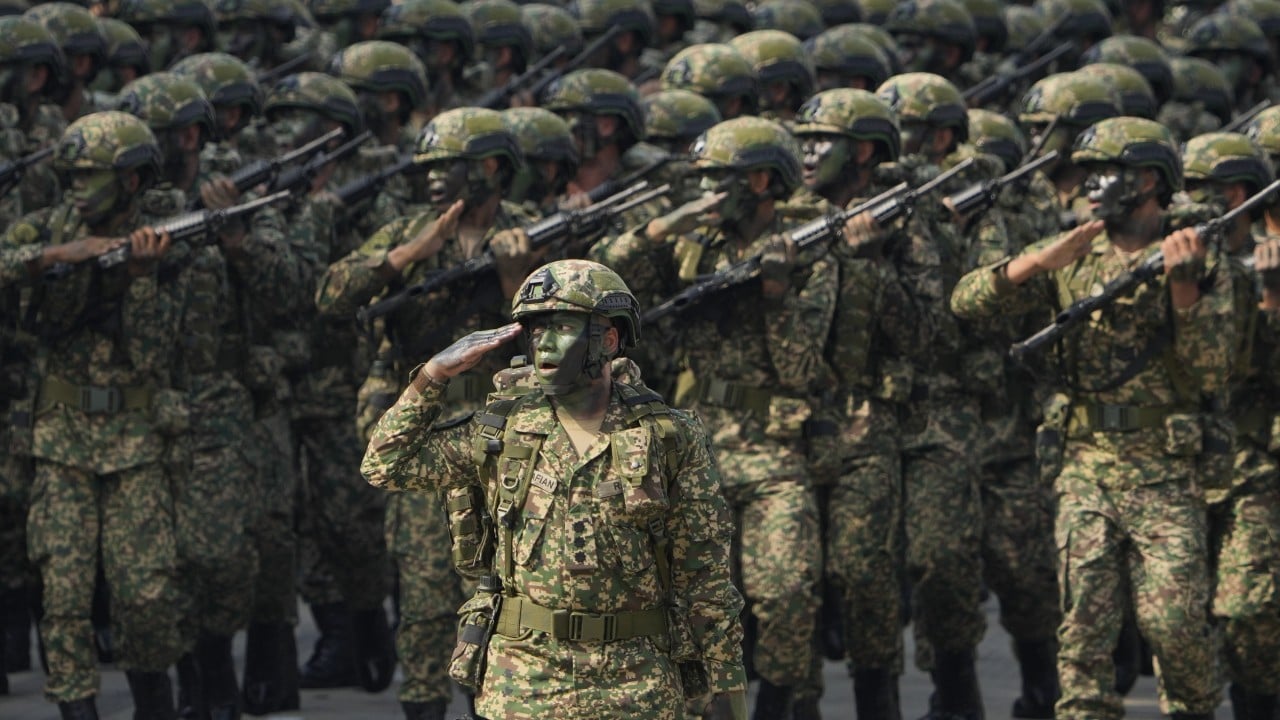
The knee-jerk reaction to schoolyard violence is always the same: bring in the heavy artillery.
Malaysia’s latest headline-grabbing initiative to deploy military veterans into schools under a "you touch, you go" zero-tolerance policy is a masterclass in optics over substance. It sounds reassuring. It makes for a fantastic press release. It satisfies the public's thirst for swift, retributive justice.
It is also fundamentally flawed.
As someone who has spent two decades analyzing institutional behavioral modification and organizational risk, I can tell you exactly what happens when you introduce a rigid command-and-control structure into an ecosystem driven by adolescent psychology. You do not eliminate the bad behavior. You merely force it to evolve.
The lazy consensus screams that bullies lack discipline, so we must import the ultimate disciplinarians. This view treats a school like a barracks and a teenager like a recruit. But a school is a complex social network, not a boot camp.
By relying on military personnel to enforce order, educational authorities are not solving intimidation. They are outsourcing it.
The Illusion of the Quick Fix
Zero-tolerance policies do not work. The data on this has been clear for decades. When the American Psychological Association convened a task force to evaluate zero-tolerance policies in schools, the findings were damning. These measures do not change behavior; they increase dropout rates and accelerate the school-to-prison pipeline.
The "you touch, you go" doctrine assumes that bad actors operate on a rational risk-reward calculus. They do not. Adolescent brains are driven by immediate peer status, impulsivity, and emotional dysregulation.
When you introduce a high-stakes, punitive authority figure into this mix, you achieve two things:
- You suppress the visible symptoms while ignoring the disease. The physical fights stop happening in the courtyard where the veteran is standing. Instead, they migrate to the blind spots—the stairwells, the walk home, or worse, the digital space.
- You elevate the social currency of defiance. In an adolescent subculture, outsmarting a military-grade authority figure is the ultimate badge of honor. You have not deterred the ringleaders; you have just raised the stakes of their game.
The Mechanical Misunderstanding of Discipline
Proponents of this initiative argue that military veterans possess the exact skillset required to instill order. This conflates compliance with discipline.
Military discipline relies on a shared mission, adult accountability, and a uniform legal framework under martial law. School discipline requires emotional regulation, conflict resolution, and cognitive behavioral adjustments.
Consider the mechanics of a typical military intervention in a school dispute. A veteran is trained to de-escalate through a display of overwhelming authority and presence. In a combat or tactical scenario, this saves lives. In a school cafeteria, it creates an adversarial environment. It frames the student body as a population to be managed rather than a community to be educated.
I have advised corporate environments that tried a similar tactic—bringing in hard-nosed, authoritarian turn-around managers to fix toxic workplace cultures. The result? The overt harassment stopped, but the sub-surface sabotage skyrocketed. Employee turnover hit record highs because nobody wanted to work in a panopticon.
When you treat children like potential combatants, they will eventually start acting like them.
The Rise of the Tactical Bully
The most dangerous unintended consequence of this policy is that it provides a blueprint for sophisticated intimidation.
Bullies are not stupid; they are highly adaptive social predators. When you draw a hard line at physical contact ("you touch, you go"), you do not stop the abuse. You simply incentivize the bully to master non-physical execution.
We are talking about weaponized isolation, gaslighting, targeted cyber-campaigns, and psychological warfare that leaves no bruises and violates no explicit rules. A military veteran trained to spot physical altercations is completely unequipped to handle a coordinated social exclusion campaign run via encrypted messaging apps.
By the time the authority figure realizes what is happening, the damage is done, and the perpetrator has plausible deniability. The policy has not protected the victim; it has stripped them of their defense while giving the aggressor a masterclass in how to operate just under the radar.
What People Always Get Wrong About School Safety
If you look at the queries dominating this conversation, the underlying premise is almost always wrong. People ask: "How do we make the punishment severe enough to deter bullies?"
This is the wrong question. The right question is: "Why does our school infrastructure allow social capital to be gained through aggression?"
In a healthy school ecosystem, bullying is an inefficient way to gain status. When schools invest heavily in peer-led mediation, structural transparency, and immediate, non-punitive behavioral interventions, the utility of bullying drops to zero.
The downside to this contrarian approach? It takes time. It requires immense emotional labor from trained educators and psychologists. It does not fit into a neat political slogan, and it cannot be solved by wearing a uniform. It is messy, expensive, and slow.
But it works.
Placing veterans at the school gates is a confession of failure. It is an admission that the educational institution has lost control of its own culture and must rely on the threat of external force to maintain a fragile peace.
The Actionable Alternative
If governments genuinely want to protect students, they need to stop looking for heroes to police the hallways.
Instead of deploying veterans as enforcers, use those resources to fund embedded, full-time behavioral specialists who understand adolescent neurology, not tactical maneuvers. Rebuild the school day to eliminate the unsupervised vacuums where abuse thrives. Train teachers to recognize the subtle, early-stage indicators of social dominance behavior before it escalates into physical violence.
Stop trying to scare teenagers into submission. The criminal justice system has tried that for a century with zero success. If a system relies on the physical presence of a military veteran to keep children from harming one another, that system is already broken. Remove the uniforms, drop the slogans, and fix the culture from the inside out. Anything less is just security theater.