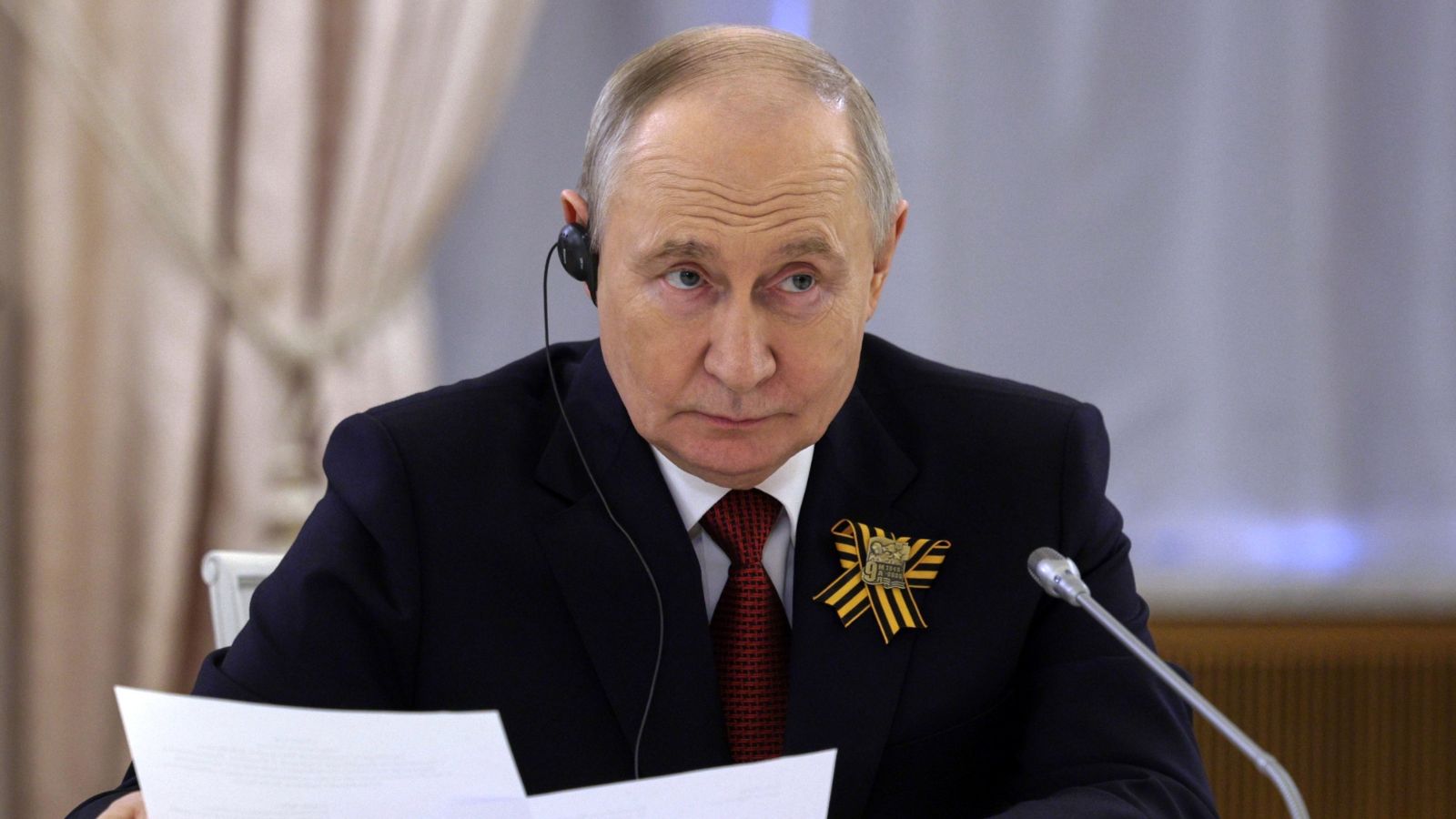
Latvian intelligence just confirmed what border guards in Warsaw and Tallinn have whispered for months. Russia is actively drafting plans for military provocations against Poland and the Baltic states.
If you think this means Russian tanks rolling across the Suwalki Gap, you are looking at the wrong playbook. The Kremlin knows it cannot win a conventional war against a unified West. Instead, Vladimir Putin wants to answer a simpler, highly dangerous question: exactly how much sovereign European territory can he violate before the West blinks?
The immediate catalyst for this shift isn't Russian strength. It's Russian panic. Ukraine's long-range drone campaign has systematically brought the war home to the skylines of Moscow and St. Petersburg, turning oil refineries and military hubs into smoking ruins. Under immense domestic pressure to change the narrative, Putin is looking to export the chaos northward.
The Art of the Near-Miss
Western intelligence agencies don't expect a formal invasion. They are bracing for hybrid, highly deniable operations designed to trigger political fractures inside Europe. We aren't talking about hypothetical scenarios anymore. The templates already exist.
Consider what happened when a swarm of 19 Russian decoy drones crossed deep into Polish airspace. Poland scrambled F-16s alongside Dutch F-35s and German Patriot units to down the intruders. Just days later, three Russian MiG-31 fighter jets sliced 10 kilometers into Estonian airspace near Vaindloo Island, flying within minutes of the capital city, Tallinn. The Russian pilots ignored radio contact from intercepting alliance jets before being escorted out.
These aren't navigational errors. They are calculated stress tests.
By forcing frontline states to scramble millions of dollars in air defense assets against plywood and Styrofoam decoys, the Kremlin achieves three distinct goals.
- Exhausting stockpiles: Firing an expensive air-to-air missile at a cheap drone creates a massive economic and inventory imbalance for Western forces.
- Testing response times: Russian electronic warfare units track exactly how long it takes for NATO command structures to authorize a kinetic response.
- Normalizing border friction: When airspace violations happen every month, the public slowly becomes desensitized, dulling the political impact of future escalations.
What a Plausible Provocation Looks Like
If the Kremlin decides to push the button on a localized frontier crisis, the operation will likely blend deniable military actions with civil disruption. Security officials point to several highly vulnerable flashpoints.
The Border Flashpoints
- The Narva River Border: Estonia shares a highly integrated border with Russia at Narva. A staged border clash, involving the sudden movement of border markers or the brief detention of frontier guards under the guise of an "anti-terrorist operation," could happen in minutes.
- The Suwalki Corridor: This narrow strip of land connects Poland to Lithuania, sandwiched between the heavily militarized Russian exclave of Kaliningrad and Belarus. A staged transit dispute involving Russian rail lines or cargo could easily turn into a localized standoff.
- GPS Jamming and Sabotage: Commercial airline pilots flying over the Baltic Sea already face systematic GPS spoofing originating from Kaliningrad. Scaling this up to cripple maritime shipping or targeting undersea data cables provides a high-impact, low-risk way for Moscow to signal its capability to disrupt Western infrastructure.
Polish Prime Minister Donald Tusk summarized the regional consensus bluntly during an emergency briefing, noting that the security situation has grown completely unstable, and various types of escalation are expected across the eastern flank.
The Alliance Response and Strategic Pitfalls
NATO hasn't stayed silent. Following the airspace incursions, the alliance activated Operation Eastern Sentry to bolster ground-based air defenses and deploy additional fighter patrols to the region. Both Poland and Estonia triggered Article 4 consultations, a mechanism used when a member state feels its territorial integrity or security is actively threatened.
Yet, the primary danger isn't military capability. It's political resolve.
The Kremlin's strategic goal is to find a gray area that sits just below the threshold of Article 5—the sacred collective defense clause stating an attack on one is an attack on all. If Russia occupies a tiny, uninhabited Baltic island or briefly seizes a border outpost, will every Western capital truly agree to risk a wider conflict over a few square meters of dirt?
That's the exact wedge Putin wants to drive into the alliance. If a single major Western power hesitates during a minor border crisis, the psychological core of Western deterrence evaporates.
Immediate Steps for Regional Security
Fending off these gray-zone operations requires shifting away from traditional military timelines. Frontline states are already changing how they manage daily airspace threats.
First, air defense rules of engagement must be permanently decentralized. Giving local commanders the immediate authority to neutralize incoming low-altitude threats prevents Russia from exploiting bureaucratic delays.
Second, the economic asymmetry must change. Investing heavily in low-cost counter-drone systems, like directed-energy laser weapons or tactical anti-drone rockets, prevents the rapid depletion of expensive missile stockpiles.
Finally, public resilience is a defense metric. Intelligence agencies must aggressively pre-bunk Russian disinformation campaigns. When an incident occurs on the border, getting the objective, fact-based narrative out within the first hour completely defangs Moscow's ability to sow panic and confusion among Western electorates.
The NATO Transcript on Airspace Violations provides the official briefing detailing how allied fighter jets responded to the drone incursions on the eastern flank.


