We used to think humans held a monopoly on cross-species kindness. That assumption is dead wrong. Primates don't just tolerate other species; they actively care for them, protect them, and sometimes even grieve them.
When you look past standard textbook definitions of survival of the fittest, nature gets weird. Animals cross evolutionary lines every single day to look after creatures that share zero DNA with them. Let's break down what primate altruism actually looks like in the wild, why scientists are scrambling to rewrite their behavioral models, and what this teaches us about our own evolutionary roots.
The Reality of Inter-Species Care
For decades, behavioral ecologists viewed animal interactions through a hyper-pragmatic lens. Every action had to trace back to direct genetic survival or reciprocal altruism. If an animal spent energy helping another, you had to find the payoff.
Then reality stepped in. Primates routinely adopt, feed, and shield orphaned animals belonging to entirely different taxa.
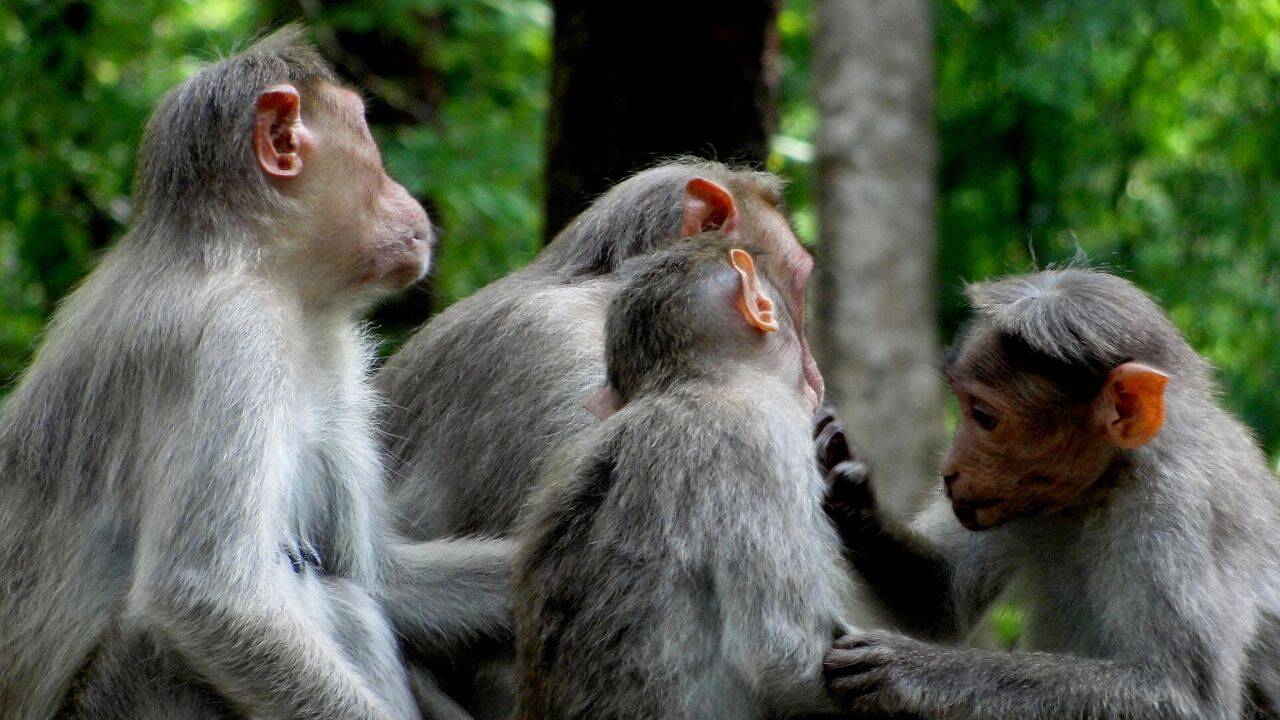
Take vervet monkeys or baboons. Field researchers have documented instances where these primates adopt abandoned bushbabies or small carnivores. They carry them around, groom them, and step between them and predators. There is no biological return on investment here. The infant doesn't share genes, and it won't grow up to protect the troop.
It defies cold-blooded evolutionary math.
Primatologists call this misplaced parental care, but that label feels lazy. It sounds like an excuse to dismiss behavior that doesn't fit neat academic boxes. When a wild capuchin monkey spends hours grooming a small opossum, it isn't making a math error. It is choosing to care.
What Research Actually Shows
To understand this phenomenon, we have to look at the field data. Researchers studying wild chimpanzees and bonobos have recorded dozens of cross-species adoption events.
Bonobos are particularly fascinating here. Known for solving social tension through touch and conflict resolution, they stretch those exact behavioral toolkits across species lines. Field observations show bonobos playing gently with small mongooses or protecting injured birds.
Why does this happen? The answer sits in neurobiology.
Oxytocin and vasopressin aren't exclusive human traits. Primates share complex emotional architectures with us. When a primate sees an infant in distress—regardless of species—the neural machinery for caregiving fires up automatically. Evolution gave these animals a generalized nurture response rather than a narrow, species-locked trigger.
Maternal instincts misfire. That is the standard biological explanation. But when that misfire happens repeatedly across multiple troops, across different continents, across varied species, it stops being a glitch. It becomes a feature of complex social intelligence.
Surprising Instances Recorded in the Wild
You want concrete examples? Look at the work coming out of long-term field sites in East and West Africa.
Capuchin monkeys in Central America have been watched sharing food resources with fledgling birds that fell from canopy nests. Instead of treating the easy meal as a snack, adult monkeys nudged insects toward the young birds.
Or consider mountain gorillas. Silverbacks have been observed dismantling poacher snares and deliberately shielding small forest duikers from danger. These aren't pets. These are wild animals making split-second decisions to protect vulnerable life forms.
We love to romanticize nature as a red-tooth-and-claw slaughterhouse because it fits neatly into action movies. The truth is messier. Cooperation wins out just as often as conflict. Primates understand vulnerability because they experience it themselves.
The Cognitive Leap Required for Altruism
Cross-species care demands a high level of social cognition. To care for an outsider, an animal needs theory of mind elements—the basic ability to recognize another living thing's distress.
Think about what goes on inside a chimpanzee's head when it encounters an orphaned duiker. It has to inhibit its predatory instincts, read the physical cues of hunger or fear, and apply a soothing behavioral response. That takes brainpower.
Lower mammals rarely show this kind of behavioral plasticity. They run on rigid scripts: fight, flee, feed, or mate. Primates throw the script away. They improvise. They look at a struggling creature and decide to intervene.
This challenges old ideas about empathy. We used to draw a sharp line in the sand at the human border, claiming only our species possessed the capacity to care for the unrelated and the helpless. Primates erase that line.
Why This Matters for Conservation and Beyond
Understanding that primates care for other species changes how we manage wildlife sanctuaries and conservation zones. Animals aren't just isolated units in an ecosystem. They form complex emotional and behavioral webs that we are only beginning to map.
If you work with captive primates, ignoring their capacity for cross-species bonds leads to poor enclosure design and stressed animals. If you study human evolution, recognizing that empathy predates the split between humans and chimps shifts our understanding of morality. Morality isn't a cultural invention stamped onto a blank slate. It is an ancient biological inheritance.
Next time someone tells you nature is entirely selfish, point them toward the troop of baboons raising an orphaned bushbaby. Empathy is older than humanity. It is hardwired into the primate brain, waiting for a chance to care for anything small enough to need it.