The rain in Manchester does not fall so much as it settles, heavy and grey, into the brickwork of old cotton warehouses that still line the canals. You can run your hand along those damp stones today and feel the grit of the nineteenth century, the physical residue of an industrial miracle built on an ocean of human misery.
For years, I have walked past those buildings on my way to community meetings, listening to the descendants of the Windrush generation talk about the ghosts in the mortar. We talk about history as if it is a closed book sitting on a high shelf, safe from the draft. Then a headline breaks, sharp as a gavel, and the dust flies everywhere.
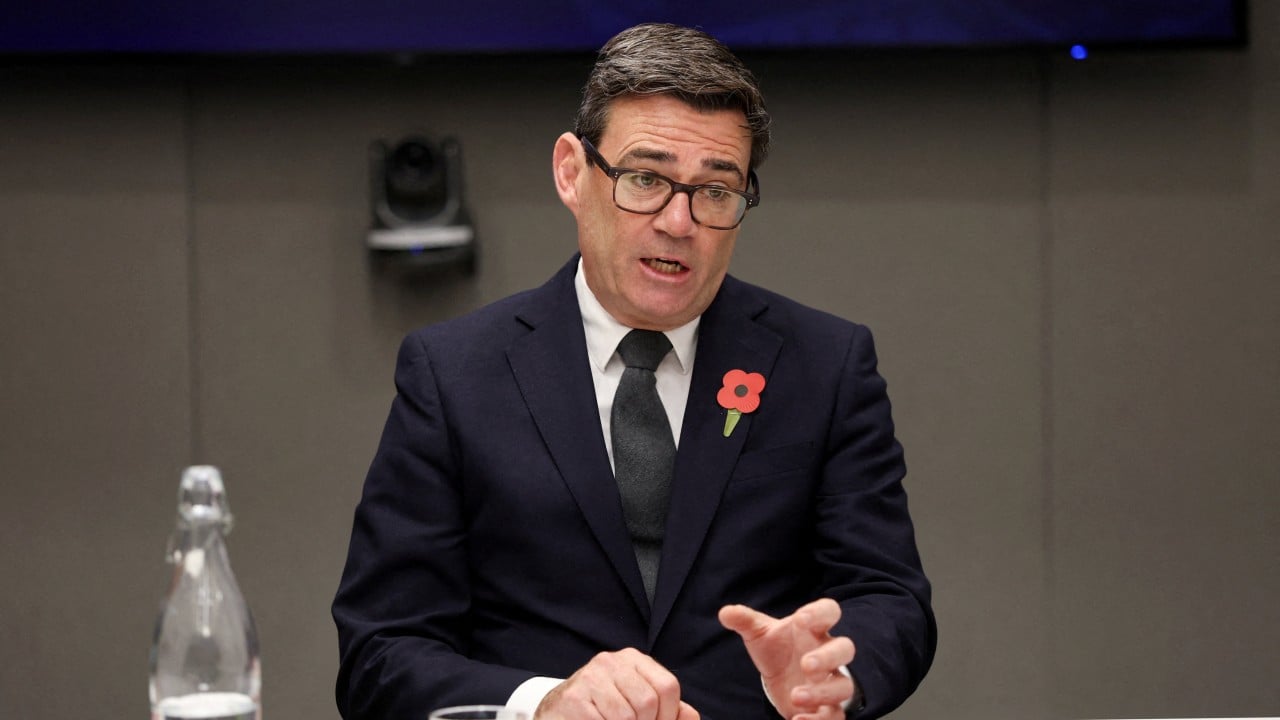
Andy Burnham, stepping into the role of Prime Minister, recently signaled that he is open to offering a formal apology for Britain’s role in the transatlantic slave trade. In the very same breath, he closed the door on financial reparations.
Sorry.
Just the word. Heavy with ceremony, light as air.
When I first read the news, sitting at my kitchen table with a cooling mug of tea, I felt a familiar, hollow ache right behind my ribs. It is the specific exhaustion that comes from watching powerful people offer you a bandage while keeping their foot firmly planted on the wound. To understand why this political compromise—an apology without restitution—feels less like healing and more like a sophisticated dismissal, we have to look past the polished podiums of Westminster and step into the living rooms where the bill is still being paid.
The Architecture of a Half-Measure
To grasp the friction of this moment, consider a hypothetical scenario. Imagine a man named Arthur, a retired carpenter in Bristol, whose great-grandfather was stolen from the coast of West Africa and worked to death on a sugar plantation in Barbados. Next to Arthur’s story, place a hypothetical ledger belonging to an old British banking family whose founding capital came directly from the 1833 Slave Compensation Act—the massive £20 million bailout the British government paid not to the enslaved, but to the enslavers, for the loss of their "property."
British taxpayers only finished paying off the debt for that bailout in 2015. Let that number sit in your mouth for a second. 2015. Within the last decade, the descendants of the enslaved living in London, Birmingham, and Manchester were still paying taxes to service the loans that compensated the families who owned their ancestors.
Now, picture the Prime Minister standing before Arthur. The leader looks solemn. The lighting is dignified. He says, "What happened to your great-grandfather was a stain on our national conscience, and we are deeply sorry." Then, as Arthur reaches out—not for a handout, but for the structural investment that might fix the underfunded school down the street or close the generational wealth gap that keeps his grandchildren renting while others inherit—the Prime Minister tucks his hands into his pockets. "However," he says, "we must look forward, not backward. There will be no money."
This is the political tightrope Burnham is walking. By signaling openness to an apology, he breaks with the rigid orthodoxy of predecessors who feared that uttering the word sorry would immediately trigger a legal avalanche in international courts. It is a calculated gamble designed to appease the moral conscience of the British public and the demands of Caribbean nations, while simultaneously assuring the Treasury and skeptical voters that the national checkbook remains locked tight.
But an apology without repair is simply a press release.
Why Words Alone Fall Short
If you have ever been wronged in a way that altered the trajectory of your life, you know the anatomy of a real apology. When a driver wrecks your car, they do not simply step out of their vehicle, express profound regret for the mangled metal, and walk away while you stand by the side of the road wondering how you will get to work tomorrow. Sincerity, in human affairs, is measured by the willingness to absorb the cost of the mistake.
Between 1640 and 1807, British ships transported an estimated 3.1 million Africans across the Atlantic. Hundreds of thousands died in the suffocating dark of the Middle Passage before ever seeing land. Those who survived generated the staggering wealth that financed Britain’s railways, universities, museums, and banks. The sugar in the British teacup and the cotton in the Lancashire mills were the engines of the modern world.
When critics argue against reparations, they often ask a seemingly practical question: How could we possibly calculate the cost, and who would pay for crimes committed centuries ago?
It is a fair question, and I admit, the sheer scale of the accounting is dizzying. Even those of us who advocate fiercely for reparatory justice sometimes pause at the logistical mountain ahead. How do you put a price tag on a stolen language? What is the exchange rate for a severed family tree? The complexity can feel paralyzing, and politicians rely on that paralysis to justify doing nothing at all.
Yet, we solved a vastly more complex accounting problem in 1833 when the beneficiaries were white plantation owners. The British state managed to catalog, value, and distribute millions of pounds with bureaucratic precision when it was time to pay the perpetrators. The sudden onset of mathematical helplessness when the victims ask for their due is not a logistical failure. It is a failure of will.
The Invisible Ledger
What most people miss in the shouting match over reparations is that nobody is asking for a Prime Minister to walk down the streets of Kingston or Brixton handing out envelopes of cash. That caricature is a convenient straw man used to make a profound moral demand sound absurd.
The Caribbean Community (CARICOM) has laid out a clear, ten-point plan that looks nothing like a lottery payout and everything like nation-building. It asks for debt cancellation for Caribbean nations crushed by the economic aftershocks of colonialism. It calls for technology transfers, investments in public health crises like hypertension and diabetes—conditions directly linked to the generational trauma and dietary shifts of plantation life—and educational programs that tell the unvarnished truth of how Britain became great.
Consider what happens next when a leader offers an apology while rejecting these tangible frameworks.
First, it creates an illusion of closure. Once the official statement is read into the parliamentary record, the political establishment can check a box. The "slavery issue" is marked resolved. Future demands for equity in housing, healthcare, or criminal justice can then be dismissed with a wave of the hand: We already apologized for that. Why can’t you move on?
Second, it severs the past from the present. The consequences of the slave trade are not museum pieces; they are living architectures. You see them in the stark disparities in maternal mortality rates for Black women in the UK today. You see them in the persistent wage gaps and the way capital remains concentrated in the exact same institutions that insured slave ships three hundred years ago. To apologize for the root while refusing to treat the poisoned fruit is an exercise in selective vision.
The Weight of the Unsaid
I remember sitting with my grandmother in her cramped flat in South London, watching the news on a small television perched on a laminate cabinet. She worked forty years as a nurse in the National Health Service, arriving in Britain in the late 1950s because the "Mother Country" called for help to rebuild after the war. She loved Britain with a fierce, complicated loyalty, even when landlords slammed doors in her face and bosses passed her over for promotions she had earned twice over.
One evening, a documentary came on about the grand country estates of England—the sweeping lawns, the marble staircases, the portraits of powdered men staring down from gilded frames. The narrator mentioned, almost in passing, that the estate had been funded by sugar plantations in Jamaica.
My grandmother didn't get angry. She just went quiet, smoothing the folds of her cardigan over her knees. "They built a paradise on our backs," she said softly, "and then made us feel like trespassers when we knocked on the door."
That is the invisible stake in Burnham’s careful phrasing. When a British Prime Minister says he is open to an apology, he is acknowledging that the paradise was built on stolen labor. That is not nothing. After decades of state-sanctioned amnesia, hearing the highest office in the land admit the crime carries a undeniable psychological weight. For many, hearing the truth spoken aloud from Downing Street will feel like a long-overdue validation of a pain their families have carried in silence for generations.
Words matter. They shape the national myth. If the Prime Minister stands up and says, "We did this, and it was wrong," it changes what is taught in classrooms. It shifts the baseline of British identity from one of benevolent civilizers to one of flawed humans reckoning with a brutal past.
But you cannot live inside a word. You cannot send your children to school on a sentiment, and a Caribbean island sinking under the dual weight of climate change and colonial debt cannot build a sea wall out of parliamentary regret.
A Reckoning Deferred
We are standing at a familiar crossroads in British politics. Time and again, when confronted with the darkest chapters of its imperial history, the establishment chooses the path of least resistance: symbolic grace paired with material stinginess.
By drawing a hard line against reparations before a conversation has even truly begun, Burnham is trying to buy peace on the cheap. He wants the moral prestige of the apology without the political cost of the repair. He wants to close the ledger without balancing the books.
Yet history has a stubborn way of refusing to stay buried under polite phrasing. Every time a young person in London looks at the wealth gleaming in the glass towers of the City and wonders why their own neighborhood is starved of funding, the question returns. Every time a hurricane tears through the Caribbean, leaving nations to borrow money at punitive interest rates from the very financial centers their ancestors enriched, the debt comes due again.
An apology is a doorway, not a destination. If the Prime Minister walks up to that threshold, utters the word sorry, and then bolts the door from the inside, the silence that follows will be louder than anything he could possibly say.
Down by the canals in Manchester, the rain keeps falling on the old warehouse bricks, dark and cold, waiting for someone brave enough to finally pay the rent.