The train from Tokyo slows down, and the asphalt gives way to a sea of green that feels older than memory. You step onto the platform at Karuizawa, and the air hits you differently. It smells of damp pine needles, woodsmoke, and the sharp, metallic tang of autumn. People come here to escape the neon crush of the capital, seeking refuge beneath the towering cedars and the misty canopy of the Japanese mountains.
Except the mountains are waking up. For another perspective, see: this related article.
Stand at the edge of a rural village in Iwate or Akita just as the dusk settles, and you will hear it. Not the familiar clatter of cicadas, but the heavy, deliberate scrape of claws against wooden siding. It is the sound of an animal testing the boundary between the wild and the domestic, searching for the easiest calories available.
We talk about tourism in Japan through the lens of broken records. The numbers flash across airport monitors with dizzying speed: thirty million, forty million, forty-five million international travelers arriving with lightweight suitcases and insatiable curiosity. We measure success in the weight of the coins they leave behind in convenience store registers and Michelin-starred sushi counters. But every system has a shadow side. Every policy choice ripples outward in ways accountants sitting in glass towers in Kasumigaseki rarely anticipate. Similar analysis on this matter has been shared by National Geographic Travel.
Consider what happens when you turn a departure tax into a shield.
Since early 2019, every traveler leaving Japan by air or sea has quietly paid an extra one thousand yen. It slips into the cost of the ticket unnoticed, a digital rounding error absorbed by credit card statements and corporate travel budgets. Officially dubbed the Sayonara Tax, or the international tourist tax, this levy was designed with a simple mandate: fund the infrastructure of hospitality. Governments projected tens of billions of yen flowing directly into the national treasury, earmarked for making the country easier to navigate, cleaner to traverse, and safer to inhabit.
Politicians called it an investment. The tourists paid it without blinking. One thousand yen is roughly the price of a bowl of ramen and a draft beer. It is invisible.
Yet money collected invisibly tends to cast long shadows.
Walk through a mountain hamlet in Nagano province, and you will see where some of those billions ultimately ended up. Not in glittering tourist centers or multilingual information kiosks, but on the back of an exhausted local official hauling a heavy iron cage into the brush.
Bears do not care about gross domestic product. They care about acorns.
For generations, the relationship between rural Japanese communities and the Asiatic black bear was defined by a wary, respectful distance. Farmers knew where the forest ended; bears knew where the cultivated fields began. It was an uneasy truce maintained by a dwindling rural population. Younger generations packed their bags and moved to Tokyo, leaving behind aging grandparents, overgrown orchards, and abandoned farmland that acted as an open invitation to wildlife.
Then the climate shifted, and the forests changed with it.
Hotter summers baked the mountain ridges, turning the beech nut harvests to ash. When the wild pantry runs bare, hungry animals look elsewhere. They wander down the hiking trails, drift past empty vacation homes, and find themselves standing on the edge of suburban asphalt, staring blankly at glowing vending machines and unsecured garbage bins.
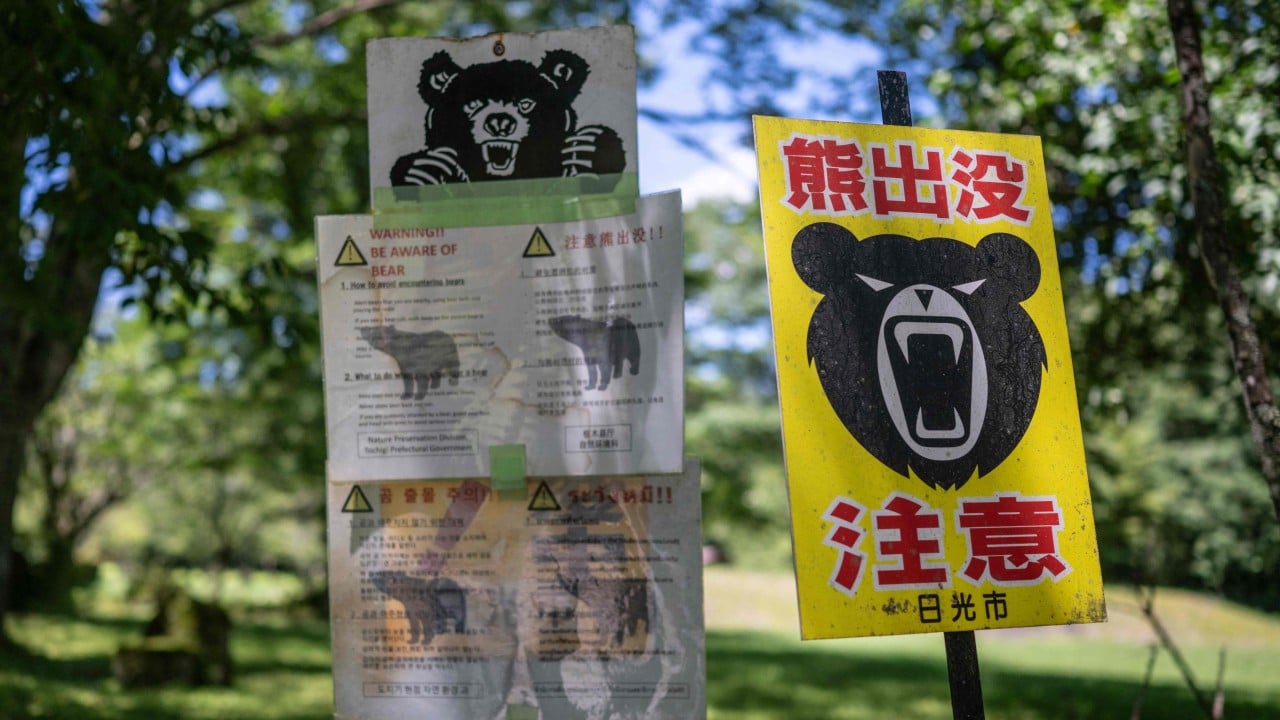
The numbers are staggering. In recent years, bear sightings and human encounters across Japan have surged to record highs, resulting in tragic injuries and a rising tide of public anxiety. This is not a distant nature documentary. This is a mother walking her child to a primary school in Akita, listening intently to the rustle of the bushes, clutching a small brass bell designed to warn predators away.
When the local government budgets are stretched thin, pest control becomes a desperate scramble. You cannot simply shoo a three-hundred-pound bear back into the timberland with a stern voice and a wave of your hand. You need electric fencing. You need GPS tracking collars. You need specialized training for wildlife management officers, public awareness campaigns for bewildered travelers venturing into deep hiking territory, and rapid-response teams capable of operating across rugged, inaccessible terrain.
This is where the departure tax found its true calling.
Buried deep inside the treasury allocations, a significant portion of those tiny one-thousand-yen contributions has been quietly funneled away from trendy downtown Wi-Fi hotspots and directed toward rural wildlife defenses. It is an irony worth pausing over. The vacationer sipping green tea in a Kyoto temple is, through the quiet mechanics of bureaucratic distribution, underwriting the installation of bear-proof garbage cans in a tiny farming village three hundred miles north.
Money flows from the sky, carried by millions of tourists stepping off international flights, and condenses into heavy steel traps and thermal-imaging drones.
Imagine, for a moment, a local hunter turned municipal wildlife specialist standing on a frosty ridge at dawn. Let us call him Tanaka. He has lived in this valley for seventy years. He remembers when the hills were full of young men who knew every trail, every ridge, every hidden spring. Now, he is one of a handful of people tasked with protecting a community of pensioners from an influx of hungry predators driven out of their traditional habitats.
Tanaka adjusts his radio, the static hissing against the silence of the woods. He checks the battery on his thermal scope, funded by a tourist he will never meet, flying home to Frankfurt or Sydney with a passport stamped in Osaka.
The connection is absurd, beautiful, and entirely real.
We live in an interconnected web of unintended consequences. Globalization is not just container ships crossing the Pacific or digital nomads tapping away on laptops in seaside cafes in Kanagawa. It is also the ripple effect of tourism revenue stabilizing the very edges of civilization. When a country opens its doors wide to the world, it invites complexity. It invites pressure on ancient shrines, crowded trains, and fragile ecosystems. But it also generates the capital required to manage those pressures, if the political will exists to direct the funds where they are desperately needed.
Japan is attempting something remarkable. It is trying to monetize the transient joy of travel and channel it directly into the permanent defense of its rural heartland.
The bear problem will not vanish overnight. Climate change continues to rewrite the rules of the wild, pushing animals closer to human settlements with relentless persistence. The departure tax is not a silver bullet; it is merely a tool, a financial lifeline tossed into rough waters.
Yet every time a traveler hands over their passport, pays their fare, and triggers that invisible levy, they are participating in a grand, quiet bargain. They came to witness the ancient beauty of a country that balances neon futures with moss-covered pasts. And in doing so, whether they realize it or not, they are helping to keep the lights on in the deep valleys where the wild things still roam.
The morning train rattles past the tree line, leaving a thin trail of white steam against the mountain slope. Somewhere out there, beneath the heavy green canopy, the forest breathes, watches, and waits.