The coffee in the paper cup had gone cold ten minutes ago, but Elena kept her hands wrapped around it anyway. The warmth was the only fixed point in a room that felt entirely unmooring. Across the polished mahogany table sat a loan officer whose smile was professional, practiced, and entirely devoid of comfort.
The numbers on the paper weren't just digits. They were anchors dragging down a dream Elena and her husband had spent five years sketching out on the back of kitchen napkins: a small brick-and-mortar bookstore downtown, a place with creaking floorboards and the sharp, comforting scent of aging paper, where neighborhood kids could sit on oversized floor cushions and lose themselves in illustrated worlds. Don't forget to check out our recent article on this related article.
"The rate moved again," the officer said, his voice flat with the casual cruelty of macroeconomic reality.
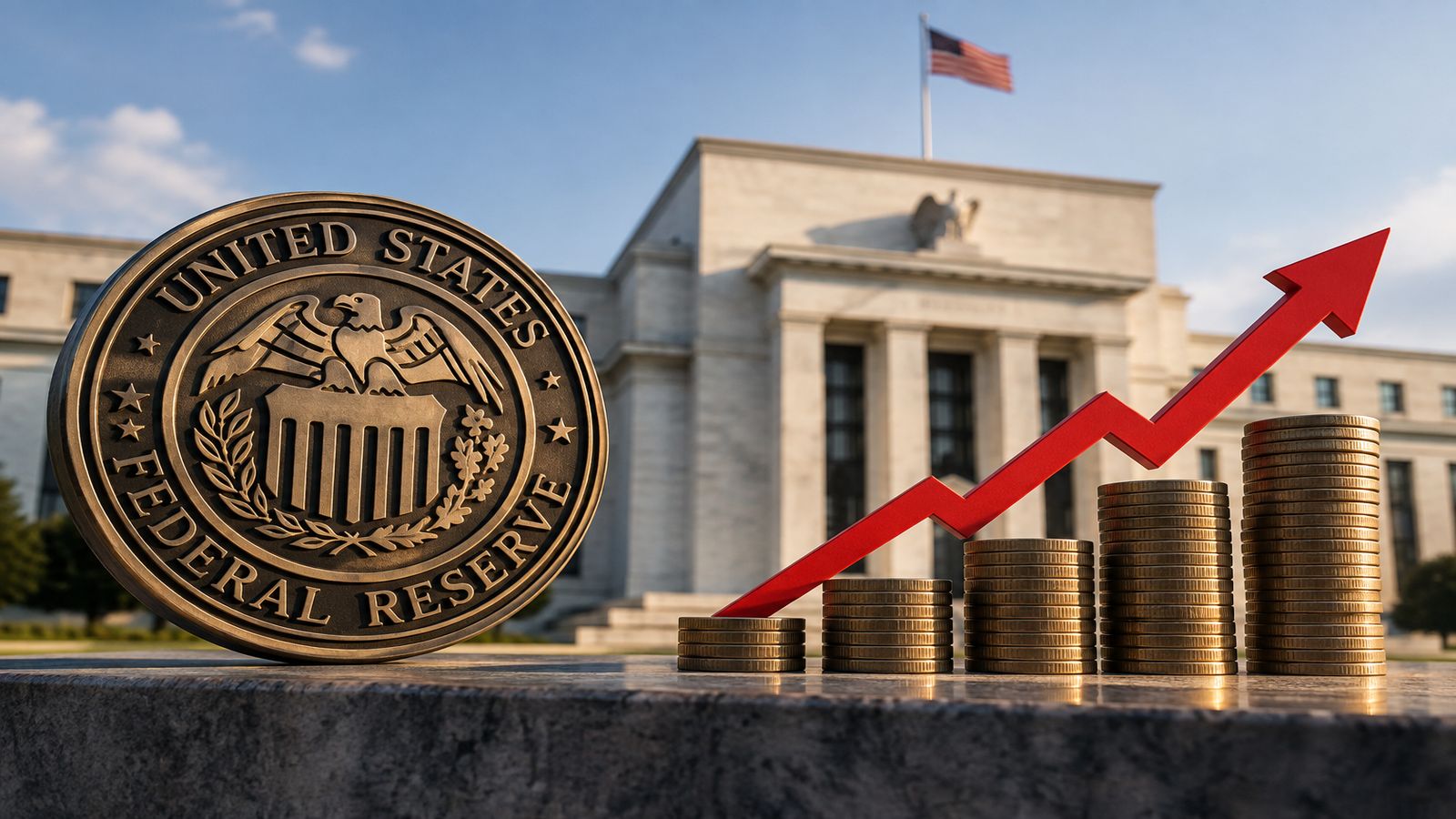
It wasn't a surprise. Everyone had been whispering about it for weeks. In Washington, inside the quiet, vaulted halls of the Federal Reserve, men and women in dark suits were looking at glowing monitors, tracking jagged lines that represented millions of lives reduced to statistical aggregates. To them, inflation was a fever that required a bitter medicine. To Elena, it meant her monthly mortgage payment was climbing into the stratosphere, and the loan she needed to swing open her shop doors was suddenly swelling past the point of feasibility. If you want more about the background here, Business Insider offers an in-depth summary.
Inflation is a thief that doesn't break windows. It slips through the cracks under the front door when nobody is looking. It pads into the grocery store overnight and leaves behind a receipt that makes your stomach drop. A gallon of milk, a tank of gas, a bundle of electrical wire for a storefront renovation—each one ticked upward, stealthy and relentless.
And so, the architects of monetary policy pull the only major lever they hold. They raise the cost of borrowing money.
It sounds clinical. A quarter-point here, a half-point there. It reads well in financial columns next to stock tickers and glossy portraits of economists analyzing quarterly yields. But down on the pavement, where people live and breathe and try to build things from scratch, these decisions land like falling masonry.
Consider Todd Buchholz, the Yale economist and former White House director of economic policy, looking at the same stubborn data boards. His assessment wasn't built on optimism; it was anchored in the stubborn resilience of consumer spending. People kept buying. Prices kept refusing to tumble down the mountain they had climbed over the past few years. And because the fire of inflation refused to burn itself out naturally, the central bank was staring down the barrel of necessity. Another hike. Maybe two.
Prices do not fall just because we wish them to. They stay elevated because the engine of the economy keeps running on high gear, fueled by wages that tried to catch up and savings that people were finally spending after years of uncertainty.
When the Federal Reserve speaks, the entire world holds its breath. But what does a rate hike actually mean for someone who doesn't trade bonds or manage a mutual fund?
It means friction.
Imagine wanting to buy your first home. You have saved for a decade, tucking away every spare dollar while watching housing prices sprint ahead of your savings account. Just as you finally reach the starting line, the goalposts are yanked backward. A higher interest rate means a higher monthly payment on the exact same roof over your head. Thousands of dollars over the lifetime of a loan vanish into interest payments, not principal. The dream shrinks. A smaller house, a longer commute, or no house at all.
The housing market becomes a game of musical chairs where the music never really stops, but fewer and fewer people are allowed to sit down. Sellers hesitate to list their homes because trading a three percent mortgage for a seven percent mortgage feels like financial self-sabotage. Buyers find themselves locked out by the dual barrier of inflated home prices and punishing borrowing costs. The entire property ecosystem freezes, turning a vibrant market into a static standoff.
For businesses, the effect is magnified. Companies large and small rely on credit like an engine relies on oil. They borrow to buy inventory, to hire workers, to expand into new neighborhoods, to weather the slow seasons. When money becomes expensive, expansion stops. Hiring freezes. The ambitious projects are shelved until further notice.
Think about the local bakery needing a new commercial oven, or the regional logistics company trying to replace half its aging delivery fleet. When interest rates climb, the monthly debt service swallows cash flow that would have otherwise gone toward employee bonuses or safety upgrades. Small businesses feel this squeeze first and hardest because they lack the massive cash reserves of multinational corporations. They cannot simply issue bonds or tap international credit lines. They depend on local banks, and local banks must tighten their belts when the central bank turns off the tap.
This is the cruel paradox of modern economics. To save the patient from a chronic fever, the doctor administers a treatment that causes a severe chill. You cool the economy by making it harder for people to spend, harder for businesses to grow, and harder for families to plan for tomorrow.
The question haunting boardrooms and kitchen tables alike is simple yet terrifying: How much medicine is too much?
If the Federal Reserve stops too soon, inflation stays sticky. It settles into the bedrock of daily life like a permanent tax on groceries and rent, eroding purchasing power year after year until the middle class feels entirely hollowed out. People watch their paychecks buy less and less, feeling trapped on a treadmill that accelerates every time they try to catch their breath. They notice that a cart containing the exact same items they bought three years ago now costs fifty percent more, while their salary has only budged ten percent. That gap is where financial anxiety breeds.
On the other hand, if they push too hard—if they squeeze the credit hose until the water stops flowing entirely—they risk tipping a resilient economy over the cliff into a sharp recession. Workers lose their jobs not because they aren't skilled, but because their employers can no longer service debt or secure short-term operational loans. Factories slow their assembly lines. Retailers cancel incoming shipments. The unemployment rate ticks up, and suddenly the fear of inflation is replaced by the much darker fear of joblessness.
There is no painless exit from a major inflationary cycle. History teaches us that recovering from a widespread price shock is like trying to land a commercial jetliner on a short runway during a crosswind. Every adjustment must be precise. Every miscalculation carries a heavy cost.
Yet, sitting across from that loan officer, Elena didn't want to talk about monetary theory or historical precedents. She looked at the revised business plan, folded the paper neatly, and slid it back into her bag.
The bookstore would have to wait. The shelves would stay empty for another season. The savings account would have to absorb a few more months of rising living costs before she could even think about chasing her dream again.
Multiply Elena's moment by millions. Across the country, people are recalculating, downsizing, delaying, and waiting. They are trimming budgets not out of luxury, but out of necessity. They are watching the news for whispers of what the Federal Reserve will do next month, treating a group of economists in Washington like weather forecasters predicting a hurricane.
Consider the credit card debt piling up in households across the nation. When savings run dry, families turn to plastic to bridge the gap between their paychecks and their grocery bills. As benchmark rates rise, the annual percentage rates on those cards soar into double digits. A balance carried month-to-month transforms into an avalanche of compounding interest, trapping working families in a cycle that is nearly impossible to escape.
Or look at the auto loan market, where monthly payments now rival what previous generations paid for rent. Families need reliable transportation to get to work, but buying a car has become an extraordinary financial burden as financing costs scale upward with every central bank meeting.
We live in a system where invisible threads connect the choices made in marble-pillared federal buildings to the price of a gallon of milk in a corner bodega, the interest rate on a family sedan, and the viability of a neighborhood bookstore. Every interest rate tick is a heartbeat felt across the financial ecosystem.
The numbers on the screen will change next week. New reports will drop. Pundits will argue over basis points and core inflation metrics, dissecting every word spoken by central bankers in search of hidden meaning. But the real story is written in the quiet decisions made in living rooms every single night—the canceled vacations, the postponed expansions, the cautious pauses of a nation waiting for the storm to break.
And until the temperature finally drops, the wait continues.