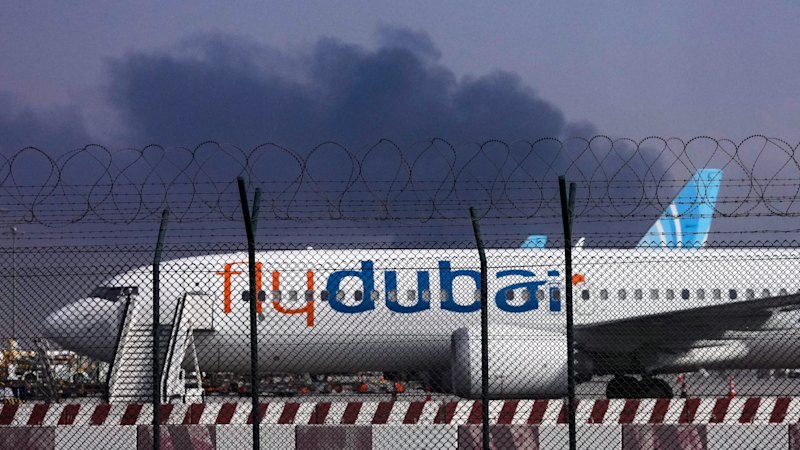
The detection and neutralization of an insider threat within commercial aviation operations exposes critical vulnerabilities in pre-employment screening and continuous monitoring systems. When an aviation professional, such as a co-pilot, initiates a targeted plot against infrastructure like Ben Gurion Airport, the incident demands a rigorous examination of organizational risk management rather than a reliance on single-actor anomaly explanations.
Security frameworks in civil aviation traditionally prioritize external vectors—such as perimeter breaches, surface-to-air threats, or passenger-borne contraband. This creates a systemic blind spot regarding vetted personnel who possess authenticated credentials, system knowledge, and physical access to high-value assets. Deconstructing the mechanics of this security failure requires an analysis of behavioral baselines, credential-handling protocols, and the latency between psychological deterioration and operational intervention.
The Architecture of Insider Risk in Aviation
Commercial flight operations rely on a high-trust operational model. Crew members undergo extensive background checks, psychological evaluations, and continuous training to maintain their certification. However, these mechanisms are largely static at the point of entry.
[Static Screening at Onboarding] -> [Operational Decay over Time] -> [Unmonitored Psychological Stress] -> [Exploitation of Access Privilege]
The transition from a stable operative to an active threat vector involves a multi-variable regression curve that static onboarding procedures cannot capture. The primary failure points within this architecture include:
- Credential Privilege Escalation: Access rights granted for professional competence are rarely re-evaluated against behavioral anomalies unless a formal infraction occurs.
- Peer-Review Isolation: Flight deck environments are insular. Co-pilots and captains operate in closed loops where third-party observation is limited, reducing the likelihood of early peer reporting of radicalization or acute distress.
- Signaling Latency: Indicators of intent—such as sudden shifts in financial stability, expressions of ideological grievance, or erratic psychological markers—often fail to trigger cross-departmental data sharing between human resources, medical evaluators, and security personnel.
Quantifying the Threat Matrix
To understand how an individual bypasses multi-layered security protocols, analysts must evaluate the risk equation. Risk in aviation security is a product of three distinct variables:
$$\text{Risk} = \text{Threat} \times \text{Vulnerability} \times \text{Consequence}$$
In the context of an insider threat involving a flight crew member:
- Threat represents the intent of the individual, which may evolve rapidly due to internal psychological pressures or external radicalization.
- Vulnerability is exceptionally high because the individual already holds the physical keys to the mechanism of destruction—the aircraft itself—and possesses clearance to bypass standard airport security checkpoints intended for passengers.
- Consequence remains catastrophic, as commercial aircraft utilized as kinetic weapons maximize both structural damage and loss of life.
Because vulnerability cannot be reduced to zero without removing the human pilot entirely, mitigation strategies must focus aggressively on threat suppression through real-time behavioral analytics and continuous workforce monitoring.
Systemic Corrections and Operational Defenses
Mitigating future incidents of this nature requires a fundamental shift from reactive investigation to predictive intervention. Civil aviation authorities and commercial operators must implement structural reforms that address the blind spots exposed by isolated actor events.
First, continuous psychological and behavioral monitoring must replace the current quadrennial or annual check-box evaluations. This involves integrating operational data analytics with peer feedback mechanisms that encourage anonymous reporting of acute behavioral shifts without immediate punitive career consequences, thereby removing the friction that discourages early intervention.
Second, the principle of least privilege must be applied to the flight deck. While operational autonomy is necessary for flight safety, dual-authentication protocols for critical navigational overrides during sensitive phases of flight over high-security zones can prevent a single actor from executing a catastrophic deviation from a flight plan.
Third, intelligence-sharing frameworks between national security agencies and commercial airline employers must be streamlined. Regulatory barriers that restrict the flow of radicalization indicators or concerning behavioral flags must be dismantled to ensure that security teams receive actionable intelligence before operational execution occurs.
The neutralization of an attempted aviation attack by an insider highlights the necessity of treating flight crew members not as permanently trusted entities, but as dynamic variables within a high-consequence security ecosystem. Eliminating single-point-of-failure vulnerabilities requires institutionalizing continuous oversight, reducing unwarranted operational isolation, and aligning human resources data with physical security protocols.