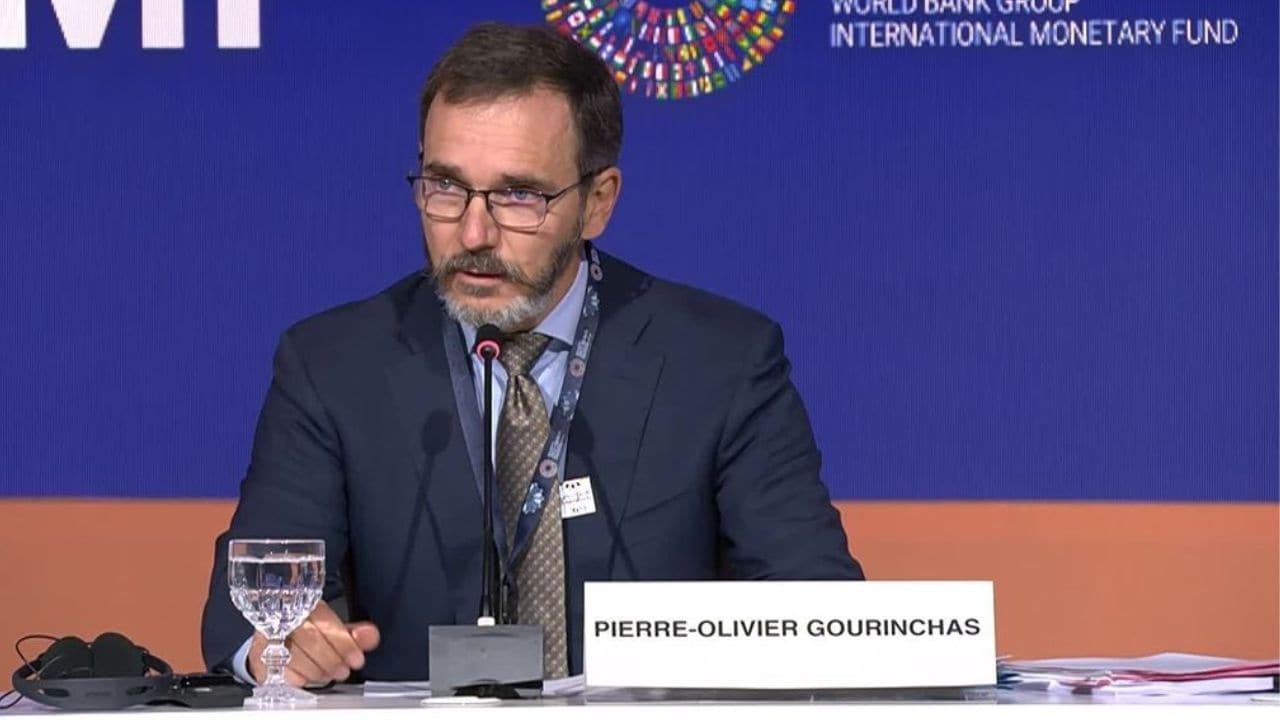
The International Monetary Fund is about to lose its chief economic navigator. Pierre-Olivier Gourinchas just announced he's stepping down as the IMF Economic Counsellor, and honestly, the timing is a bit of a head-scratcher for anyone watching the markets. He's heading back to the University of California, Berkeley, on July 1, 2026, leaving a massive hole in the Fund’s leadership during one of the most volatile periods since the 1970s.
When Gourinchas took over from Gita Gopinath in early 2022, he didn't exactly get a "welcome to the job" honeymoon. He walked straight into a global inflation spike, the fallout of a pandemic, and a geopolitical map that started fracturing in ways we hadn't seen in decades. He wasn't just a face for the World Economic Outlook reports; he was the guy trying to explain why the global economy was "limping along" while everyone else was shouting about a total collapse.
What Gourinchas actually did for the IMF
Most people see the IMF as a giant bank for countries in trouble, but the Research Department that Gourinchas led is more like the world's economic brain. He pushed the Fund to look at things they’ve historically been a bit slow to grasp. Think about geo-economic fragmentation. Before Gourinchas, that was a buzzword. Under his watch, it became a core analytical framework. He helped the world understand that if the West and East stop trading, it's not just a political spat—it's a multi-trillion-dollar tax on global growth.
He also didn't shy away from the messy stuff. He was deep in the weeds on the AI Preparedness Index, trying to figure out which countries are going to get crushed by automation and which might actually thrive. It's easy for an academic to sit in Berkeley and write papers, but Gourinchas had to turn those theories into "policy-relevant" advice for 190 member countries. That’s a brutal balancing act.
The shoes that need filling
The search for a successor starts now, and Kristalina Georgieva has a tough task. The next Economic Counsellor isn't just inheriting a desk; they’re inheriting a global economy that’s basically a tinderbox. We’ve got high debt levels everywhere, interest rates that are stubborn, and a trade war that feels like it’s just getting started.
What made Gourinchas effective was his agility. When the war in the Middle East escalated, his team didn't wait six months to issue a report. They were pushing out alternative scenarios and "spillover" analysis almost in real-time. That's the kind of pace the IMF hasn't always been known for. If the next person is a traditionalist who wants to wait for perfect data, the Fund is going to lose its seat at the table.
Why this departure feels different
Usually, these transitions are pretty routine. A top academic comes in for a few years, adds a fancy title to their CV, and heads back to a tenured position. But right now, we’re seeing a shift in how the IMF operates. There’s a lot of pressure from the Global South for more representation. You’ve probably noticed the chatter about whether the top spots at these institutions should always go to the same small group of Western-trained economists.
While Daniel Katz was recently tapped for a different high-level role, the Economic Counsellor spot remains the "Chief Economist" of the world. It’s a job that requires you to tell powerful finance ministers things they don't want to hear—like "your spending is out of control" or "your tariffs are hurting your own people." Gourinchas had a way of saying those things with enough data that you couldn't just ignore him.
What you should watch for next
The transition period between May and July is going to be telling. Watch how the IMF handles the upcoming summer updates to the World Economic Outlook. If the tone shifts or if they suddenly get more cautious, it might mean the leadership change is causing some internal friction.
For investors and policy junkies, the "Gourinchas era" will likely be remembered for its focus on resilience. He constantly reminded us that while the global economy is surprisingly tough, it isn't indestructible. His departure leaves a vacancy for someone who can navigate the "New Normal" where trade is a weapon and inflation is a shadow that won't go away.
If you’re keeping track, here’s what to look out for over the next 60 days:
- The Shortlist: Look for names that have experience in both emerging markets and advanced economies. The IMF can't afford a one-sided perspective right now.
- The Research Shift: See if the Fund stays aggressive on issues like AI and climate finance or if they retreat back to standard monetary policy talk.
- Market Reaction: Generally, these moves don't rattle markets, but if a controversial figure is nominated, expect some volatility in how the IMF’s "credibility" is viewed.
Gourinchas is leaving the IMF better than he found it, which is saying something given the chaos of the last four years. Now the question is whether the Fund can find someone with the same mix of academic depth and political savvy to keep the ship steady. July 1 is coming fast.