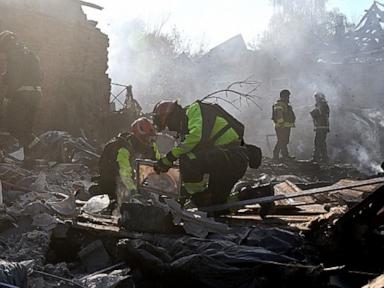
President Donald Trump has repeatedly declared on social media that Moscow and Kyiv agreed to stop attacking each other’s energy facilities. The reality on the ground is entirely different. Within hours of those announcements—first in mid-September and again in mid-October—Russian glide bombs and missiles slammed into Ukrainian power plants, while Ukrainian long-range drones continued hammering Russian oil refineries. There is no binding energy ceasefire, no verification mechanism, and no pause in the systematic destruction of power grids and fuel depots. Instead, the push for an energy truce reveals a desperate effort by the White House to contain a global diesel shortage sparked by the war in Iran and exacerbated by Ukraine’s remarkably effective campaign against Russia’s refining sector.
Anatomy of a Non-Existent Ceasefire
To understand why these announcements keep colliding with reality, look at how they are made. Rather than emerging from signed protocols or multi-party diplomatic summits, the supposed agreements have materialized as unilateral social media posts from Washington. On September 14, and again on October 11, Trump proclaimed that both warring nations had agreed to refrain from hitting energy infrastructure.
Diplomatic agreements require precise definitions, and this one lacks even the basics. What constitutes an energy facility? Does the term cover dual-use electrical substations that power both civilian hospitals and weapons factories? Does it include oil storage terminals fueling armored columns near the front lines? Neither Washington nor Moscow has offered a framework answering those questions.
Ukrainian President Volodymyr Zelenskyy responded to the announcements with cautious conditional language, stating that Kyiv was prepared to halt strikes on Russian energy assets only if Moscow reciprocated and Western partners provided concrete guarantees. Moscow offered no such commitment. On the very evening of the October announcement, Russian forces struck a power plant in Kharkiv, plunging residential blocks into darkness as temperatures dropped. By mid-November, the air war had escalated rather than cooled, with Ukraine launching waves of over a thousand drones in a single night against targets including the Ilsky oil refinery in Krasnodar and fuel depots in the Rostov region.
The Real Driver Is Global Diesel
If the truce does not exist on the battlefield, why keep announcing it? The answer sits at fuel pumps thousands of miles away from Eastern Europe.
Global energy markets have been battered by a twin shock. Since the outbreak of the U.S.-led conflict with Iran in February, diesel and refined fuel exports from Persian Gulf states have plummeted to roughly a quarter of their pre-war volume. Maritime chokepoints and damaged Gulf processing facilities stripped the global market of middle distillates—the heavy fuels required to run freight trucks, agricultural machinery, shipping fleets, and military vehicles.
At the exact same moment Gulf supplies dried up, Ukraine’s domestic drone industry reached maturity. Over the course of the year, Ukrainian forces shifted from sporadic symbolic raids to a methodical campaign targeting Russia’s primary economic lifeline. According to Kyiv’s assessments, long-range strikes have disabled more than half of Russia’s oil refining capacity. Even Russian President Vladimir Putin took the rare step in October of publicly acknowledging the economic toll, admitting the strikes had shaved roughly one percent off Russia’s gross domestic product.
When you remove both Persian Gulf exports and Russian refining capacity from the global supply chain simultaneously, diesel prices surge. Facing intense domestic pressure over fuel inflation ahead of the November elections, the White House sought an immediate way to put Russian refined products back on the water. Halting Ukrainian drone strikes on Russian refineries became an urgent economic priority for Washington, culminating in a controversial administration deal to allow Russian diesel back into the market—a move that drew sharp bipartisan pushback in the Senate and dismay from European allies.
Why Kyiv Refuses to Trade Away Its Leverage
Asking Ukraine to stop hitting Russian refineries asks Kyiv to surrender its single most effective asymmetric weapon.
For nearly five years, Ukraine has fought a war of attrition against an adversary with deeper manpower reserves and larger artillery stockpiles. On the front lines in Donetsk and elsewhere, Ukrainian troops face relentless pressure, complicated further by technical constraints such as newly imposed speed limits on the Starshield satellite network that have degraded Ukrainian air defense coordination.
Deep strikes inside Russia change the strategic math. They accomplish three vital objectives for Kyiv:
- Financial Attrition: Crude oil exports are hard to stop entirely, as shadow fleets move raw barrels to buyers in Asia. Refined products like diesel and aviation fuel, however, require complex, vulnerable distillation towers and cracking units that rely on Western-made components under heavy sanctions. Destroying a refinery permanently impairs Moscow's ability to generate high-margin revenue and forces Russia to restrict its own fuel exports.
- Front-Line Logistics: Mid-range strikes on depots in Rostov and Krasnodar directly starve Russian mechanized units of fuel, slowing offensive operations before ammunition and troops can reach the zero line.
- Domestic Psychological Impact: For years, the Kremlin insulated urban populations in Moscow and St. Petersburg from the realities of the invasion. Fuel shortages, rising domestic pump prices, and nightly air defense alerts bring the cost of the war directly to the Russian public.
From Kyiv’s perspective, an informal, unverified moratorium benefits Moscow exclusively. Russia gets breathing room to repair damaged cracking units and restore diesel exports, while retaining the freedom to bombard Ukrainian cities with ballistic missiles and glide bombs that Ukraine lacks the air defense interceptors to stop.
Moscow’s Asymmetric Winter Strategy
The Kremlin has zero incentive to honor an energy ceasefire unless forced to do so by escalating pain at home. Historically, Russian military doctrine relies heavily on weaponizing winter against civilian infrastructure.
Unlike Russia’s sprawling, decentralized network of oil refineries spread across eleven time zones, Ukraine’s electrical grid is concentrated and already severely degraded. Years of targeted strikes have destroyed most of Ukraine’s thermal and hydroelectric generating capacity, leaving the country dangerously reliant on a handful of Soviet-era nuclear power plants and high-voltage substations that connect them to the grid.
Moscow understands that it does not need to hit a nuclear reactor to cause a catastrophic blackout. Destroying the step-down transformers and transmission corridors surrounding those plants achieves the same result. By dragging out talks over broader European security architectures while continuing strikes on Ukrainian power plants and civilian transit, the Kremlin aims to break Ukrainian morale through cold and darkness while keeping Western diplomats preoccupied with phantom ceasefires.
The Verification Trap in Modern Drone Warfare
Even if both capitals genuinely wanted to pause energy strikes tomorrow, enforcing such an agreement would be a technical nightmare.
Past arms control and ceasefire agreements relied on satellite imagery and international observers to monitor heavy troop movements or artillery pullbacks. Today’s deep-strike war is fought with cheap, long-range prop-driven drones and loitering munitions assembled in dispersed workshops and launched from mobile trucks.
Consider a hypothetical scenario illustrating the verification problem. Suppose a Ukrainian drone swarm targets a military airfield in southern Russia, and electronic warfare jamming causes three of those drones to veer off course, crashing into an adjacent electrical substation. Moscow immediately declares the truce broken and launches a retaliatory barrage against thermal power plants in Kyiv and Kharkiv. Without neutral inspectors on the ground at every refinery and substation—an impossibility in an active war zone—neither side can distinguish between an intentional strike, an electronic warfare diversion, and a staged provocation.
Furthermore, the physical infrastructure of modern warfare is thoroughly intertwined. The same railway electrical substations that power civilian commuter trains also move armored personnel carriers. The same refineries producing commercial diesel also refine jet fuel for bombers launching glide bombs into Sumy and Kharkiv. Drawing a clean diplomatic line between civilian energy and military logistics is an exercise in wishful thinking.
The Collision of Domestic Politics and Battlefield Reality
The gap between Washington’s rhetoric and the smoke rising over Krasnodar and Kharkiv exposes a fundamental disconnect in current diplomacy.
You cannot tweet a ceasefire into existence when the underlying strategic incentives push both combatants toward escalation. For the White House, an energy truce is a convenient narrative meant to soothe jittery commodity traders and frustrated drivers. For Moscow, vague talk of de-escalation serves as a diplomatic smokescreen to divide Washington from European capitals—who are already alarmed at being sidelined in broader security discussions—while Russian forces press their advantage on the ground.
Until Ukraine receives either ironclad air defense coverage capable of sealing its skies or security guarantees backed by enforceable military consequences, Kyiv will keep sending drones toward Russian refineries. And until those refineries stop burning, global diesel markets will remain hostage to a war that neither side is willing to pause for the sake of lower fuel prices.