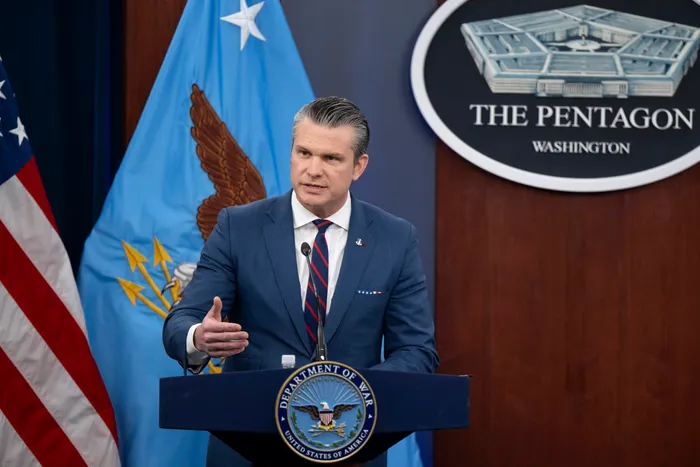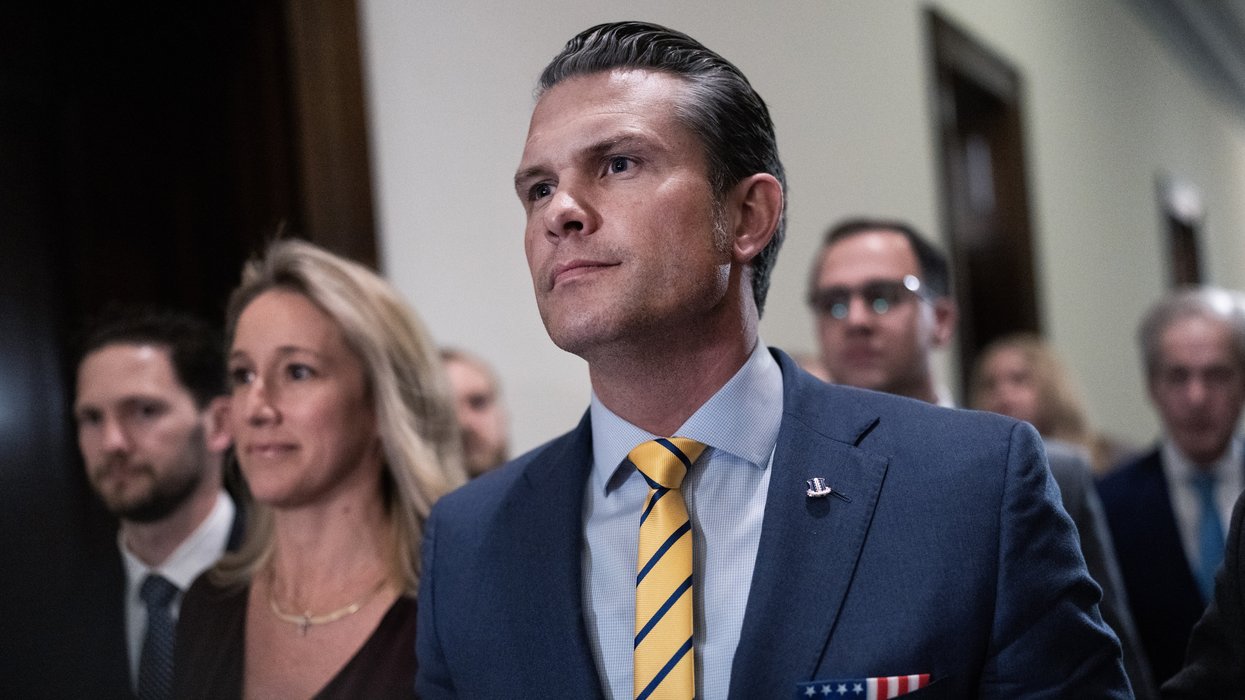
The Secretary of War stood behind the Pentagon lectern on Thursday and did something rarely seen in the history of American conflict. He didn't just brief the press on the naval blockade of Iran; he put the press on trial. Pete Hegseth, a man who has traded his combat fatigues for the weight of the "War Department," used a televised operational update to brand the American media as "Pharisees" with "hardened hearts." It was a moment of pure, unadulterated friction that signaled a new era in how the United States government intends to manage the optics of high-stakes warfare.
While the Joint Force is busy enforcing a total blockade of Iranian ports—targeting everything from the "Dark Fleet" of illicit oil tankers to any vessel providing material support to the regime—Hegseth is fighting a different campaign on the home front. He isn't interested in the traditional back-and-forth of the Pentagon press pool. He wants a spiritual and patriotic alignment that he claims the media is willfully sabotaging.
The Blockade and the Biblical Scolding
The operational facts of "Operation Epic Fury" are staggering. The United States and Israel launched a massive, coordinated campaign on February 28, 2026, aimed at dismantling Iran’s nuclear infrastructure and military backbone. After forty days of sustained strikes, a fragile ceasefire took effect on April 8. But as Hegseth made clear, the "nice way" of doing things is currently a naval stranglehold.
The U.S. is currently using roughly 10% of its naval power to maintain a blockade that has effectively neutralized 100% of the Iranian Navy. Hegseth’s message to the new Iranian regime was blunt: "We can do this all day." But the vitriol he saved for Tehran was nothing compared to the fire he rained down on the journalists sitting ten feet in front of him.
He accused the press of peddling an "endless stream of garbage" and questioned which side they were actually on. By invoking the "Pharisee" label, Hegseth wasn't just complaining about bad press. He was framing the media as a group of self-righteous, legalistic hypocrites who are blind to the "goodness" of the American mission. It is a rhetorical move designed to bypass the traditional gatekeepers of information and speak directly to a base that already views the mainstream media with deep-seated suspicion.
Why the Narrative Control Matters Now
The timing of this outburst is not accidental. The war in Iran is at a precarious inflection point. The initial 40-day air campaign was a tactical success, but the geopolitical fallout is messy. Over 13 U.S. service members have been killed, with hundreds more wounded. The financial cost is already spiraling toward a $200 billion supplemental request.
In previous conflicts, these numbers would be the subject of grueling daily scrutiny. Hegseth is attempting to preempt that scrutiny by framing it as "unpatriotic." He pointed back to the 2021 Afghanistan withdrawal, accusing the media of "bending over backwards" to defend the Biden administration while "relentlessly seeking the negative" in the current administration’s "historic battlefield victory."
This is more than just a personality clash. It is a calculated strategy to maintain domestic support for a conflict that has no set end date. Hegseth explicitly stated that the duration of the war would be determined solely by the President, with no "fixed deadline." In a vacuum of information about when the boys come home, the "goodness" of the mission becomes the only metric that matters.
The Mechanics of the Stranglehold
While the war of words rages in Washington, the reality on the water is clinical. The blockade, led by Admiral Cooper at CENTCOM, is a sophisticated operation involving more than 10,000 sailors, Marines, and Airmen.
- The Targets: Every ship entering or leaving Iranian ports, regardless of nationality.
- The Dark Fleet: Specific focus on illegal tankers evading sanctions or insurance requirements.
- The Reach: Operations extend beyond the Strait of Hormuz into international waters and the Pacific.
Hegseth’s insistence that this is "not a fair fight" is a point of pride. The Pentagon is betting that the combination of a decimated Iranian Navy and a "locked and loaded" U.S. Joint Force will force the regime into a "golden bridge" deal led by the Vice President.
The Danger of the Hardened Heart
The Secretary’s "Pharisee" rant reveals a fundamental shift in the Pentagon’s DNA. For decades, the military-media relationship was a managed tension. There were rules of engagement, off-the-record briefings, and a general understanding that facts were the currency of the room.
Hegseth has replaced that currency with "resolve" and "goodness." By demanding that the press "open your eyes to the goodness," he is asking for a theological commitment to the administration's foreign policy. This leaves no room for the gray areas of warfare—the civilian casualties, the long-term instability of "regime change," or the economic shocks of a frozen energy market.
If you don't see the success, your heart is hardened. If you report on the $200 billion price tag, you are unpatriotic.
This approach creates a dangerous feedback loop. When the leadership of the War Department views skepticism as a moral failing rather than a professional duty, the risk of intelligence failures and strategic blind spots increases exponentially. We have seen this before in various iterations of American interventionism, but never with this level of overt religious and patriotic condemnation from the top.
The Strategy of Direct Engagement
The end goal of Hegseth’s media blitz is to ensure that the "American people with goodness in their hearts" ignore the reports coming out of the Pentagon press room. He is banking on the idea that the "fake news" label is now so deeply ingrained that he can conduct a war in the Middle East while simultaneously conducting a war against the domestic press.
The blockade of Iran is a physical manifestation of American power. The attack on the press is a psychological one. Hegseth is gambling that he can win both. He wants the Iranian regime to see a United States that is "maximally postured" for combat, and he wants the American public to see a media that is "maximally postured" against the national interest.
This isn't just about Pete Hegseth's temper. It is about a permanent change in the relationship between the people who fight wars and the people who report on them. The "Pharisees" in the press gallery aren't going anywhere, but neither is a Secretary of War who believes he is on a mission that transcends the need for their questions.
The next few weeks will decide if the "golden bridge" to a deal with Iran actually exists, or if the U.S. is simply digging itself into a deeper conflict while the man at the helm tells everyone to stop looking at the shovel.
Don't expect a ceasefire in the briefing room anytime soon.