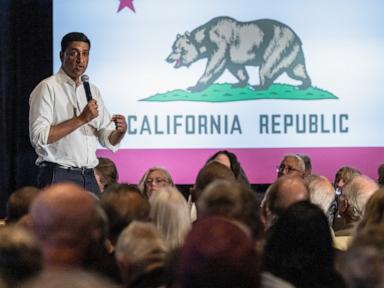
Most Americans pay more for daycare than they do for a mortgage, yet Washington treats childcare like a luxury expense. Rep. Ro Khanna wants to blow up that entire status quo before the 2028 presidential primary even kicks off.
In late September 2026, the California Democrat introduced the Free Child Care for America Act (H.R. 10741), a massive, nearly $1 trillion ten-year legislative package designed to guarantee universal childcare across the United States. The bill eliminates out-of-pocket daycare fees for millions of working families, pays grandparents and neighbors to watch kids, and hands eligible stay-at-home parents $1,000 a month. It's a clear policy plank for a potential 2028 White House run.
Look closer at the fine print, though. The political math behind paying for it—and the rift it exposes inside the Democratic Party—tells a much bigger story than a simple campaign headline.
How the Free Child Care for America Act Actually Works
If you've ever tried to find an open infant spot at a licensed daycare center, you know the problem isn't just price. It's supply. Waitlists stretch for a year or longer in major cities, and rural counties often have zero licensed facilities at all.
Khanna's bill attempts to solve both the cost crisis and the supply shortage by funding three distinct pathways for families. Rather than forcing every kid into a government-run facility, the legislation allocates roughly $78 billion to $80 billion per year in federal grants to states and tribal governments to subsidize existing options.
1. Zero-Cost Licensed Centers and Home Daycares
Under the proposal, families using registered, licensed childcare centers or licensed family home providers wouldn't pay tuition. In 2024, Khanna pitched an earlier version of this legislation—the Child Care for America Act—that capped parent fees at $10 a day. He scrapped the $10 cap in 2026 in favor of making care completely free at the point of service.
Why the shift? Means-testing and sliding-scale co-pays create administrative nightmares. When families have to submit pay stubs every few months just to prove they qualify for a $10 rate, working parents drop out of the program. Making it free removes the paperwork trap.
2. Paying Grandparents, Aunts, and Neighbors
Roughly 90% of America's childcare infrastructure is private, and millions of families rely on informal networks because traditional daycares don't cover night shifts or weekend hours. Khanna's plan establishes a certification track for "family, friend, and neighbor" caregivers.
Grandparents, aunts, uncles, or trusted neighbors who complete basic safety and certification requirements get paid directly by the state to watch the kids. Critics argue informal care lacks the early-education rigor of formal preschools. Honestly, for a single mom working a 6:00 AM hospital shift, a certified grandmother is infinitely better than an unaffordable center that doesn't open until 7:30 AM.
3. The $1,000 Monthly Stay-at-Home Parent Stipend
This is the piece that catches most progressive economists off guard. Parents who choose to stay home with a child under age three can receive a $1,000 monthly cash stipend—$12,000 a year—provided their household income sits at or below 100% of their state's median income.
In his 2024 draft, Khanna proposed a $300 monthly stipend. Tripling it to $1,000 turns the bill into a direct ideological counterpunch against conservative family policy. Vice President JD Vance has pushed expanding federal subsidies of up to $9,000 annually specifically for married couples with a stay-at-home parent. Khanna's version strips out the marriage requirement and raises the payout, framing unpaid caregiving at home as real economic labor.
Raising Caregiver Wages Without Bankrupting Centers
You can't expand childcare supply if nobody wants the job. Right now, early childhood educators are among the lowest-paid workers in the country, routinely leaving classrooms for retail or warehouse jobs that pay better and carry less stress.
Khanna's legislation mandates that childcare workers receive at least a living wage—building on his earlier benchmark of a $24-an-hour federal wage floor for early educators.
Here is the catch that small daycare owners always worry about. If Congress forces a center to pay teachers $24 an hour while prohibiting the center from charging parents tuition, the business goes bankrupt overnight unless federal reimbursement rates cover the true cost of care.
To prevent provider closures, the Free Child Care for America Act ties federal grant money to actual operating costs rather than outdated market-rate surveys. It also mirrors his earlier infrastructure push, which earmarked billions for facility renovations and startup grants in underserved "childcare deserts". Whether state governments can distribute those funds fast enough without choking small operators in red tape remains an open question.
The $1 Trillion Question and How Khanna Plans to Pay for It
A nearly $1 trillion price tag over ten years invites immediate sticker shock on Capitol Hill. Deficit hawks in both parties will point out that adding $80 billion a year to mandatory federal spending is non-starter territory in a divided Congress.
Khanna hasn't shied away from the math, though his proposed pay-fors are politically explosive. In interviews surrounding the bill's rollout, he outlined three main revenue offsets:
- A 5% Billionaire Tax: Khanna estimates an annual wealth tax on billionaires would generate roughly $400 billion toward the package.
- Pentagon Budget Cuts: He proposed trimming $200 billion from Defense Department spending over the decade.
- Ending Foreign Military Conflict: Following the 2026 conflict with Iran, Khanna argued that halting overseas military intervention would free up hundreds of billions in taxpayer funds that could be redirected to domestic family infrastructure.
Even if you agree with every single one of those priorities, bundling universal childcare with defense cuts and a wealth tax guarantees fierce opposition from defense contractors, Wall Street, and moderate Democrats in swing districts.
Why House Democratic Leaders Haven't Signed On
Over 50 national and grassroots childcare advocacy groups—including the National At-Home Dad Network and Abriendo Puertas—endorsed the Free Child Care for America Act by mid-November 2026. Notice who hasn't endorsed it yet? House Democratic leadership.
Top Democrats agree on the talking point that childcare is too expensive, yet they have kept Khanna's bill at arm's length. That hesitation comes down to three practical realities:
- Sticker-Shock Vulnerability: Swing-district Democrats spent the 2026 midterms defending themselves against inflation and spending attacks. Co-sponsoring a $1 trillion standalone bill gives Republicans an easy attack ad.
- Competing 2028 Frameworks: Democratic think tanks like Third Way and the Project 2029 policy initiative are rolling out narrower, means-tested childcare plans. Party centrists prefer targeted tax credits over universal entitlements.
- The Presidential Primary Factor: Everyone in Washington knows Khanna is testing the waters for 2028. Following the November 2026 midterm elections, progressive allies launched a "Run Ro" draft movement, and Khanna publicly stated he would decide on a presidential campaign with his family after the holidays. Backing his signature bill right now looks like picking a favorite before the primary race even starts.
What Parents and Voters Should Watch Next
If you're a parent budgeting for daycare in 2027, don't expect federal checks to clear your bank account next month. H.R. 10741 sits in committee in the 119th Congress, where Republican control and fiscal gridlock block any path to a floor vote this session.
Instead, treat this bill as a preview of the 2028 presidential primary debate. Watch how other potential Democratic contenders respond when pressed on three specific questions:
- Universal vs. Means-Tested: Will rival candidates match Khanna's promise of free care for every income bracket, or will they cap subsidies at middle-class thresholds?
- Stay-at-Home Parity: Will mainstream Democrats embrace direct cash stipends for stay-at-home parents, or stick strictly to subsidizing workforce participation?
- State-Level Pilots: Several blue states—including New Mexico and Minnesota—have already experimented with universal or heavily subsidized childcare models. Look for lawmakers to push smaller state-level pilot grants in the 2027 budget negotiations even while the federal bill stalls.
If you want to track where your own representatives stand before the 2028 cycle heats up, look up the co-sponsor list for H.R. 10741 on Congress.gov. The names on—and missing from—that list will tell you exactly which faction of the Democratic Party is winning the argument over how American families raise their kids.
For further context on the rollout, watch ABC7's coverage of Rep. Ro Khanna's universal childcare proposal, which outlines the three-pathway structure and early reactions to the nearly $1 trillion price tag.


