Diplomacy usually moves at a glacial pace. Then November 19, 2026 happened, and three men sat down at Kylin Villa in Shenzhen to talk about "world peace".
Chinese President Xi Jinping, U.S. President Donald Trump, and Russian President Vladimir Putin finally held their unprecedented trilateral meeting. Before the doors even opened, Beijing framed the gathering around grand themes of global stability and peaceful coexistence. Trump promised big talk on denuclearization, the war in Ukraine, trade, and the escalating conflict with Iran.
If you only read the pre-summit headlines, you'd think the world was witnessing a modern Yalta Conference. You'd be wrong. Having spent years tracking great-power negotiations, I can tell you that when three rivals release a four-point declaration promising "world peace" without mentioning the two biggest wars currently raging on the planet, you aren't looking at a breakthrough. You're looking at high-stakes political theater.
Why the Shenzhen Trilateral Actually Happened
Forget the lofty speeches about global harmony for a second. Every leader in that room flew to southern China with a specific, selfish domestic or strategic problem they needed to fix.
Xi Jinping Played the Adult in the Room
Beijing orchestrated the entire event alongside the APEC forum in Shenzhen, and Xi walked away with the biggest immediate win. By convening both Washington and Moscow on Chinese soil, Xi projected an image of China as the indispensable broker of 21st-century geopolitics.
Ruby Osman, a senior policy adviser at the Tony Blair Institute for Global Change, nailed Beijing's core strategy when she noted that China wanted to be seen as "the adult in the room". China loves contrasting itself with Washington and Moscow by claiming it doesn't start foreign wars and actually listens to smaller nations. Keeping the official agenda vague wasn't a mistake by Chinese diplomats. It was the entire point. Xi wanted zero part in getting dragged into binding commitments over Ukraine or Middle Eastern proxy wars that could hurt Beijing's bottom line.
Vladimir Putin Shattered Western Isolation
For Putin, simply getting a seat at that table was victory enough. Western capitals spent years trying to turn the Russian president into an international pariah over the invasion of Ukraine. Sitting shoulder-to-shoulder with the American president in a major global tech hub instantly torched that narrative.
Look closely at the actual text of the U.S.-Russia-China Heads of State Declaration toward Peace. Buried right in the middle is an explicit agreement recognizing "state consent and respect for immunities of State officials" alongside a warning that the International Criminal Court must not "abuse their jurisdiction". That clause wasn't written for Xi or Trump. It was a custom-built diplomatic shield handed directly to Putin, who faces an active ICC arrest warrant.
Donald Trump Needed a Foreign Policy Win
Trump walked into Shenzhen after a bruising stretch at home. His Republican Party had just taken a beating in the midterm elections, widespread tech outages had rattled American voters, and the U.S.-Israeli conflict with Iran was threatening to spiral out of control.
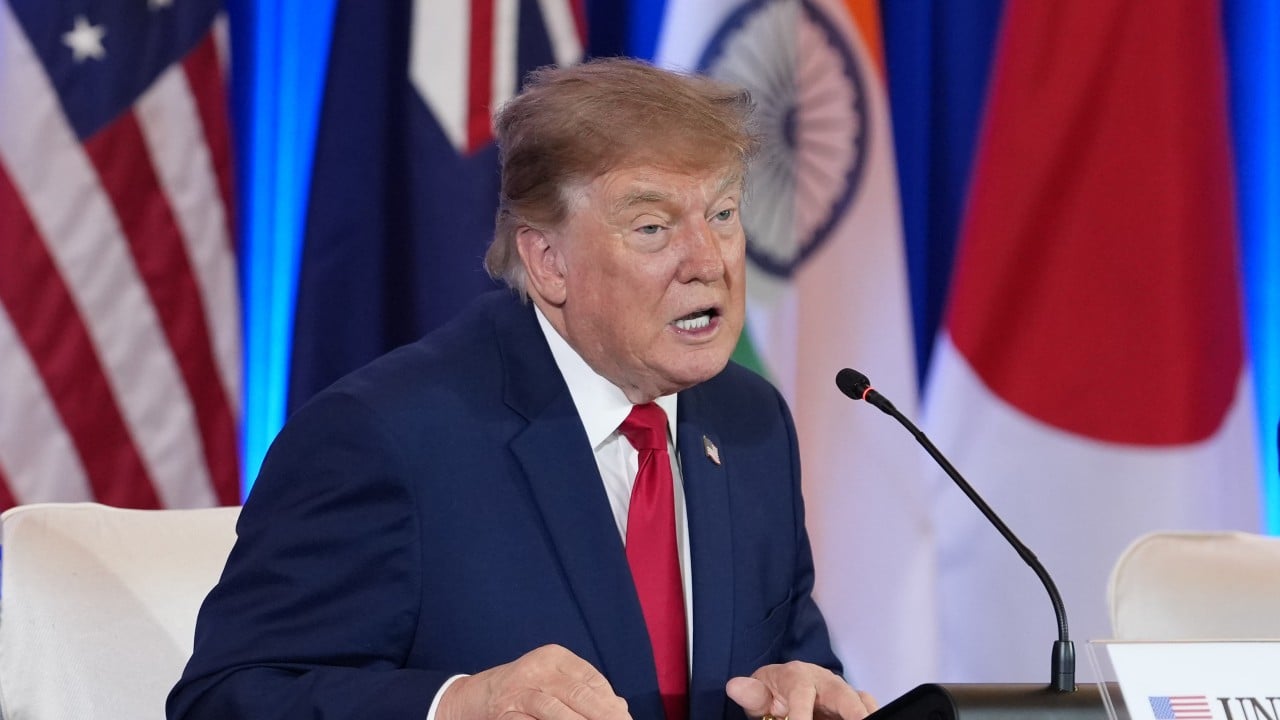
Trump thrives on breaking diplomatic orthodoxy. During opening remarks, he dismissed the "old school" habit of refusing to talk to adversaries, arguing you can't forge peace by avoiding the room. Standing next to Xi and Putin gave him instant historical optics. It also gave him leverage to remind nervous allies—and his domestic critics—that he alone holds a direct line to America's two fiercest rivals.
What the World Peace Declaration Actually Says
When the hour-long summit wrapped up on November 19, the three governments published a remarkably thin four-point statement. If you strip away the diplomatic fluff, the leaders agreed on four specific items:
- United Nations reform. They pledged to work together on updating the UN framework, with Putin emphasizing their shared status as founding members.
- Energy supply stability. All three nations promised to boost the production and supply of refined petroleum products to keep global energy flowing.
- Sovereign immunity. They backed limits on international courts like the ICC prosecuting sitting state officials.
- Nuclear risk dialogue. They dusted off the classic Reagan-Gorbachev line that "a nuclear war cannot be won and must never be fought" and agreed to hold talks on reducing nuclear risks.
Notice what's missing? Everything that actually keeps military planners awake at night.
The Elephants Left Outside Kylin Villa
The gaps in that joint declaration tell the real story of where global power stands right now. Analysts at the Council on Foreign Relations immediately pointed out that the statement completely ignored Ukraine and Iran.
That silence wasn't accidental. Trump held a separate bilateral meeting with Putin right before the three-way session, and he later dialed into a Berlin gathering with Ukrainian President Volodymyr Zelenskyy and over 40 European leaders to claim he'd pushed for a peaceful settlement. Yet zero concrete progress on territorial boundaries or security guarantees emerged from Shenzhen. Russia still demands concessions Kyiv won't give, and China refuses to pressure Moscow into backing down.
The Iran war exposed an even sharper divide. Trump publicly stated before and after the meeting that Tehran cannot get a nuclear weapon and must fully reopen the Strait of Hormuz to protect global oil shipments. Both Beijing and Moscow hold massive economic and political sway over Iran. Neither Xi nor Putin signed onto a single sentence pressuring Tehran in the official communiqué. Calling for higher refined petroleum output is a cheap way to signal concern about energy markets without actually confronting Iran's blockade tactics.
Taiwan didn't make the cut either. Beijing views the self-ruled democracy strictly as an internal matter and flatly refuses to let international summits dictate its cross-strait policy.
Why Nuclear Talks Are Harder Than They Sound
A lot of commentators celebrated the fourth bullet point about nuclear risk reduction. UN Secretary-General António Guterres had openly hoped the three largest nuclear powers would use Shenzhen to launch real arms control negotiations.
Here's the catch. "Dialogue on reducing nuclear risks" is diplomatic code for agreeing to keep talking without agreeing to cap a single warhead.
For years, Washington demanded that Beijing join trilateral arms control treaties because China has been rapidly expanding its nuclear stockpile. Beijing always refused, arguing its arsenal is still a fraction of the massive stockpiles held by the U.S. and Russia. Even in Shenzhen, Xi avoided any commitment to freeze weapons production.
There is one area where the three men quietly share a fear, though. None of them wants a nuclear domino effect among U.S. allies. If countries like Japan, South Korea, Poland, or Germany start doubting Washington's security umbrella, they might decide to build their own nuclear bombs. Keeping non-proliferation on paper serves all three capitals, even if actual disarmament remains a fantasy.
Who Really Won the Shenzhen Summit
Dr. Samuel Ramani, an associate fellow at the Royal United Services Institute, summed up the scoreboard bluntly: China finished first, Russia came in second, and the United States landed in a distant third.
I'd push that analysis one step further. The real losers weren't even in the room.
European capitals and Asian allies like Tokyo and Seoul watched the live feeds from Shenzhen with quiet dread. When an American president signs a joint statement attacking the International Criminal Court—an institution backed by nearly every close U.S. ally—it signals that Washington is willing to trade away traditional alliances for great-power optics. As experts at the German Marshall Fund noted, the thinness of the declaration proves we aren't seeing a genuine three-way carve-up of the globe. The three leaders simply disagree on too much to run the world as a private club. Still, the visual of Trump treating Putin and Xi as equal partners in global governance rattles smaller democracies that rely on American deterrence.
Russia's position is also more fragile than the photos suggest. Researchers at the Observer Research Foundation rightly pointed out that Russia looked like the third wheel in Shenzhen. Outside of its aging nuclear arsenal and oil fields, Russia's economy is dwarfed by both the United States and China. Putin needed Xi's hospitality just to get on the stage.
Three Deadlines That Will Test This Truce
Summits produce handshakes, but calendars produce reality. If you want to know whether the Shenzhen trilateral meant anything beyond a photo op, ignore the speeches and watch three concrete dates coming up fast.
First, keep your eyes on December 14 and 15, 2026, when Trump hosts the G20 summit at his Doral resort in Miami. Xi is expected to attend, and Trump has floated an invitation to Putin. Watch whether Putin actually shows up on American soil—and whether European G20 members stage a diplomatic boycott if he does.
Second, circle January 10, 2027 on your calendar. That's the exact day the current U.S.-China trade truce expires. Warm words in Shenzhen didn't erase American semiconductor export controls or Chinese threats to choke off rare-earth mineral supply chains. If Washington and Beijing fail to extend that truce before January 10, tariffs and tech sanctions will snap back immediately.
Third, track the quiet backchannel talks in Abu Dhabi. The U.S. brokered a fourth round of Russia-Ukraine negotiations there earlier in November without a breakthrough. If the Shenzhen meeting truly unlocked Russian flexibility, you'll see movement in those Abu Dhabi sessions within weeks, not months.
Until those three tests play out, treat the Shenzhen "world peace" summit for what it actually was—a masterclass in political optics where three rival leaders bought themselves a little breathing room without solving a single crisis.