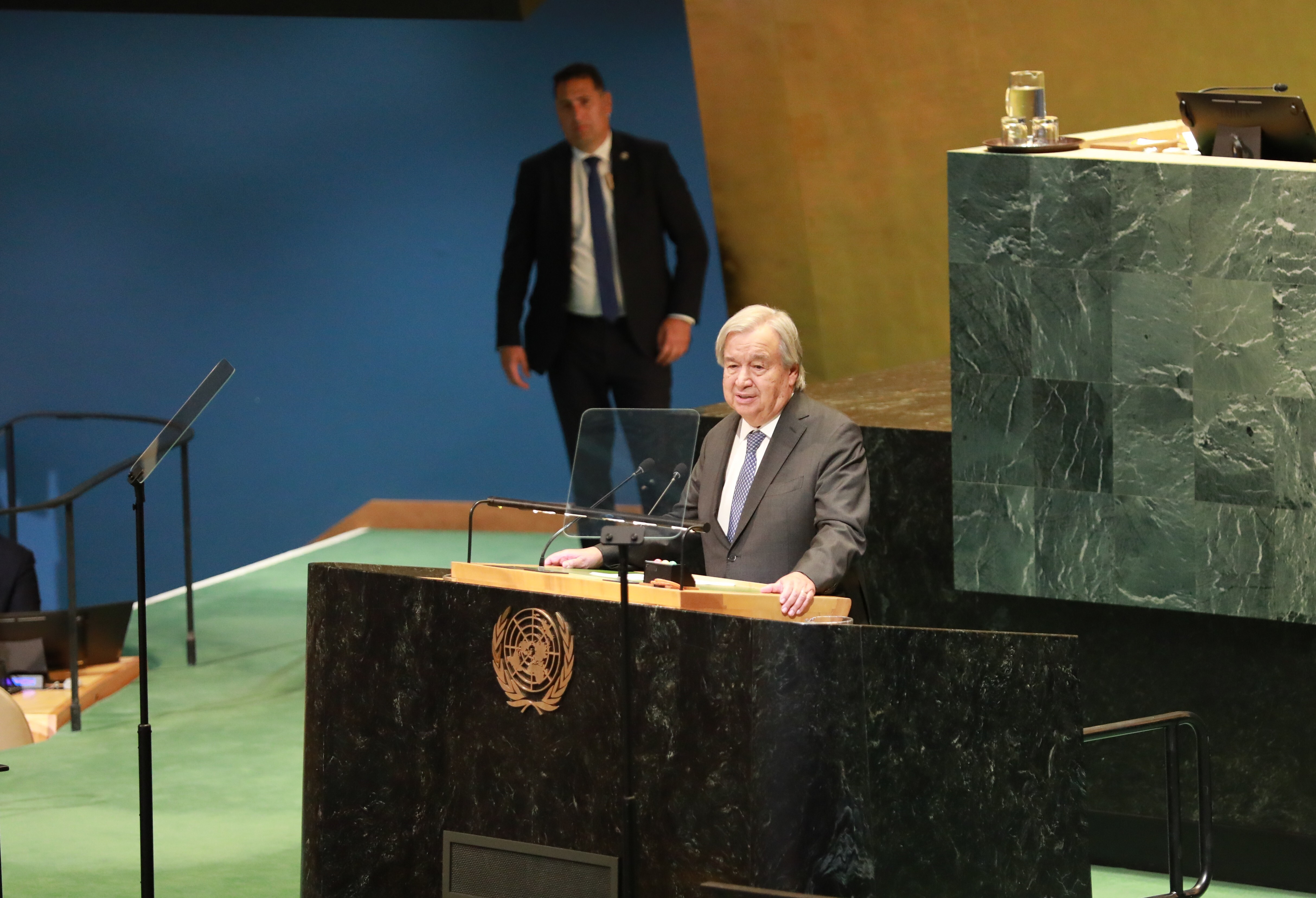
Watching heads of state step up to the green marble podium in New York can make international diplomacy look like a high-stakes chess match where everything gets decided in a single week. Honestly, that's mostly theater. The real diplomatic machinery turns slowly, often behind closed doors or months before and after the cameras roll.
If you're trying to figure out what actually happens when world leaders converge at the United Nations, you've got to separate the speeches from the leverage. During the 81st session's High-Level Week in September 2026, presided over by Khalilur Rahman of Bangladesh under the theme "Restoring trust, managing transformation: A United Nations that delivers for all," leaders gathered to wrestle with familiar fault lines and a few newer headaches. Yet the headlines often blur what the UN General Assembly can legally enforce, what happens in hallway bilaterals, and how ongoing Security Council work in November 2026 carries the weight forward.
Why World Leaders Converge at the United Nations in the First Place
Most people assume the General Assembly is a global parliament passing binding laws that nations have to obey. It isn't. Under Chapter IV of the UN Charter, the General Assembly is the main deliberative and policymaking body where all member states sit with equal voting weight, regardless of military muscle or GDP size. Resolutions there carry political and moral weight, not automatic enforcement power—that distinction trips up casual observers constantly.
When presidents, prime ministers, and foreign ministers fly into Manhattan for the High-Level Week general debate, they aren't showing up expecting rival leaders to suddenly change their minds mid-speech. They're using a concentrated diplomatic window where dozens of counterparts are in one place at the same time. A foreign minister can knock out ten bilateral meetings between breakfast and midnight, test backchannels on stalled ceasefires, and signal domestic priorities to audiences back home.
At the same time, the calendar doesn't freeze once the speeches wrap up in late September. By mid-November 2026, the spotlight shifts to grinding, operational follow-through—from Security Council meetings on the Middle East and UNISFA mandate renewals like Resolution 2838 to debates over veto use and emerging security technologies. If you only pay attention to the opening-week soundbites, you miss how mandates actually get renewed or deadlocked.
The High-Level Week Playbook vs. Reality
On paper, High-Level Week looks tidy: the general debate, climate and sea-level summits, pandemic preparedness sessions, and commemorative meetings. In practice, it's a controlled collision of competing agendas.
Take the 81st session's high-level gatherings in September 2026. Leaders held sessions on Climate Action and the Just Transition, sea-level rise, pandemic prevention and response, and nuclear disarmament alongside the general debate. That sounds neat until you look at how divided the room was on execution. On conflicts like Ukraine, Gaza, and Iran, speeches and high-level debates rarely produced instant breakthroughs, even when shuttle diplomacy or side talks tried to move the needle.
One common mistake people make is judging the week solely by whether a sweeping treaty gets signed on stage. Diplomacy rarely works like a movie climax. Often, the tangible output is a modest framework, a renewed peacekeeping mandate later in the fall, or simply keeping communication lines open when direct trust is at rock bottom.
The Biggest Shifts Shaping Global Diplomacy Right Now
Anyone who thinks UN summits are just a rerun of Cold War-era bloc politics is missing how much the bargaining table has shifted. Middle powers, regional blocs, and private tech giants are all pulling on the same levers in ways that complicate traditional state-to-state diplomacy.
Artificial Intelligence and Private Power Enter the Room
For years, climate change dominated the biggest multilateral urgency pitches at UN gatherings. During the 81st session, artificial intelligence moved squarely into the center of the debate—and exposed sharp disagreement over who sets the rules.
UN Secretary-General António Guterres warned during the session about a massive transfer of power away from governments toward a handful of private companies, while discussions brought tech leaders and governments face-to-face over AI risks and guardrails. At the same time, leaders clashed on tone and urgency—some pushed for common global governance and warned about security incidents, while others dismissed AI risk talk as overblown.
Here's the catch for policymakers: a handful of AI labs and chipmakers now shape frontier capabilities and compute access at a speed that traditional diplomatic treaties struggle to match. Meanwhile, representatives from Africa and the Global South have pressed to be co-architects of AI rules rather than passive end-users. Whether the UN can anchor practical guardrails or gets sidelined by bilateral deals and industry standards is one of the biggest open questions in global governance.
Gulf States, Middle Powers, and Fragmented Coalitions
Another detail that gets overlooked is how much middle powers and regional players are hedging their bets. Rather than lining up neatly behind a single security guarantor, Gulf states and other regional actors have increasingly combined traditional security ties with broader diplomatic outreach, maritime security concerns, and regional coalition-building.
European leaders, too, have leaned into framing themselves around international law, multilateral institutions, and regional partnerships amid ongoing war in Ukraine and shifts in Middle East diplomacy. Meanwhile, major-power summits—including engagements between U.S. and Chinese leaders—have shown how fragile truces can be, pushing follow-up tests onto other global forums like APEC and the G20.
That fragmentation cuts both ways. On one hand, it makes universal consensus harder to reach in the Security Council when vetoes or deep rivalries freeze action. On the other hand, issue-based coalitions and sideline agreements—whether on critical minerals, off-grid energy, or regional diplomacy—still get negotiated when big-tent resolutions stall.
Common Myths That Trip Up Casual Observers
When you follow global summits through short clips and hot takes, a few predictable myths tend to stick. Clearing them up makes reading diplomatic news way less frustrating.
- Myth 1: A General Assembly vote changes facts on the ground overnight. Even when a resolution passes with strong support, implementation depends on member states' political will, funding, and Security Council dynamics where applicable.
- Myth 2: Nothing happens if a summit doesn't end with a historic breakthrough. Side meetings, bilateral agreements, and quiet mediator channels often do the real legwork long before—or long after—a joint communique appears.
- Myth 3: Only superpowers shape the agenda. Smaller states, island nations facing sea-level rise, and regional coalitions routinely force issues like climate vulnerability, development finance, and representation onto the table.
How to Track What Actually Matters After the Headlines Fade
If you want to follow UN diplomacy like an insider instead of getting whiplash from daily headlines, change how you read the coverage. Start by checking which UN body is actually meeting—the General Assembly plenary, one of its six main committees, or the 15-member Security Council—because their powers and voting rules are completely different.
Next, look past the opening rhetoric and track the follow-through weeks and months later. You can check live meeting schedules and agendas directly through the UN Journal, review session priorities and high-level summaries on the UN 81st Session High-Level Week portal, and monitor formal mandates and council actions via the UN Security Council programme of work.
Finally, compare what leaders say at the podium against what their delegations actually sign, fund, or block in committee rooms and on the sidelines. Words at the UN are cheap; mandates, budgets, and diplomatic follow-through tell you what really moved.


