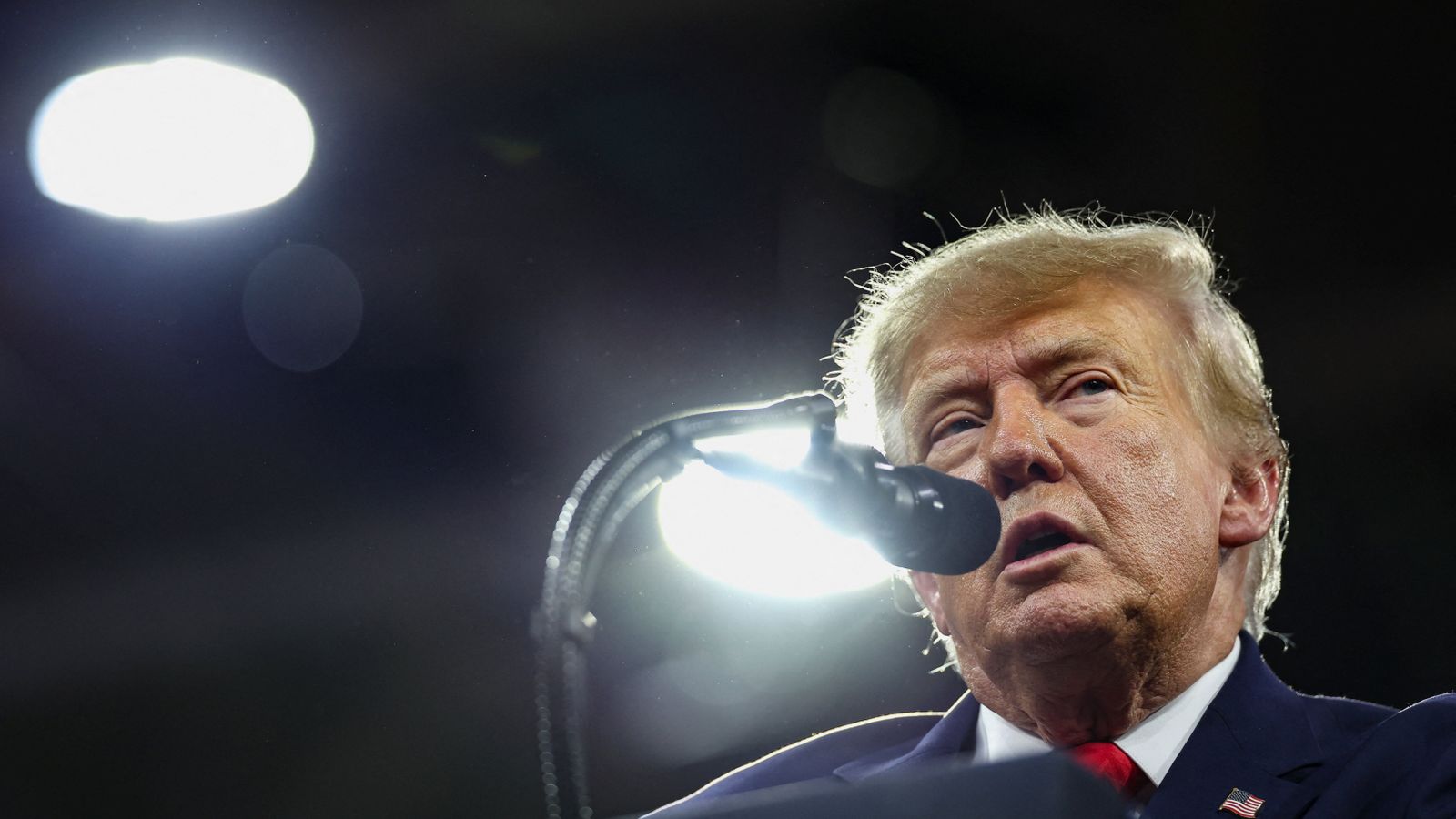
Donald Trump loves a clean exit line. Whenever a geopolitical crisis threatens to drag down markets, spike gas prices, or distract from his domestic agenda, his instinct is almost always the same. He steps up to a microphone, projects total confidence, and promises that the mess is basically over.
That's exactly what happened when Trump declared that the conflict with Iran is "going to get wrapped up soon." Headlines exploded instantly. Traders scrambled to price in de-escalation, pundits argued over whether he had a secret backchannel deal ready to sign, and voters wondered if another Middle Eastern quagmire had somehow been dodged in record time.
Hold on. If you take that statement at face value, you're missing how Trump negotiates—and how Tehran actually operates.
I've spent years watching how White House messaging collides with Middle Eastern reality, and there's a massive gap between saying a conflict is ending and actually putting out the fire. Political rhetoric moves fast. Regional proxy networks don't.
Why Trump Says the Iran War Will Wrap Up Soon
To understand the quote, look at the audience. Trump wasn't speaking to the Islamic Revolutionary Guard Corps in Tehran. He was talking to American voters, energy markets, and hesitant allies who despise open-ended foreign interventions.
Trump's entire foreign policy brand rests on being the guy who avoids "endless wars." During his first term, he tore up the 2015 Joint Comprehensive Plan of Action (JCPOA), slapped "maximum pressure" sanctions on Tehran, and ordered the 2020 strike that killed Qasem Soleimani. Yet even at the peak of those crises, he constantly signaled that he wanted a quick deal, not a prolonged ground war.
Saying a conflict will wrap up soon serves three immediate goals:
- Calming oil markets. Nothing panics an administration faster than crude prices surging past $100 a barrel right before an election cycle or major economic push. Verbal de-escalation buys time and cools speculative trading.
- Framing victory early. If you declare the end is near, you get to define what winning looks like before your critics can call it a stalemate.
- Pressuring Tehran publicly. By suggesting the fight is almost over, Trump puts the burden on Iranian leadership to either take an off-ramp or look like the irrational party prolonging the pain.
It's a classic real estate negotiator's move. You announce the deal is practically closed while the other side is still arguing over the inspection clause.
The Gap Between Washington Rhetoric and Tehran Reality
Here's the problem with treating geopolitics like a Manhattan construction contract. Iran doesn't run on a four-year election cycle, and its leadership doesn't measure success in quarterly market reactions.
Supreme Leader Ali Khamenei and the senior commanders of the IRGC view survival through a multi-decade lens. For them, asymmetric warfare isn't a temporary tactic—it's the core architecture of their national defense. Even when direct military exchanges pause, the underlying infrastructure remains intact.
Think about what "wrapping up" actually requires on the ground. Does it mean stopping direct missile salvos between state militaries? Maybe. Does it mean Hezbollah, the Houthis in Yemen, and Iraqi Shia militias suddenly lay down their weapons and stop harassing shipping lanes in the Red Sea?
Not a chance.
I've seen analysts make this exact mistake repeatedly over the last decade. They watch a ceasefire announcement in one capital and assume the entire region just hit the reset button. In reality, Tehran uses pauses in direct confrontation to regroup, resupply, and shift pressure onto cheaper, deniable fronts. A quiet week in the Persian Gulf often precedes a spike in drone attacks hundreds of miles away.
How Financial Markets Misread Geopolitical Soundbites
Whenever Trump drops a line like "it's going to get wrapped up soon," algorithmic trading desks react within milliseconds. Oil futures dip. Defense stocks wobble. Airlines catch a brief bid.
If you're watching those charts to figure out whether peace has arrived, stop. Markets don't price in long-term stability; they price in immediate headline risk. Traders care about whether the Strait of Hormuz stays open tomorrow morning, not whether Iran's nuclear enrichment program has been permanently dismantled.
Let's look at the concrete mechanics of how this plays out:
- Initial shock drives prices up. Escalation headlines trigger worst-case scenarios about disrupted global oil supply—roughly 20% of the world's petroleum passes through the Strait of Hormuz, according to the U.S. Energy Information Administration (EIA).
- De-escalation rhetoric triggers profit-taking. When the White House signals an imminent wrap-up, hedge funds unwind those panic hedges fast.
- Reality sets back in. Weeks later, when sanctions remain in place and regional skirmishes continue, volatility creeps right back into the system.
Relying on market dips as proof of peace is like checking your umbrella to see if the hurricane is over. Just because the wind stopped howling for ten minutes doesn't mean you're out of the eyewall.
What Wrapping Up Actually Looks Like in Practice
If the Trump administration genuinely intends to wind down direct hostilities with Iran without deploying massive U.S. ground forces, the exit ramp has to look very specific. You can't just tweet a ceasefire and walk away.
First, there has to be an unwritten or backchannel understanding on red lines. Historically, Washington and Tehran have communicated through intermediaries in Oman, Qatar, or Switzerland. Even during intense crises—like the aftermath of the Soleimani strike in January 2020, when Iran fired ballistic missiles at Ain al-Asad airbase in Iraq—backchannel messages helped prevent an uncontrolled spiral into full-scale war. Both sides took a punch, claimed victory to their domestic audiences, and stepped back from the brink.
Second, economic leverage stays on the table. Trump has consistently favored financial strangulation over troop deployments. Expect strict enforcement of oil export sanctions and secondary sanctions on foreign banks doing business with Iranian entities, even if kinetic strikes pause.
Third, regional allies have to buy in. Israel, Saudi Arabia, and the United Arab Emirates all have massive stakes in how any conflict with Iran ends. If Jerusalem believes an early wrap-up leaves Hezbollah or Iranian missile facilities untouched, Israeli military operations won't stop just because Washington wants to declare mission accomplished. You can't force a regional coalition to stand down if their existential security concerns haven't been addressed.
The Nuclear Elephant Still Sitting in the Room
You can't talk about ending a conflict with Iran without addressing its nuclear program. Honestly, this is where the "wrapped up soon" narrative hits a brick wall.
According to reports from the International Atomic Energy Agency (IAEA), Iran has enriched uranium up to 60% purity—just a short technical step away from weapons-grade 90% material. They've installed advanced centrifuges at underground facilities like Fordow and Natanz, drastically shrinking their "breakout time" should leadership decide to build a bomb.
You don't wrap that up in a weekend.
Either the U.S. negotiates a rigorous, verifiable inspection and dismantlement agreement—which hardliners in both Washington and Tehran fiercely oppose—or the nuclear threshold remains an active fuse waiting to ignite the next crisis. Calling a truce while enriched uranium stockpiles sit untouched inside fortified mountains isn't ending a war. It's hitting the snooze button.
How to Read White House Middle East Statements Going Forward
Next time you see a viral clip promising that a complex international conflict is about to wrap up, run it through a quick filter before reacting or adjusting your investments.
Watch the Pentagon, not just the podium. Look at U.S. Central Command (CENTCOM) force posture updates. Are aircraft carrier strike groups returning to home port, or are additional air defense batteries and refueling tankers still flying into the region? Hardware movements tell the truth that press briefings hide.
Track diplomatic traffic in Muscat and Doha. Real de-escalation leaves a paper trail of quiet flights by senior National Security Council officials and foreign ministers visiting Gulf mediators. If those backchannels are silent, the public optimism is mostly theater.
Pay attention to maritime insurance rates in the Persian Gulf and Red Sea. Shipping underwriters at Lloyd's of London don't care about political spin—they price actual physical risk to multi-million-dollar vessels. When war-risk premiums drop, the shooting is actually stopping. Until then, treat every promise of a quick wrap-up for what it really is: an opening bid in a much longer fight.


