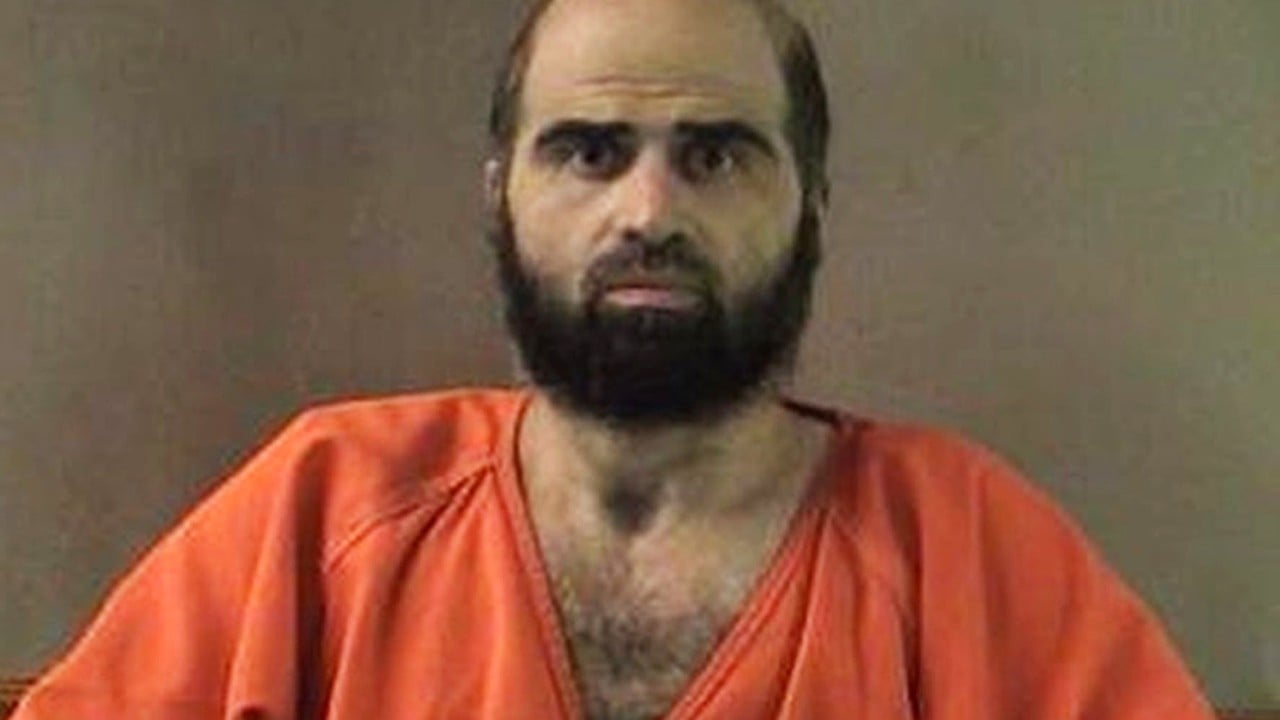
Rumors fly fast online, especially when they involve high-profile death row inmates and presidential authority. Lately, a headline claiming Donald Trump approved a firing squad execution for Fort Hood shooter Nidal Hasan has been making the rounds across social media feeds.
Here is the reality. That headline is false, and the legal mechanics behind federal and military executions make that specific scenario impossible under current military protocols.
If you've spent any time following military justice or capital punishment in the United States, you know how slow the wheels turn. People love a dramatic story about swift executive action. They want to believe a president can just pick up a pen, choose a dramatic method of execution, and order it done by Tuesday.
It doesn't work like that. Not even close.
The Reality Behind Nidal Hasan and Execution Orders
Let's look at the actual facts of the case first. Nidal Hasan, a former U.S. Army major and psychiatrist, killed 13 people and injured more than 30 others at Fort Hood (now Fort Cavazos) in Texas on November 5, 2009. In August 2013, a military jury convicted him of 13 counts of premeditated murder and 32 counts of attempted premeditated murder. They unanimously sentenced him to death.
Since that verdict, Hasan has sat on military death row at the United States Disciplinary Barracks in Fort Leavenworth, Kansas.
Under the Uniform Code of Military Justice (UCMJ), specifically Article 71(a), no military death sentence can be carried out until the President of the United States personally approves it. That part of the rumor has a tiny grain of truth to it. The president does hold the final signature.
However, a president cannot sign that warrant until the inmate has exhausted every single mandatory appeal within the military justice system and the federal appellate courts. In 2023, the U.S. Court of Appeals for the Armed Forces affirmed Hasan's death sentence. Even after that milestone, the case still faces review pathways up to the U.S. Supreme Court and potential habeas corpus petitions in federal civilian courts.
No president—not Barack Obama, not Donald Trump during his first term, not Joe Biden, and not Trump in a subsequent term—has signed an execution warrant for Nidal Hasan. More importantly, even if a president did sign an execution order tomorrow, it wouldn't be for a firing squad.
How Military Executions Actually Work
The Department of Defense doesn't improvise execution methods. They don't let politicians pick from a menu of historical punishments.
According to Department of Defense regulations and Army Regulation 190-55, which governs U.S. Army corrections system procedures and executions, the sole authorized method for carrying out a military death sentence is lethal injection.
Let's be clear about this. There is no provision in modern U.S. military law for hanging, electrocution, gas, or a firing squad.
The U.S. military hasn't executed anyone since April 13, 1961, when Army Private John A. Bennett was hanged at Fort Leavenworth for rape and attempted murder. Back then, hanging was the standard military protocol. Decades later, the military overhauled its capital punishment procedures to align with federal civilian standards, adopting lethal injection as the exclusive method.
When you see viral posts claiming a president ordered a firing squad for a military prisoner, you're looking at pure clickbait designed to exploit outrage and confusion.
Why People Confuse State Firing Squads With Federal Rules
So where does this firing squad idea come from? Honestly, it's easy to see why people get mixed up.
Over the past few years, several U.S. states have brought back the firing squad as an alternative execution method. Why? Because pharmaceutical companies started blocking prisons from using their drugs for lethal injections. States couldn't get the chemicals they needed, so legislatures scrambled for backups.
- Utah has long maintained the firing squad as an option, famously using it to execute Ronnie Lee Gardner in 2010.
- South Carolina passed a law in 2021 making the electric chair the default and the firing squad an alternative when lethal injection drugs aren't available.
- Idaho authorized firing squads in 2023 due to persistent drug shortages.
- Mississippi and Oklahoma also keep firing squads on the books as backup methods if lethal injection is held up by legal challenges or supply issues.
During his first administration, Donald Trump's Department of Justice actually revised federal execution protocols in late 2020. That rule change allowed the federal Bureau of Prisons to use any execution method authorized by the state where the execution takes place—which theoretically opened the door to firing squads or electrocution for federal civilian inmates if lethal injection wasn't an option.
People saw headlines about Trump-era rules allowing firing squads, mashed them together with memories of Nidal Hasan's death sentence, and created a viral rumor out of thin air.
Federal civilian prisoners are governed by the Department of Justice and executed at the federal penitentiary in Terre Haute, Indiana. Military prisoners like Hasan are governed by the Department of Defense under the UCMJ and held at Fort Leavenworth. Those are two entirely separate legal universes. A DOJ rule change doesn't rewrite Army regulations.
The Long Road of Military Death Row Appeals
If you want to understand why Hasan is still alive more than a decade after his conviction, you have to look at how the military appellate process is built. It is deliberately exhaustive. Because the military justice system operates under different rules than civilian courts—including non-unanimous verdicts in non-capital cases and command influence concerns—Congress built extra layers of mandatory review into capital cases.
You can't waive your appeals in a military death penalty case. Even if Nidal Hasan walked into court tomorrow and begged to be executed immediately, the law wouldn't allow it.
The automatic review process moves through strict stages:
- The Convening Authority: The commanding general who convened the court-martial reviews the findings and sentence.
- The Service Court of Criminal Appeals: For Hasan, this was the Army Court of Criminal Appeals (ACCA), which reviewed the trial record for legal errors and factual sufficiency.
- The Court of Appeals for the Armed Forces (CAAF): A civilian panel of five judges appointed by the president reviews the case. CAAF upheld Hasan's conviction and sentence in 2023.
- The U.S. Supreme Court: The defense can petition the Supreme Court for a writ of certiorari.
- Presidential Approval: Only after direct appellate review concludes does the case land on the president's desk for final approval under Article 71(a).
- Collateral Review: Even after a president signs off, the inmate can file habeas corpus petitions in civilian federal courts, triggering another round of appeals that can easily stretch for years.
Every single person currently sitting on military death row at Fort Leavenworth is stuck somewhere in this exact pipeline. Hasan isn't receiving special treatment. He is simply moving through a legal apparatus that takes twenty to thirty years to reach an endpoint.
Why Viral Misinformation Thrives on Military Justice Stories
I've watched legal misinformation spread online for years, and military cases are always the worst offenders. Most civilians don't interact with the Uniform Code of Military Justice. They watch movies like A Few Good Men and assume military law is fast, brutal, and completely controlled by whoever wears the most stars—or whoever sits in the Oval Office.
Bad actors on social media know this. They create fake news graphics, AI-generated thumbnails, and fabricated articles claiming dramatic executions have been scheduled. They know most people won't cross-reference Army Regulation 190-55 or check the docket for the Court of Appeals for the Armed Forces.
The outrage drives clicks. Clicks drive ad revenue. By the time fact-checkers debunk the post, the publisher has already cashed the check and moved on to the next fabricated headline.
How to Verify Claims About Federal and Military Executions
When you see a shocking headline about an upcoming execution or a sudden change in death penalty methods, you don't need a law degree to verify it. You just need to check primary sources instead of screenshots.
Start with the Death Penalty Information Center (DPIC). They maintain a real-time, exhaustive database of every scheduled execution in the United States, broken down by state, federal, and military jurisdictions. If an execution warrant has actually been signed for Nidal Hasan or any other military prisoner, it will be documented there immediately with the exact date and legal status.
You can also check the official public docket for the U.S. Court of Appeals for the Armed Forces or official press releases from the Department of Defense. Major milestones in high-profile military cases—especially something as historic as the first military execution in over sixty years—don't happen in secret. They generate official DoD announcements, filings in the Federal Register, and immediate coverage from Pentagon beat reporters.
Don't fall for cropped social media posts or anonymous blogs claiming secret execution orders have been signed. Check the primary dockets, look at the actual military regulations, and ignore the noise.