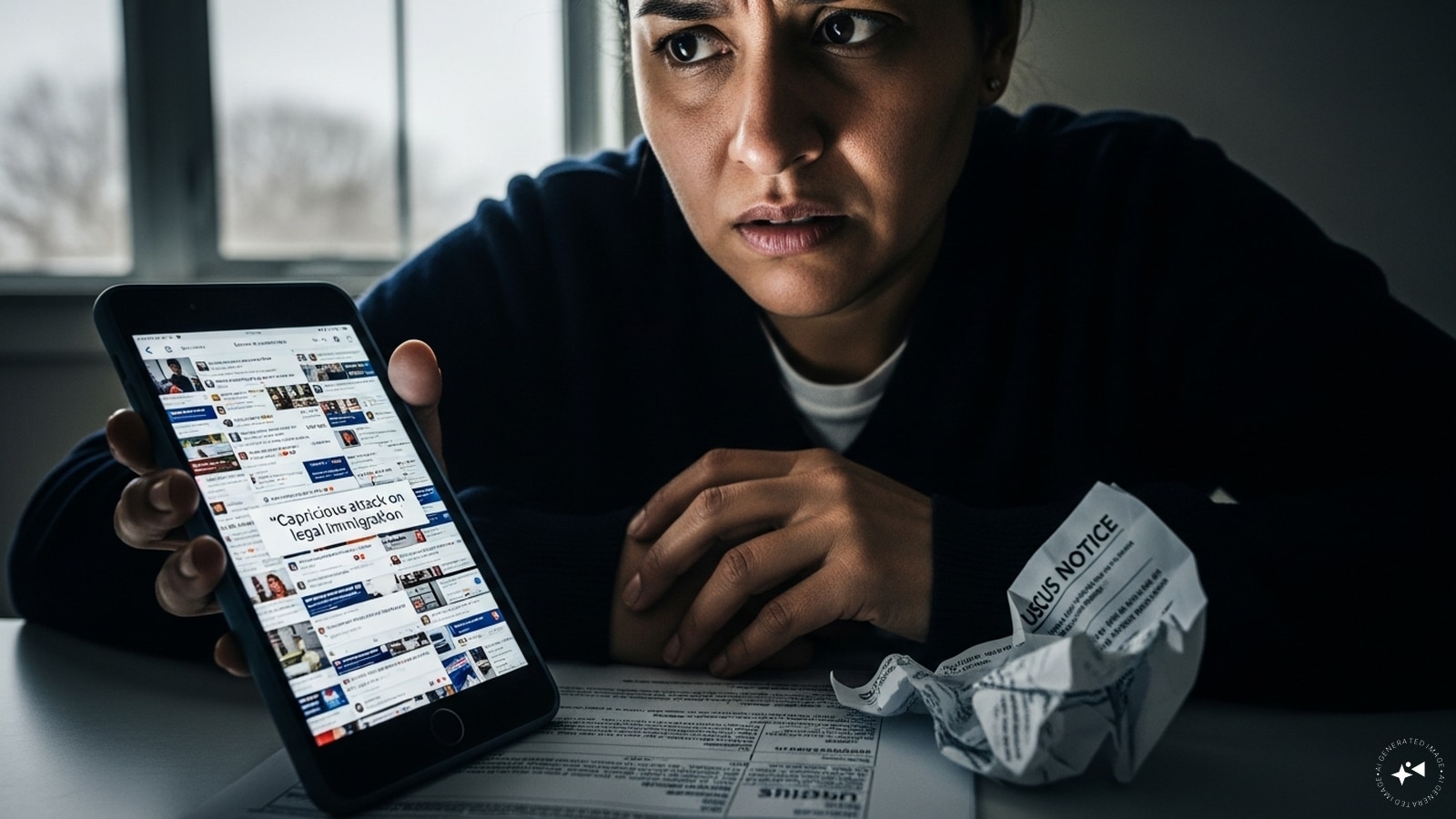
Your five-year-old retweets and casual political rants are no longer just screaming into the digital void. They’re sitting on a desk at U.S. Citizenship and Immigration Services (USCIS).
Last week, the Trump administration cleared a massive bureaucratic hurdle by securing approval to collect five years of social media handles from anyone applying to adjust their immigration status inside the United States. This isn't just another routine paperwork update. It's a fundamental shift that turns your private online life into a high-stakes screening test.
If you're one of the three million people who apply for status changes, green cards, or work permits every year, you're now required to hand over your digital keys.
The Discretionary Trap Chilling Legal Immigration
The widespread panic across social media platforms like X and LinkedIn isn't an overreaction. It stems from absolute clarity on one thing: the government has deliberately left the rules vague.
Under Policy Memorandum PM-602-0199 issued on May 21, 2026, USCIS explicitly restated that applying for an adjustment of status inside the country is an "extraordinary form of relief" rather than a guaranteed administrative step. By declaring that green cards are entirely up to the agency's discretion, the administration has given individual immigration officers unprecedented power to reject cases based on what they find online.
The real trouble lies in the twin targets of this digital dragnet: "anti-Americanism" and "antisemitic activity."
The government hasn't provided a concrete, legal definition for either phrase. Instead, a recent directive to consular and field offices instructed personnel to view these vaguely defined online activities as an "overwhelmingly negative factor" during discretionary reviews.
When you leave terms like "anti-American" completely open to interpretation, you invite individual bias. Security experts and immigration lawyers are sounding the alarm because this guidance shifts the screening process away from objective threats—like criminal records or terrorist ties—and pushes it directly into the realm of ideology, opinion, and political stance.
What happens if you liked a post criticizing a U.S. foreign policy decision? What if you shared a satirical meme about a political figure? Under this current framework, an officer could easily conflate routine political dissent with a fundamental rejection of American values, forcing you into a corner where you have to defend years of internet history just to save your application.
The Invisible Cost of Digital Surveillance
This policy change didn't come out of nowhere. It's part of a broader, more quiet effort to shape immigration through speech restrictions rather than outright law changes.
Earlier policy expansions targeting foreign tech workers, trust and safety personnel, and research academics showed us the blueprint. By making visa renewals and green card approvals contingent on staying clear of "censorship" or "anti-American" speech, the administration successfully forced massive self-censorship across tech sectors and universities.
The social and psychological toll of this monitoring is immense. Legal organizations like the Brennan Center for Justice and the Knight First Amendment Institute have fought these measures for years, pointing out that public data collection of this scale destroys personal privacy. A social media history doesn't just show public statements; it reveals deeply personal details, including religious practices, sexual orientation, and political affiliations that have absolutely nothing to do with your eligibility to work or live in the U.S.
Worse, internal documents uncovered through Freedom of Information Act (FOIA) requests reveal that even the government knows this data dragnet doesn't work. A prior federal review openly admitted that forcing applicants to disclose social media handles provided "no value" and had "very little impact" on catching actual security threats.
It isn't about safety. It’s a tool designed to make applicants second-guess every click, share, and comment.
High Technical Standards and Stricter Deadlines
As if the ideological screening weren't enough, USCIS is simultaneously tightening the screws on the administrative side. Alongside the social media screening, a separate rule change allows officers to flatly deny green card applications months down the line over technical errors, such as missing or invalid signatures, without giving the applicant a chance to fix the mistake.
In the past, a minor signature error triggered a simple Request for Evidence (RFE), giving your lawyer a few weeks to submit a corrected page. Now, that minor mistake can result in an immediate denial, forcing you to lose your filing fees and completely restart a process that already takes years.
How to Protect Your Status Right Now
Waiting around for federal lawsuits to strike down these policies is a losing strategy. The rules are active today, and you have to navigate them as they exist right now. If you're preparing to file an I-485 or any status adjustment form, you need to take immediate, defensive steps.
- Conduct a Full Digital Audit: You must review the last five years of your online presence across every platform—including X, Facebook, LinkedIn, Instagram, and Reddit. Look at your history through the lens of a hostile reviewer. Delete old political arguments, polarizing commentary, or ambiguous jokes that could be twisted by an aggressive officer.
- Audit Your Resumes and Professional Profiles: Ensure your employment history is completely factual and free of buzzwords that might trigger specialized scrutiny. If you've worked in content moderation, algorithmic research, or data policy, be prepared for extra questioning.
- Check Every Single Signature Line: Do not rush your forms. Treat the physical signature blocks with absolute precision. A stray mark or an incomplete cursive line shouldn't be the reason your green card application gets thrown out.
- Work With an Experienced Attorney: This isn't the era for DIY immigration. You need legal counsel to review your application packages and sit with you through interviews where an officer might bring up your digital footprint.
The era of separating your digital life from your legal status is officially over. The best way to survive this system is to scrub your public tracks, double-check your paperwork, and refuse to give the bureaucracy an easy reason to say no.